
COMPOUNDING TECHNIQUES FOR TOPICAL AND TRANSDERMAL PREPARATIONS
Abstract
Pharmaceutical compounding is considered both an art and a science and involves preparing medications tailored to an individual’s health needs. Compounded nonsterile preparations (CNSPs) encompass many dosage forms, including transdermal and topical preparations. These dosage forms offer many benefits for patient pharmaceutical care, including convenience, ease of administration, and improved medication adherence. Pharmacists and pharmacy technicians who compound topical and transdermal medications should be well-versed in compounding standards and skilled in the techniques needed to prepare compounds that are effective, safe, and high-quality. This continuing education program will review the importance of topical and transdermal preparations, discuss United States Pharmacopeia (USP) standards for these dosage forms, and review techniques for preparing ointments, creams, pastes, and gels.
Accreditation Statements
In support of improving patient care, RxCe.com LLC is jointly accredited by the Accreditation CouncilTM for Continuing Medical Education (ACCME®), the Accreditation Council for Pharmacy Education (ACPE®), and the American Nurses Credentialing Center (ANCC®), to provide continuing education for the healthcare team.
Joint Universal Activity Number: The Joint Accreditation Universal Activity Numbers assigned to this activity are as follows:
Pharmacists: JA4008424-0000-26-082-H07-P
Pharmacy Technicians: JA4008424-0000-26-082-H07-T
Credits: 2 contact hour(s) (0.2 CEU(s)) of continuing education credit.
Credit Types:
Pharmacy - 2 Credits
Type of Activity: Knowledge
Media: Computer-Based Training (i.e., online courses)
Estimated time to complete activity: 2 contact hour(s) (0.2 CEU(s)), including Activity Pre-Test, Post-Test, and Activity Evaluation.
Release Date: June 6, 2026 Expiration Date: June 6, 2029
Target Audience: This educational activity is for Pharmacists and Pharmacy Technicians
How to Earn Credit: From June 6, 2026, through June 6, 2029, participants must:
Read the “learning objectives” and “author and planning team disclosures;”
Take the “Educational Activity Pre-Test;”
Study the section entitled “Educational Activity;” and
Complete the Educational Activity Post-Test and Activity Evaluation. The Educational Activity Post-Test will be graded automatically. Following successful completion of the Educational Activity Post-Test with a score of 70% or higher, a statement of participation will be made available immediately. (No partial credit will be given.)
CME Credit: Credit for this course will be uploaded to CPE Monitor® for pharmacists. Physicians may receive AMA PRA Category 1 Credit™️ and use these credits toward Maintenance of Certification (MOC) requirements. Physician Assistants may earn AAPA Category 1 CME credit, reportable through PA Portfolio. All learners shall verify their individual licensing board’s specific requirements and eligibility criteria.
Statement of Need
Pharmacists and pharmacy technicians increasingly compound topical and transdermal medications to meet patient-specific needs when commercially available products are unavailable, inappropriate, or poorly tolerated. These dosage forms can improve adherence, provide localized treatment, and deliver drugs through the skin while avoiding first-pass metabolism. These healthcare professionals are not uniformly aware of USP <795> standards, drug-base compatibility, skin permeability factors, and counseling considerations that affect absorption and patient use. Competence in safe preparation, optimal communication, geometric dilution, levigation, and fusion is essential for preparing smooth, uniform formulations with consistent quality and for optimizing therapeutic performance for patient care and outcomes.
Learning Objectives: Upon completion of this educational activity, participants should be able to:
Discuss the importance of topical and transdermal dosage forms
Recall important considerations for preparing transdermal medications
Identify compounding techniques used to prepare ointments, creams, pastes, and gels
Disclosures
The following individuals were involved in planning, developing, and/or authoring this activity: Liz Fredrickson, PharmD; and Pamela Sardo, PharmD, BS. None of the individuals involved in developing this activity has a conflict of interest or financial relationships related to the subject matter. There are no financial relationships or commercial or financial support relevant to this activity to report or disclose by RxCe.com or any of the individuals involved in the development of this activity.
© RxCe.com LLC 2026: All rights reserved. No reproduction of all or part of any content herein is allowed without the prior, written permission of RxCe.com LLC.
Highlights Compounding personnel should select dosage forms based on patient-specific needs, including the ability to swallow, age, and clinical condition Dosage form selection should support consistent drug delivery and reproducible preparation, ensuring reliable therapeutic outcomes Key aspects of dosage form and route selection should be documented to support continuity of care and reproducibility Excipients should be selected based on the intended route of administration, ensuring safety and compatibility with the formulation Beyond-use dates should reflect dosage form characteristics, with liquid preparations generally requiring more conservative dating Different dosage forms require different quality considerations, including uniformity, stability, and performance Compounded preparations should be designed to minimize patient risk, including improving adherence and reducing medication errors |
Educational Activity Pre-Test
A patient with dysphagia requires medication that is not available in a suitable oral dosage form. Which of the following is the MOST appropriate USP <795>-aligned approach?
Crush tablets and administer without modification
Discontinue therapy until esophageal dilation occurs
Prepare a transdermal or topical formulation if appropriate
Double the oral dose and advise to predose with menthol mouth spray
When compounding a transdermal preparation, which of the following is MOST important when selecting excipients?
Add food coloring for the color preference of the patient
Consider the cost of the excipient rather than the main active ingredients
Suitability for skin absorption and compatibility with the route
Availability of commercial aromatic flavors
Which of the following best reflects USP <795> guidance on beyond-use dating for topical and transdermal preparations?
All dosage forms with active ingredients have the same beyond-use date
Topical preparations may have different BUDs based on formulation characteristics
BUDs are determined only by the manufacturer based on a narrow therapeutic index
BUDs are not required for suppositories, otic, or other topical preparations
Educational Activity
Compounding Techniques for Topical and Transdermal Preparations
Introduction
Pharmaceutical compounding is considered both an art and a science and involves preparing medications tailored to an individual’s health needs. Compounded nonsterile preparations (CNSPs) encompass many dosage forms, including transdermal and topical preparations. These dosage forms offer many benefits for patient pharmaceutical care, including convenience, ease of administration, and improved medication adherence. Pharmacists and pharmacy technicians who compound topical and transdermal medications should be well-versed in compounding standards and skilled in preparing effective, safe, high-quality compounds. This continuing education program will review the importance of topical and transdermal preparations, discuss United States Pharmacopeia (USP) standards for these dosage forms, and review techniques for preparing ointments, creams, pastes, and gels.
USP <795> Pharmaceutical Compounding - Nonsterile Preparations
Pharmaceutical compounding is considered both an art and a science and involves preparing medications tailored to an individual’s health needs.1 Compounded nonsterile preparations (CNSPs) encompass many different oral dosage forms, each with a specific purpose and associated patient benefits. The United States Pharmacopeia (USP) <795>, “Pharmaceutical Compounding, Nonsterile Preparations,” defines nonsterile compounding as combining, admixing, diluting, pooling, reconstituting other than as provided in the manufacturer’s labeling, or otherwise altering a drug product or bulk drug substance to create a nonsterile preparation.2
The chapter requirements are essential to minimize harm, including death, to human and animal patients that could result from:2
Excessive microbial contamination
Variability from the intended strength of the correct ingredients
Physical and chemical incompatibilities
Chemical and physical contaminants and/or
Use of ingredients of inappropriate quality
The scope of the chapter pertains to numerous CNSPs, including the following:2
Solid oral preparations (such as capsules or tablets)
Liquid oral preparations (such as solutions or suspensions)
Rectal preparations
Vaginal preparations
Topical preparations (such as creams, gels, and ointments)
Nasal and sinus preparations intended for local application (such as nasal sprays and nasal irrigation)
Otic preparations (excluding use in perforated eardrums)
USP <795> requires personnel who compound such dosage forms to be competent in preparing them, including measuring and mixing, properly using equipment and devices, and handling and transporting components and CNSPs.2 Such skills are crucial to ensure the proper preparation of compounds for patients.
The Topical Route of Administration
Topical medications are applied directly to the body surface, including the skin and mucous membranes of the eyes, ears, nose, throat, or airway.3 They are typically intended to treat the localized area on which they are applied, though systemic absorption can occur, leading to unwanted side effects.3
The volume of the drug able to penetrate the skin as part of a semisolid formulation is dependent on a number of factors, including the following:1
The amount of pressure applied
The vigor with which preparation is rubbed into the skin
The amount of surface area covered
The condition of the patient’s skin
The type of ointment base used
Whether occlusive dressings are used
The advantages of topical medications include their localized effects via direct application, their suitability for dermatologic and ophthalmologic preparations, and their general convenience and ease of use.3 Disadvantages include limited absorption for drugs with high molecular weights, poor lipid solubility, and potential local side effects such as rash, irritation, and dermatitis.1,3
Compounded Topical Preparations
Compounded topical preparations are extremely common and allow for medication flexibility for many patients.4 These medications are common within the area of dermatology and may be prescribed for many reasons, including the following:4
The patient requires a different strength of a commercially available medication
The patient requires a medication in a topical dosage form
The patient requires a topical medication free of preservatives, irritants, or allergens
The drug requires preparation immediately before dispensing due to stability issues
Combination preparations are needed to improve patient adherence and convenience
Pharmacists should work with the prescribing physician and the patient to determine the optimal formulation for treatment.1 Many factors may come into play when deciding on the best dosage form. When choosing between an ointment, paste, or cream preparation, the extent of skin penetration needed and the characteristics of the affected area should be considered (Table 1).1
Table 1
Topical Dosage Form Descriptions
| Dosage Form | Uses | Route of Administration |
| Ointments | Oleaginous bases are used on dry, scaly lesions | Topical, rectal, and ophthalmic preparations |
| Pastes | Applied to areas that need protection | Topical |
| Creams | Applied to moist, weeping lesions because they have a drying effect | Topical, rectal, and vaginal preparations |
The Transdermal Route of Administration
The transdermal route of administration involves delivering drugs through the skin and into the general circulation to achieve a local or systemic effect.1 These medications are applied to the skin and absorbed into the bloodstream, avoiding first-pass metabolism.1 The amount of drug that can be administered through the skin can be measured through drug blood levels, the detection of the drug or its metabolite in urine, or the patient's clinical response.1
For a drug to be absorbed percutaneously, it must penetrate the stratum corneum (SC).1 The stratum corneum is approximately 40% protein and 40% water.1 The remaining components include lipids such as cholesterol, triglycerides, and free fatty acids.1 These lipids are a key consideration of how well a drug will penetrate the skin.1 A drug’s rate of movement will depend on the concentration of the drug as well as its aqueous and lipid solubility characteristics.1
Compounded Transdermal Preparations
Compounding personnel should be aware of the factors that make active pharmaceutical ingredients (APIs) suitable for use in transdermal formulations. Important considerations include the drug's physical and chemical properties (molecular weight, solubility, partition coefficient, dissociation constant, pKa), the carrier vehicle, and the skin's condition.1 The following are important considerations:1
The amount of drug absorbed per unit of surface area per time interval increases with an increase in the concentration of the drug
The larger the area of application, the larger the quantity of drug absorbed
A drug needs to have a greater physicochemical attraction to the skin than to the formulation vehicle
Drugs with a molecular weight (MW) of 100-800 daltons and good lipid and aqueous solubility can permeate the skin (the ideal MW is less than 400 daltons)
Good skin hydration favors percutaneous absorption
The longer the medication remains in contact with the skin, the more drug absorption
Advantages of the transdermal route include ease of application, avoidance of first-pass metabolism, and improved compliance by switching some oral formulations to transdermal.1
However, there is a limited number of drugs that meet the criteria to be formulated as transdermal medications.1 Counseling points for transdermal medications are provided in Table 2 below.1
Table 2
Patient Counseling Points for Transdermal Medications1
| Percutaneous absorption can vary by application site; advise the patient to use the recommended site and rotate locations within it. This allows the skin to regain its normal permeability after being occluded and can help prevent irritation. The patient can reuse a skin site one week after application |
| Preparations should be applied to clean, dry skin and not to oily, irritated, inflamed, broken, or calloused skin |
| Lotion should be avoided at the site of application. This could affect the partition coefficient between the drug and the skin |
| The drug should be placed at a site that will not subject it to being rubbed off by either clothing or movement, or getting onto another person or pet |
| The patient (or caregiver) should be counseled to thoroughly clean their hands before and after applying the drug |
| The patient should discuss any sensitivities or intolerances that develop with their physician |
| Creams and ointments may be applied differently due to the dosage form, active ingredients, and desired therapeutic outcomes |
| The patient should be instructed not to wash the area for at least a few hours to allow time for the drug to have an effect |
Compounding Techniques for Nonsterile Topical Dosage Forms
Compounding starts with understanding general compounding techniques. Additional compounding techniques can then be applied to topical dosage forms, including ointments, creams, pastes, and gels.
General Techniques
Compounding personnel should be familiar with general compounding techniques for particle-size reduction and mixing when formulating nonsterile topical dosage forms. Perfecting these skills will help ensure that preparations are compounded accurately. Particle size reduction, also known as comminution, helps ensure that ingredients are within the same particle-size range, and various methods can achieve this.1 Manual methods of comminution are defined in Table 3.1 The method used will be dependent on the API characteristics.1
Table 3
Manual Comminution Methods1,5
| Term | Definition |
| Trituration | Grinding solids into a fine powder while simultaneously mixing |
| Levigation | Grinding an insoluble substance to a fine powder while wet |
| Pulverization by intervention | An intervening solvent is used to dissolve the compound, and this is mixed to enhance the evaporation of the solvent |
Understanding methods for mixing the components of preparations is also vital, as it helps ensure homogeneity and uniform dose distribution.1 Geometric dilution is a manual mixing method that starts with the ingredient of the smallest quantity.1 Other ingredients are added to the mixture in order of quantity required by doubling the mixed portion each time.1
Ultimately, the primary objective in mixing ingredients is to achieve homogeneity in the final product, which is essential for optimal therapeutic outcomes. Mixing equipment may include a mortar and pestle (Figure 1) or an ointment slab with a spatula (Figure 2).
Figure 1
Mortar and Pestle
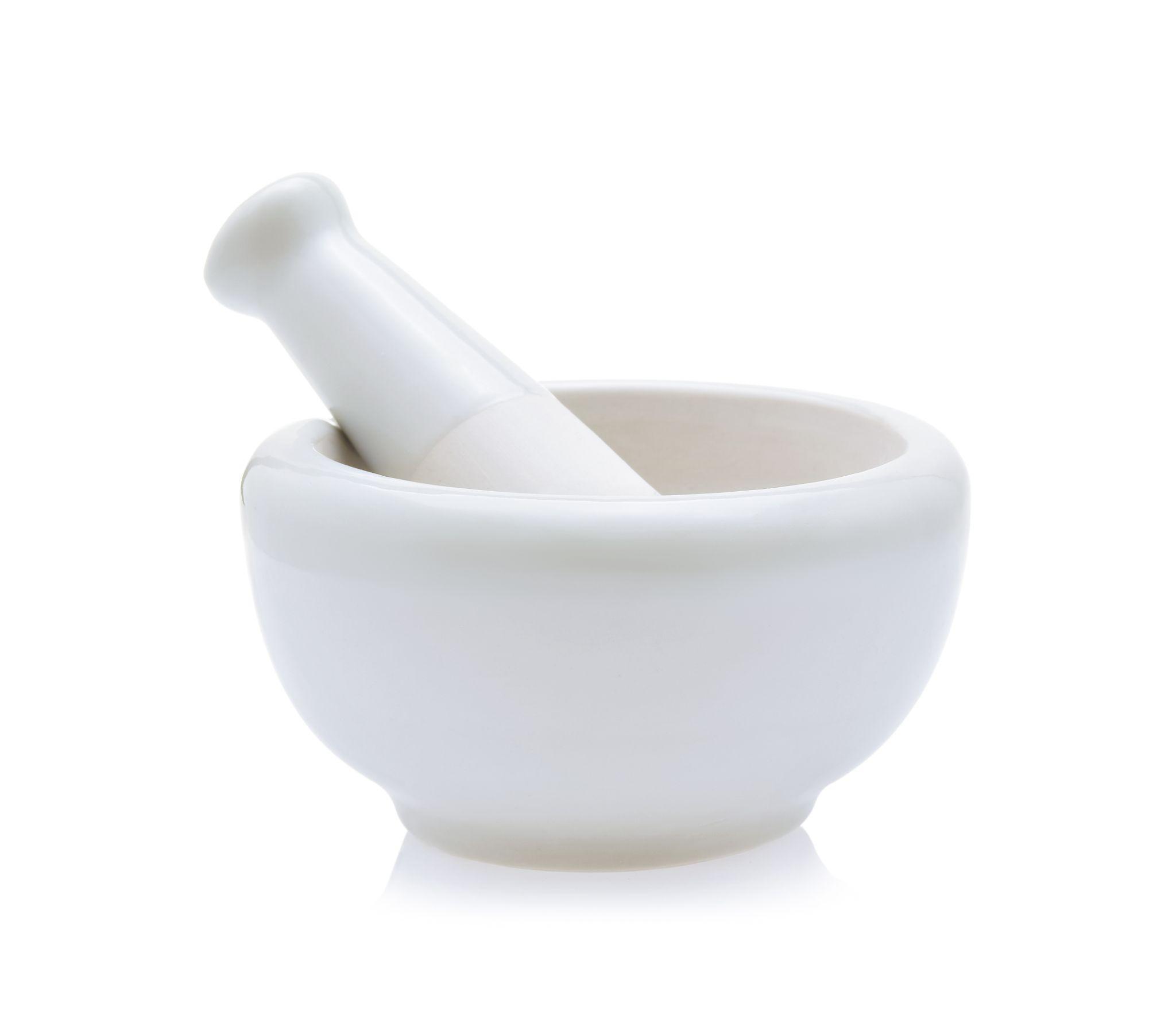
Figure 2
Ointment Slab

Techniques for Topical Dosage Form Preparation
Ointments
Ointments are semisolid preparations applied externally to the skin or mucous membranes.1 They are used to deliver drugs topically to the skin, protect injured areas, provide hydration, or produce an emollient effect.1 These dosage forms provide ease of administration, leading to good patient adherence, though some patients may not prefer the greasiness.1
An essential component of compounding ointments is selecting an appropriate ointment base.1 The ointment base serves many vital roles. First, they provide a vehicle for delivering medication, either locally or systemically.4 They can also hydrate the skin and offer protection from the environment, chemicals, and physical irritants.4 Compounding personnel have a variety of ointment bases from which to choose, all of which have varying functions and characteristics that should be reviewed and considered before selection. Drug-specific factors include whether the API is physically and chemically stable in the selected base and if the API will be bioavailable in the formulation.4
Regarding the ointment base itself, pharmacy personnel should also consider its spreadability and occlusive nature. Spreadability is how easily a substance can be applied to the skin.4 Patients tend to prefer spreadability because it tends to be less greasy.4 Spreadability is especially important when compounding with lipid-containing oleaginous, absorption, and water-in-oil (W/O) emulsion bases.4 Occlusiveness is defined as a water retention characteristic of a topical preparation that prevents the evaporation of moisture from the skin.4 Occlusiveness is particularly beneficial for patients who require extended contact with the drug and skin.4 Hydrocarbons have the most occlusive character among the four general classes of lipids, and oleaginous hydrophobic bases have excellent occlusiveness.4 Examples include white petrolatum and white ointment. There are also patient-specific factors to consider.4 These include whether the patient is sensitive to different preservatives or has a skin condition that may require using a base that avoids dryness.4
Table 4 details the degree of skin penetration for various ointment bases, and Table 5 provides the polarity and spreadability of common lipid components of ointment bases.1,4 Table 6 describes the five types of ointment bases with regard to varying characteristics, such as water washability.1,4
Table 4
Ointment Base by Skin Penetration
| Base Type | Skin Penetration | Examples |
| Epidermic | None or very little | Oleaginous |
| Endodermic | Into the dermis | Absorption |
| Diadermic | Into and through the skin | Emulsion, water-soluble |
Table 5
Polarity and Spreadability of Common Lipid Components of Ointment Bases
| Most Polar | Lipid Category | Examples | Most Spreadable |
| Silicone oils |
| ||
| Glycerides |
| ||
| Least Polar | Moderately polar waxes |
| Least Spreadable |
Table 6
Types of Ointment Bases, Properties, and Examples
| Property | Oleaginous Bases | Absorption Bases | Water-in-oil (W/O) Emulsion Bases | Oil-in- water (O/W) Emulsion Bases | Water Miscible Bases |
| Composition | Oleaginous -petrolatum-based | Oleaginous base + W/O emulsion | Oleaginous base + W/O emulsifier + water | Oleaginous base + O/W emulsifier + water | PEG |
| Affinity for water | Primarily hydrophobic, white wax improves the water-absorbing capacity | Can incorporate water | Can incorporate water | Can incorporate water + will soften and lose semi-solid consistency | Can incorpo- rate water + will soften and lose semi-solid consistency |
| Water washability | Poor | Poor | Poor | Good | Very good |
| Occlusive nature | Occlusive; used for its emollient effect | Less occlusive (greasy) than hydrocarbon bases | Less occlusive than hydro-carbon bases but more cosmetically elegant | Non-occlusive and nongreasy | Non-occlusive and nongreasy |
| Uses | Protectant, emollient, vehicle | Protectant, emollient, vehicle for solids & aqueous solutions | Emollient, cleansing cream, vehicle | Emollient, vehicle | Vehicle |
| Examples | Petrolatum, white ointment | Hydrophilic petrolatum, anhydrous lanolin | Cold cream, rose water ointment | Hydrophilic ointment, emollient cream | Hydrophilic ointment, emollient cream, PEG ointment |
Compounding Techniques for Ointments
When preparing an ointment, the initial step is to triturate the solid materials to reduce particle size.1,4 This will also prevent any grittiness in the final preparation. Particle size reduction can be done using a mortar pestle.1,4 Next, the API will need to be incorporated into the ointment. Manual and mechanical methods are available to accomplish this. Mechanical methods are typically preferred because they allow greater reproducibility and maintain a more hygienic preparation.6 Equipment for manual methods includes using an ointment tile, ointment pad, or mortar and pestle.1,4 Ointment tiles tend to be preferred. These pieces of equipment are composed of either glass or porcelain, and their construction offers a suitable material for mixing that is non-absorbent.1,4 An angled metal spatula helps incorporate the API into the ointment, allowing for more dexterity and strength of mixing during incorporation.1,4 Using a rubber or plastic spatula typically is not helpful, as it won’t allow the application of enough pressure for thorough mixing. They may be warranted if the ingredients used in the preparation would react with metal.1,4
For mechanical mixing, an electronic mortar and pestle (Unguator) can be utilized. This piece of equipment allows the mixtures, such as suspension ointments, to be prepared in the same container in which they will be dispensed.6 Benefits of EMP technology include easy and efficient loading of jars onto the machine, compact size, and reduced height of the equipment, which allows for ease of placement in compounding areas, and validation routines that enhance the quality assurance aspect of the compounding process.6
A common technique for incorporating an API into an ointment base is to use levigation.1,4 As noted above, levigation encompasses reducing the particle size of a drug by triturating (or spatulating) it with a small quantity of either a melted ointment base or an insoluble liquid.1,4 This process is crucial, as it helps to mix the solid into the ointment base and ensure the final preparation is smooth, consistent in texture, and non-gritty.1,4 The choice of levigating agent will depend on its compatibility with the ointment base. The formulation may already include an ingredient that could serve as a levigating agent and, in that case, can be selected as the agent of choice.1,4
Geometric dilution should be used to incorporate the API in the base.1 This is crucial to dilute the drug and ensure the final preparation is homogenous. Heat is required when preparing bases containing ingredients with high melting points.1 In these cases, either a water bath or direct heat can be used.1 Water baths are preferred for applications that need lower temperatures, while direct heat is useful when higher temperatures are needed.1 This can be accomplished using a hot plate while being cautious not to burn the preparation. When using heat, the ingredients with the highest melting points are added first, followed by those with lower melting points.1
Once all ingredients have been added, the preparation is mixed and thoroughly cooled.1 If the preparation is cooled too rapidly, it could become lumpy and lack pharmaceutical elegance for the patient.1 General tips for the preparation of ointments are detailed in Table 7.1
Table 7
Tips for Preparing Ointments1
| Two or more ointments can be combined by mixing them in a plastic bag |
| To transfer an ointment directly from a plastic bag into packaging, cut one corner of the plastic bag and squeeze the contents into the ointment tube or jar |
| The workability of drugs that build up electrostatic forces (like sulfur) can be enhanced with a few drops of mineral oil or a similar solvent |
| Volatile solvents should not be used in levigating powders. The solvent will evaporate and leave crystals of the drug |
| Heat the aqueous phase a few degrees higher than the oil phase before mixing when oil and aqueous phases are mixed together |
| Cool ointment preparations to just a few degrees above solidification before pouring into tubes or jars. Cooling will minimize layering of the ointment in the packaging |
| Heat softens ointments, making it easier to fill jars and tubes. Do this cautiously to prevent stratification of the ingredients |
| If a water-containing base is used and the drug is water-soluble, dissolve the drug in a minimum quantity of water before incorporating it into the base. |
Table 8 provides an example of an ointment preparation.1
Table 8
Example of Ointment Preparation: Formulation: Hydrophilic Petrolatum1
| Ingredient | Quantity | Purpose |
| Cholesterol | 30 g | Emulsifier |
| Stearyl alcohol | 30 g | Thickener |
| White wax | 80 g | Thickener |
| White petrolatum | 860 g | Base |
Steps:
Calculate the required quantity of each ingredient for the total amount of ointment to be prepared
Accurately weigh or measure each ingredient
Place the stearyl alcohol, white wax, and white petrolatum in a suitable container and melt the ingredients using a water bath
Add the cholesterol, and stir until the mixture is blended completely
Remove the mixture from the bath and stir until congealed
Package and label the preparation
Pastes
Pastes are thick, stiff ointments that do not melt at body temperature.1 They contain a higher percentage of solid material (often 20-50%) compared to ointments.1 Pastes are less greasy and more absorptive, making them suitable for protective and absorptive functions.1 They are used to protect skin areas from irritation and moisture, such as in diaper rash or to provide a protective barrier in conditions like psoriasis.1 Tips for preparing pastes are provided in Table 9.1
Table 9
Tips for Preparing Pastes1
| If a preparation is prepared using fusion, it should be cooled before being packaged in tubes or jars. If poured while hot, they tend to separate on cooling. These preparations should be cooled to a temperature at which they are viscous fluids, then poured into containers. |
| If a preparation is too stiff and difficult to apply, compounding personnel should decrease the concentration of the waxy components. |
| Paste preparations with relatively high solids content generally do not require levigating agents. The easiest method of preparing pastes involves the fusion technique (heat), which improves their workability. |
Creams
Creams are defined as opaque, soft solids or thick liquids that are used externally.1 Formulations include medications dissolved or suspended in a water-soluble or vanishing cream base.1 Preparations can be classified as oil-in-water or water-in-oil.1
Tips for preparing creams are provided in Table 10 below.1
Table 10
Tips for Preparing Creams1
|
|
|
|
|
|
|
|
|
Gels
Gels (Table 11) are semisolid systems consisting of small inorganic particles or large organic molecules interpenetrated by a liquid.1 They can be classified into two types: single-phase and two-phase systems.1 Single-phase gels contain no discrete particles and are formed by macromolecules uniformly distributed throughout a liquid.1 Two-phase gels, or magmas, contain small discrete particles.1
Gels are useful for delivering various topically used drugs due to their high water content and ability to provide a cooling effect upon application.1 They are particularly beneficial for inflammatory skin conditions and for delivering medications that require a high degree of local penetration.1 These formulations include gelling agents and are a versatile delivery system compatible with many different types of drugs and relatively easy for compounding personnel to prepare.1
Table 111
Classification and Description of Gels
| Class | Description | Examples |
| Inorganic gels | Usually, two-phase systems | Aluminum hydroxide gel, bentonite magma |
| Organic gels | Usually, a single-phase system | Carbomer, tragacanth |
| Hydrogels (jellies) | Inorganic; natural, and synthetic gums; organic | Pectin, sodium alginate, tragacanth |
| Organogels | Animal and vegetable fats; soap base greases; hydrophilic organogels | Cocoa butter; lard; aluminum stearate with heavy mineral oil gel |
Preparations of Compounded Gels
When compounding a gel preparation, compounding personnel should recognize that the characteristics of the gelling agent will determine the technique used to make the compound.1 General preparation techniques are summarized in Table 12, and a description of preparing aqueous dispersions of carbomer gels is provided below.
Table 121
General Gel Preparation Techniques
| The active drug can be added before or after the gel is formed. Adding it before gelling may help with uniformity if the drug does not interfere with the gelling process |
| An easy preparation method is to place the active drug and gel in a plastic bag and then knead them to mix thoroughly. Once ready, the corner of the bag can be cut off, and the preparation can be squeezed into the packaging |
| Premixing gelling agents with other powders can help with the dispersion process |
| Adding alcohol to some gels may decrease their clarity and viscosity |
| When preparing a gel, all agents should be dissolved in the solvent or vehicle before the gelling agent is added |
| pH is vital in determining the final viscosity of carbomer gels |
| Gelatin gels can be made by dispersing the gelatin in hot water and then cooling the gel |
| Natural gums should be allowed to hydrate for 24 hours in order to ensure a homogenous gel |
Familiarity with the techniques for preparing aqueous dispersions of carbomer gels is recommended. Carbomer resins are typically used in aqueous systems.1 To quickly achieve dispersion of the carbomer during preparation, it is recommended that compounding personnel slowly add the carbomer powder into the vortex of a liquid while stirring rapidly. This can be accomplished using a sieve to distribute the powder into the rapidly stirred liquid.1 A greater rate of agitation is preferred, but extremely high shear mixers should be avoided as they can break down polymers and reduce gel viscosity.1 Instead, a variable-speed mixer can be used. This device is useful as it incorporates less air into the gel.1 Once the powder has been fully incorporated, the stirring speed can be reduced, and mixing should continue for 10-15 minutes to avoid trapping excess air.1
Once the carbomer has been dispersed, the next step is to add a neutralizer.1 Sodium hydroxide or potassium hydroxide may be selected if the dispersion contains less than 20% alcohol.1 If it contains up to 50% ethanol, triethanolamine can be used.1 The neutralizing agent will thicken the preparation.1 It is important to remove any air bubbles that may be present before adding this agent.1 This can be done simply by allowing the preparation to stand or using an ultrasonic unit.1 Table 13 provides an example of a gel formulation.
Table 13
Example Gel Formulation: Estradiol 2 mg/mL Vaginal Gel
|
|
|
|
|
|
|
|
|
|
|
|
Steps:
Calculate the quantity of each ingredient required for the prescription
Accurately weigh or measure each ingredient
Levigate the estradiol with the polysorbate 80
Geometrically add the methylcellulose 2% gel and mix thoroughly.
Package and label the product.
Additional Resources
Compounding pharmacists and pharmacy technicians who wish to learn more about this topic may find the following references useful.
Remington
Martindale
The Art, Science, and Technology of Pharmaceutical Compounding
The International Journal of Pharmaceutical Compounding
compoundingtoday.com
The Role of the Pharmacy Technician
Nonsterile compounding is a specialized skill of pharmacy technicians. They can assist in preparing safe, high-quality, and effective topical compounds by utilizing skills in weighing, mixing, and measuring, as well as techniques specific to each dosage form. Pharmacy technicians can also assist pharmacists in determining if a patient has experienced any issues with their compounded medications.
Summary
Nonsterile compounding encompasses a variety of dosage forms, each with a specific purpose and associated patient benefits. Compounding personnel, including pharmacists and pharmacy technicians, should be skilled in preparing various dosage forms to produce safe, quality, and effective topical and transdermal medications. This includes skills to prepare ointments, creams, pastes, and gels.
References
Allen, Lloyd. The Art, Science, and Technology of Pharmaceutical Compounding, 6th Edition. APhA. October 2020.
General Chapter: USP. Pharmaceutical Compounding - Nonsterile Preparations <795>. In: USP–NF. Rockville, MD: USP; Dec 1, 2020
Benson HAE, Grice JE, Mohammed Y, Namjoshi S, Roberts MS. Topical and Transdermal Drug Delivery: From Simple Potions to Smart Technologies. Curr Drug Deliv. 2019;16(5):444-460. doi:10.2174/1567201816666190201143457
Nagel K, Ali F, Al-Khudari S, et al. Extemporaneous compounding of medicated ointments. Int J Pharm Compd. 2010;14(6):472-478.
PharmLabs. The Pharmaceutics and Pharmaceutical Compounding Laboratory. Accessed June 5, 2026. https://pharmlabs.unc.edu/
Standridge R. Mixing In a Compounding Pharmacy in the 21st Century. Int J Pharm Compd. 2015;19(6):479-484.
DISCLAIMER
The information provided in this course is general in nature, and it is designed solely to provide participants with continuing education credit(s). This course and materials are not meant to substitute for the independent, professional judgment of any participant regarding that participant’s professional practice, including but not limited to patient assessment, diagnosis, treatment, and/or health management. Medical and pharmacy practices, rules, and laws vary from state to state, and this course does not cover the laws of each state; therefore, participants must consult the laws of their state as they relate to their professional practice.
Healthcare professionals must consult their employer, healthcare facility, hospital, or other organization for guidelines, protocols, and procedures to follow. The information provided in this course does not replace those guidelines, protocols, and procedures, but is for academic purposes only, and this course’s limited purpose is for the completion of continuing education credits.
Participants are advised and acknowledge that information related to medications, their administration, dosing, contraindications, adverse reactions, interactions, warnings, precautions, or accepted uses is constantly changing. Any person taking this course understands that such a person must make an independent review of medication information before any patient assessment, diagnosis, treatment and/or health management. Any discussion of off-label use of any medication, device, or procedure is informational only, and such uses are not endorsed hereby.
Nothing contained in this course represents the opinions, views, judgments, or conclusions of RxCe.com LLC. RxCe.com LLC is not liable or responsible to any person for any inaccuracy, error, or omission with respect to this course or course material.
© RxCe.com LLC 2026: All rights reserved. No reproduction of all or part of any content herein is allowed without the prior, written permission of RxCe.com LLC.
RxCe.com
© RxCe.com LLC 2025: All rights reserved.