
HOSPICE: UNDERSTANDING AND OPTIMIZING COMFORT CARE
Faculty:
Kristina (Tia) Neu, RN
Kristina (Tia) Neu is a licensed Registered Nurse and author currently developing in-service training for healthcare professionals. She is a National Board-Certified Health & Wellness and Lifestyle Medicine Coach. Her work experience includes several areas of the healthcare profession, such as psychiatric nursing, medical nursing, motivational health coaching, chronic case management, dental hygiene, cardiac technician, surgical technician, and clinical director of a Clinically Integrated Network (CIN).
Pamela Sardo, PharmD, BS
Pamela Sardo, PharmD, BS, is a freelance medical writer and licensed pharmacist. She is the founder and principal at Sardo Solutions in Texas. Pam received her BS from the University of Connecticut and her PharmD from the University of Rhode Island. Pam’s career spans many years in retail, clinics, hospitals, long-term care, Veterans Affairs, and managed health care responsibilities across a broad range of therapeutic classes and disease states.
Abstract
Medicare hospice regulations and the Consolidated Omnibus Reconciliation Act (COBRA) of 1985 created a permanent federal hospice benefit. The word hospice is often misunderstood and is frequently associated with imminent death. Hospice emphasizes quality of life, focuses on the patient's and family's wishes, and eases distress at the end of life. Hospice provides a wide range of services related to a terminal illness at no out-of-pocket cost to the patient or family. Hospice care prioritizes comfort, emotional and spiritual needs, and the minimization of pain and suffering. The number of hospice agencies has increased over the years. Hospice care management involves healthcare providers with clinical expertise in advanced illness and end-of-life care, including symptom management, pharmacotherapy, and support for the transition of care.
Accreditation Statements
In support of improving patient care, RxCe.com LLC is jointly accredited by the Accreditation CouncilTM for Continuing Medical Education (ACCME®), the Accreditation Council for Pharmacy Education (ACPE®), and the American Nurses Credentialing Center (ANCC®), to provide continuing education for the healthcare team.

Joint Universal Activity Number: The Joint Accreditation Universal Activity Numbers assigned to this activity are as follows:
Pharmacists: JA4008424-0000-26-173-H01-P
Pharmacy Technicians: JA4008424-0000-26-173-H01-T
Credits: 2 contact hour(s) (0.2 CEU(s)) of continuing education credit.
Credit Types:
Pharmacy - 2 Credits
Type of Activity: Application
Media: Computer-Based Training (i.e., online courses)
Estimated time to complete activity: 2 contact hour(s) (0.2 CEU(s)), including Activity Pre-Test, Post-Test, and Activity Evaluation.
Release Date: August 3, 2026 Expiration Date: August 3, 2029
Target Audience: This educational activity is for Pharmacists and Pharmacy Technicians
How to Earn Credit: From August 3, 2026, through August 3, 2029, participants must:
Read the “learning objectives” and “author and planning team disclosures;”
Take the “Educational Activity Pre-Test;”
Study the section entitled “Educational Activity;” and
Complete the Educational Activity Post-Test and Activity Evaluation. The Educational Activity Post-Test will be graded automatically. Following successful completion of the Educational Activity Post-Test with a score of 70% or higher, a statement of participation will be made available immediately. (No partial credit will be given.)
CE Credits: Credits for this course will be uploaded to CPE Monitor® for pharmacists and pharmacy technicians.
Statement of Need
Hospice care provides comfort care, dignity, and quality of life for individuals requiring end-of-life care due to a terminal illness. There is strong evidence that patients with serious illnesses have better end-of-life care if they receive palliative care. Despite this compelling evidence, a significant number of patients who may be eligible for hospice care are not referred to hospice in a timely manner. This activity addresses this gap.
Learning Objectives: Upon completion of this educational activity, participants should be able to:
Understand how hospice care fits into the broader palliative care model
Recall the Medicare eligibility requirements for hospice care
Identify the basic services of hospice care
Describe an interprofessional collaborative approach to providing hospice care
Identify medications provided in a hospice patient Comfort Care kit
Disclosures
The following individuals were involved in planning, developing, and/or authoring this activity: Kristina (Tia) Neu, RN; and Pamela Sardo, PharmD, BS. None of the individuals involved in developing this activity has a conflict of interest or financial relationships related to the subject matter. There are no financial relationships or commercial or financial support relevant to this activity to report or disclose by RxCe.com or any of the individuals involved in the development of this activity.
© RxCe.com LLC 2026: All rights reserved. No reproduction of all or part of any content herein is allowed without the prior, written permission of RxCe.com LLC.
Educational Activity Pre-Test
Which statement is most correct regarding palliative care and hospice care?
Hospice treats anyone with a serious illness, and palliative care treats those with a life expectancy < 6 months
Palliative care and hospice care provide comfort care, dignity, and quality of life for individuals requiring end-of-life care.
In end-of-life care, treatments are discontinued when the patient experiences adverse events.
Hospice care does not include treatments that control symptoms.
Which of the following is a likely reason a terminally ill individual is not referred to hospice care early enough?
A late diagnosis of an advanced disease
The provider does not make the referral to avoid lost insurance revenues
Hospice coverage is limited to inpatient care
A patient’s dietary needs often make hospice impractical
What is the purpose of lorazepam in the comfort care kit?
To crush into a paste to apply to the chest if a patient has dysphagia
To treat anxiety, or as an off-label drug for nausea and insomnia
To use as an antipsychotic for treating hallucinations in hospice
To place in a rectal enema if the patient cannot swallow
Educational Activity
Hospice: Understanding and Optimizing Comfort Care
Introduction
Hospice care is a type of palliative care that seeks to provide comfort, dignity, and quality of life for individuals with a terminal illness. Hospice care today is largely delivered through the government healthcare system. Patients who meet specific criteria are eligible for this benefit. Hospice care is not a new concept, but the philosophy behind it is changing. Hospice care is also advancing with new technologies. This course will review the goals of hospice care, the distinctive role of hospice care within the broader palliative care model, hospice care eligibility, barriers to care, the services typically provided, interprofessional collaboration in hospice care, and future trends in hospice care.
The Emergence of Hospice Care in the United States
A British physician, Dame Cicely Saunders, worked with terminally ill patients in the London area in the 1950s.1 She established St. Christopher’s Hospice in London in 1967.1,2 Seven years later, the Connecticut Hospice became the first hospice in the United States.2
In 1986, the United States Congress passed the Consolidated Omnibus Budget Reconciliation Act (COBRA) of 1985.3 It stated that terminally ill patients in nursing facilities could elect Medicare hospice care.3 COBRA also allowed states to add a hospice benefit to their Medicaid programs.3
In 2022, approximately 1.8 million Americans were reported to have received hospice services.4 In 2018, the Medicare Patient Access to Hospice Act was signed into law.5 This Act allows physician assistants to manage and provide hospice care to Medicare patients.6 This change has improved continuity of care, because now a patient can remain with their physician assistant instead of being forced to change providers to a medical doctor or nurse practitioner.6,7
Defining Hospice Care
Hospice care provides comfort care, dignity, and quality of life for individuals requiring end-of-life care due to a terminal illness.8 End-of-life care is the point at which a patient is not responding to treatment, and the physician believes the patient has only a short time to live, often < 6 months.8 In these cases, hospice care does not include further interventions to cure the terminal illness, but may include treatments that provide symptom control, such as high blood pressure medications.8
The terms palliative care and hospice care are related but not completely interchangeable. Palliative care is an umbrella model of care, or an approach to care that may include hospice care.8 Palliative care and hospice care both focus on the comfort, care, and quality of life of individuals with a serious illness.8 A patient receiving palliative care may receive treatment to slow or cure their illness.8
Hospice care has specific eligibility requirements a patient must meet to receive the Medicare/Medicaid hospice benefit. Hospice is usually provided in the patient’s home to allow comfort and the presence of loved ones.8
Table 1 clarifies the distinctions between palliative care and hospice.
Table 1
Palliative Care and Hospice Distinctions8
| Question | Palliative Care | Hospice |
|---|---|---|
| Who is treated? | Anyone with a serious illness | Anyone with a serious illness who a doctor believes only has a short time to live, often <6 months |
| Will Medicare pay? | It depends on the benefit design and treatment plan | Yes, it pays for hospice charges associated with the terminal illness |
| Does private insurance pay? | It depends on the plan | It depends on the plan |
| How long will the patient be cared for? | This depends on what care is needed and the insurance plan | As long as the hospice criteria are met, and there is a life expectancy of months, not years |
| Where will the patient receive care? | Home Assisted living Nursing home Hospital Palliative care clinic | Home Assisted living Nursing home Hospital Hospice facility |
The Current State of Hospice Care
There is strong evidence that patients with serious illnesses have better end-of-life care if they receive palliative care.9 Patients who access hospice care fare better in all respects than those who do not, and early access is better than late access.9
Hospice care is almost universally government-supported and regulated.8,10 Most hospice care is paid through Medicare.8,10 Some patients may be eligible for benefits through a joint federal and state Medicaid program.8 Veterans may be eligible for palliative care through the Department of Veterans Affairs. In some cases, private health insurance may cover certain hospice care services.8
Medicare beneficiaries receiving end-of-life care account for a significant portion of Medicare spending.10 Estimates of the percentage of Medicare costs attributable to patients in the last year of life range from 13% to 25%.10 Medicare is working to control these expenditures by focusing on opportunities to manage patient populations more efficiently and at lower cost.10 Greater use of hospice care could reduce costs for the Medicare program while improving quality-of-life outcomes.10 The trends are in this direction. Recent reports show that from 2003 through 2017, the number of Americans dying at home rose from 23.8% to 31%. This was the first time in decades that patients dying at home passed the number dying in hospitals (29.8%) and in nursing facilities (20.8%).11,12 The home setting has become the most common place to die for the first time in decades.12
The use of hospice care has increased greatly over recent decades.13 Of all Medicare beneficiaries who died in 2019, 53.1% used hospice care.14 Hospice care is higher among patients who receive home health care.14 The rate of hospice use increases with age, and is higher among women and Whites.15
Barriers to Using Hospice Care
Despite the compelling evidence in favor of hospice care for patients with terminal illnesses, a significant number of patients who may be eligible for hospice care are not referred to hospice in a timely manner.9,16 This may be as high as one in three.16
One barrier is the lack of resources.9 Some rural geographies may have fewer trained professionals or less training in addressing terminal illnesses beyond oncology.9 There may also be a lack of awareness of resources. Some hospice centers are well integrated; others are stand-alone institutions, and integration may be more fragmented. In addition, medical school residents infrequently have access to palliative care rotations to learn about hospice.9
Another reason patients are not referred to hospice care is a misunderstanding of what palliative care is and what the eligibility requirements are for hospice care.9,16 This lack of knowledge is worsened by variable interpretations of Medicare/Medicaid regulations.16
Late referrals may also occur due to poor prognostication, late diagnosis of advanced disease, or a primary care provider’s overly optimistic beliefs about survival time.16 This could be the result of insufficient communication with the interprofessional team.16
Another barrier is a reluctance to refer.9 Physicians may fear upsetting patients and do not want to abandon them. Some professionals do not understand the benefits of referral.9 This could also involve a patient's and/or family's reluctance to accept a referral.9,17 Sometimes there is a cultural reason, or the perception that hospice means immediate demise. All these factors may lead to delayed participation.9,17 Shorter or late hospice enrollment may result in patient needs going unmet, and family members having a greater difficulty in bereavement.16
One way to identify patients who could qualify for hospice and encourage participation is to know how to introduce people to hospice. When introducing hospice to patients, families, or clinicians, researchers have proposed that a ‘surprise question’ can be asked.18 This question has been used to identify patients at high risk of death who might benefit from hospice services when the response is ‘no.’18 The surprise question inquires: “Would I be surprised if this patient died in the next 12 months?” This question may help identify patients who are eligible for covered hospice services.18
Hospice Eligibility
To qualify for hospice, a physician must confirm that the patient is expected to die within six months if the illness runs its normal course.19,20 A determination that a patient is expected to die within six months is based on a clinical judgment that may include unknown or variable factors.20 Changes in a patient’s status must be documented in the patient’s clinical record.20
Clinical Status Supporting a Referral to Hospice
Changes in a patient’s clinical variables may support a referral to hospice. When a patient’s health declines, difficult-to-treat symptoms can appear. Symptoms may include recurrent or intractable infections, dysphagia (difficulty swallowing) leading to recurrent aspiration, dyspnea (trouble breathing), nausea, vomiting, diarrhea, poor responsiveness to treatment, and inadequate oral nutrition.20 Pain requiring increasing doses of analgesics may be identified. Patients may present with a decline in systolic blood pressure, ascites (abdominal fluid), weakness, or a change in level of consciousness.20 Worsening laboratory results may also be present.
Comorbidities are considered when determining a decision to begin hospice. These comorbidities and their severity can impact life expectancy. These may include cancer, chronic obstructive pulmonary disease, congestive heart failure, diabetes mellitus, neurologic disease (such as stroke or Parkinson’s), or renal failure, among others.20
An increase in emergency room visits, hospitalizations, or physician visits related to the primary hospice diagnosis may occur.9 Assistance with activities of daily living may be required, and other issues, such as pressure ulcers, may be present.20
The following case exemplifies how comorbidities affect life expectancy. Consider an 85-year-old male dialysis patient with diabetes. The patient contracted SARS-CoV-2. Dialysis was briefly suspended during COVID treatment. The patient survived COVID, but he experienced a state of shock after restarting dialysis. The shock symptoms included cold, pale skin and mottling red blotches all over the body. This led the healthcare team to cease further dialysis. Thereafter, the team was guided by an assessment of the patient, concluding that the patient was eligible for hospice.
Admission to Hospice
Baseline data are established on admission to hospice. This data may be taken from existing electronic medical records.20 Once a referral to hospice is completed, the patient must be cared for by an Interdisciplinary Group (IDG) in order to receive Medicare/Medicaid coverage.
The Interdisciplinary Group in Hospice Care
The IDG employs an interprofessional collaborative approach to hospice care.21,22 This multidisciplinary team includes the hospice medical director, who is a doctor of medicine or osteopathy, a registered nurse (RN) patient care coordinator, social worker, and a spiritual advisor or other counselor. The hospice medical director is responsible for managing terminal illness and any related conditions. The registered nurse (RN) patient care coordinator visits regularly and makes ongoing assessments of physical, emotional, and spiritual symptoms. The social worker meets with the patient and family to assess financial issues, emotional stress, the safety of the patient’s environment, and coping skills. The chaplain or spiritual care coordinator respects individual beliefs and practices and is available for spiritual and/or religious support.23,24
Depending on the goals, medical requirements, and staffing, the IDG may include other specialists, including the following:23,24
The patient’s primary physician, physician assistant, or nurse practitioner may continue to be involved in hospice care
Hospice aide provides personal care, homemaking services, and other supportive services
A pharmacist may be part of the hospice care team to review medications and provide input to manage symptoms to improve the patient’s quality of life
A bereavement coordinator may provide follow-up, support, and grief education for loved ones throughout the 13 months following the patient’s death
Volunteers trained by hospice staff may provide a variety of services, including companionship and a supportive presence. Volunteers are screened by hospice staff, which is particularly useful for patients who live alone and have no family or friends nearby; hospice volunteers can provide meals, light housekeeping, and companionship.
Other professionals are available based on the patient’s needs, including physical, occupational, speech therapists, or dietitians
Plan of Care
In hospice care, individualized patient goals are identified, and a coordinated plan of care (POC) is developed to include all services necessary to manage the terminal illness.23 The hospice medical director, the patient, and the primary caregiver collaborate to identify the patient's and family's goals.23 Medicare requires the hospice POC to include interventions to manage pain and symptoms, and to provide a detailed statement of the scope and frequency of services.23 The POC also includes measurable outcomes expected, necessary drugs, medical supplies, and appliances. Documentation of the patient’s or representative’s level of understanding, involvement, and agreement with the POC is also included in the POC.23
The POC is overseen by the RN care coordinator. Each patient is assigned an RN care coordinator.23 The RN coordinator ensures that the POC is updated, individualized, and relevant to the needs of the patient and family by continuously assessing each patient’s and family’s needs. The POC also documents and revises patient care goals and objectives.23 The RN communicates changes in services and facilitates the exchange of information.
Hospice staff may also identify and document patient needs unrelated to the terminal illness and note who is addressing them. Families may also supplement hospice services with care from other sources.
Hospice patients generally receive a few visits every week. Visit frequency and duration may depend on the patient’s condition, staffing, or other resources. During home visits, hospice staff develops a relationship with the patient, which contributes to patient comfort.23
Ongoing Patient Assessment
A patient’s clinical status requires ongoing assessment.19,20 Under Medicare Conditions of Participation, the hospice interdisciplinary group must review and update the patient's comprehensive assessment and plan of care at least every 15 calendar days, or more frequently if the patient's condition changes.25,26
Dialogue and documentation are essential for establishing and maintaining an accurate picture of the patient’s functional status. An extensive medication review occurs at hospice IDG meetings. This allows the hospice pharmacist to identify and recommend changes in nonessential or overly burdensome medication therapy. The pharmacist may recommend adding medications to manage symptoms and comfort.27
The hospice pharmacist may also contribute to the development of medication-use policies and procedures to support compliance with federal and state regulations and best practices.27 The hospice pharmacist will often participate in symptom assessment, laboratory monitoring, medication management, and prescribing in states that grant prescriptive authority to pharmacists through collaborative practice agreements (CPAs).27
Occasionally, a patient’s condition improves, resulting in an expected life expectancy of more than six months. If a Medicare patient lives longer than the expected 6 months, hospice coverage may continue if the physician and the hospice team recertify eligibility, or the patient may be discharged from hospice.19,20 Medicare hospice benefits do not expire, so if a patient is discharged from hospice, they may reapply if their health status declines.28
Covered Benefits
For terminally ill individuals who no longer pursue curative treatments, a hospice benefit covers many services to address the needs associated with the conditions described above. The hospice benefit includes nursing care, counseling, palliative medications, and up to five days of respite care to assist family caregivers.29 Hospice care is most often provided in patients’ homes.29 Medicare patients who elect the hospice benefit have little to no cost-sharing liabilities for most hospice services associated with the causative terminal illness.29 The Hospice Benefit Provisions figure below illustrates the broad range of hospice services.
Hospice Benefit Provisions30
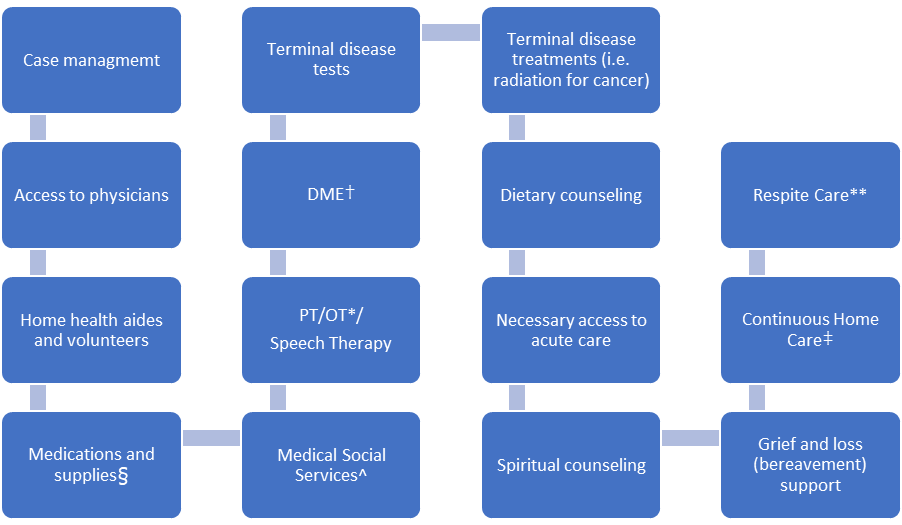
*PT/OT- physical therapy, occupational therapy
^Medical Social Services- to access community services
†DME- durable medical equipment (i.e., hospital bed, mucous suction device, bed wedge)
‡Continuous Home Care (nurse ≥8 hours/day)
**Respite Care- Admit a patient to a facility for up to 5 days for caregiver rest
§Bedpads, adult diapers, wipes
Comfort Care Kits
When individuals join hospice, medications that are no longer essential are discontinued. A statin for elevated cholesterol will be discontinued. A cream or biologic for psoriasis will be discontinued. During hospice care, various medications will be provided to the patient. As symptoms appear, such as anxiety, nausea, pain, or increased secretions, an emergency hospice kit eliminates the need to wait for critical medications to be delivered.31 These kits are prepared early in the hospice care process and delivered proactively to the patient’s location, generally before they are needed. While the medicines in the kit may vary depending on one’s specific health needs, certain medications are frequently included. These kits are often referred to as comfort care kits.31
The hospice nurse or the hospice pharmacist explains the purpose and proper administration of each medication in the kit. It is more efficient and easier for a family and the patient to receive the kit upon joining hospice care than to wait for symptoms to appear, which may arise during a stressful medical emergency.31 Some of the medications have off-label uses in hospice care. The Food and Drug Administration has not reviewed or determined the comprehensive safety and efficacy in these limited off-label uses. The full prescribing information should always be reviewed for safety and efficacy details.
The following medications may be found in a hospice comfort kit, along with the symptoms they may treat:31
Morphine Liquid is a narcotic that is used to treat pain and, in hospice, has an off-label use for shortness of breath
Lorazepam is a medication used to treat anxiety, and in hospice, has an off-label use in nausea and insomnia
Drops of Atropine are used to treat wet respirations, which, at the end of life, may be referred to as death rattles
Haloperidol is an antipsychotic that is effective for treating agitation and terminal restlessness in hospice
Prochlorperazine is available in pill or rectal suppository form and is used to treat nausea and vomiting
Promethazine is an antiemetic to treat nausea and vomiting
Bisacodyl rectal suppositories are for symptoms of constipation
Senna is a laxative made from plants and is used to treat constipation
Saline laxative rectal enema is for constipation when other treatments are ineffective
Additional medications may be added based on the hospice diagnosis. For instance, if a patient with a brain tumor is at risk of seizures, the comfort kit may include diazepam rectal suppositories. Families should always keep hospice medications and all other medications out of reach of children. Hospice medications should be kept in a secure location to minimize the risk of diversion.
Educational Pearls and Resources
Patient time under hospice care varies. Hospice is most beneficial when the range of services is provided for a month or more. After experiencing the quality and comfort of hospice teams and services, families who have utilized hospice often say they wish they had requested hospice earlier in the illness process.
In many cases, the family members of hospice patients continue to provide day-to-day care. Families in hospice care can rely on assistance and advice 24 hours a day, 7 days a week from hospice staff. Because of the hospice benefit's design, when a crisis or concern arises while receiving care, hospice staff should be the first to be called for help. A hospice nurse will visit in person if a crisis cannot be handled over the phone.
When a pharmacy team knows a family well, or the pharmacist learns of a health status change to a terminal illness from a provider, sensitive and thoughtful conversations about hospice may be possible. Delicately, pharmacy team members can encourage patients, family members, friends, or healthcare providers to contact a hospice agency to inquire whether hospice may be appropriate for an individual with a terminal illness and poor prognosis.
Patient-facing conversations can allow a pharmacy technician to inquire about over-the-counter drugs and supplements during a transition to hospice care. Pharmacy technicians are familiar with dosage forms, strengths, and usual dosing schedules of a wide range of medications for hospice patients. Pharmacy technicians are ideally positioned to optimize workflow in a busy setting and ensure accurate processing of the comfort kits. Pharmacy technicians can answer questions from hospice patients and families about medication storage and can apply auxiliary labels for items that should be refrigerated in the kits. Pharmacy technicians in hospice roles understand the unique aspects of hospice care. Table 2 provides some hospice resources for clinicians or patients.
Table 2
Select Hospice Resources
| Resource | Contact |
|---|---|
CaringInfo National Hospice and Palliative Care Organization | 800-658-8898 [email protected] |
| Hospice Foundation of America | 800-854-3402 [email protected] https://hospicefoundation.org/End-of-Life-Support-and-Resources https://hospicefoundation.org/End-of-Life-Support-and-Resources/Coping-with-Terminal-Illness/How-to-Choose |
| Medicare | https://www.medicare.gov/what-medicare-covers/what-part-a-covers/how-hospice-works |
Healthcare Compare Hospice Compare | https://healthcarecomps.com/hospice Locating a hospice provider |
Families can be assured that hospice providers do not accelerate the dying process. The providers also cannot cure terminal illnesses. Hospice strives to maximize the patient’s quality of life.
Trends in Hospice Care
The future of hospice care is advancing rapidly. Aromatherapy, massage, and reflexology have been used in palliative care but are not part of clinical guidelines at this time.32 A recent clinical trial evaluated the use of aromatherapy in hospice protocols.33 This clinical trial has been completed, but the results have not been published as yet.33
Telehealth has practical application in palliative care, especially for patients in rural areas with limited mobility.34 This may be referred to as telehospice when used to deliver hospice care.35 Telehealth was used in the case of a 69-year-old male who was diagnosed with advanced pancreatic cancer and end-stage chronic obstructive pulmonary disease (COPD).34 The patient was on home oxygen.34 He was admitted to the hospital with severe abdominal pain, nausea, diarrhea, dyspnea, and significant weight loss. The patient was seen by a multidisciplinary palliative care team at the hospital. The team discussed the patient’s prognosis, symptom management, emotional needs, and goals of care. The goal was to provide the patient with a dignified end-of-life experience.34
The patient lived in a rural area and had limited mobility due to his symptoms and travel difficulties.34 The patient needed regular symptom assessment, management, and medication titration but was unable to make the frequent clinic visits it would take for his care.34 The palliative care team offered to integrate telehealth into the patient’s care plan. A secure telehealth platform was used for regular virtual consultations. The team was able to assess and respond to the patient’s evolving needs remotely. Symptom management, emotional support, and family counseling were all handled virtually.34 Through synchronous video consultation, the patient's quality of life improved significantly, and the family was able to be counseled and spend more meaningful time with him.34
An additional clinical trial assessed bias and disparities in end-of-life care.34 Pharmacy team members in a broad range of practice settings are optimally positioned to provide support, education, or in-services to teach healthcare professionals or the community about hospice. Pharmacy team involvement in hospice includes providing broad essential services to hospice care teams, direct or indirect patient care, and medication therapy management. Pharmacy teams can also provide transition-of-care support and symptom management.
Summary
In 2022, approximately 1.8 million Americans were reported to have received hospice services. Hospice care provides comfort care, dignity, and quality of life for individuals requiring end-of-life care due to a terminal illness.
The terms palliative care and hospice care are related but not completely interchangeable. Palliative care is an umbrella model of care, or an approach to care that may include hospice care.
There is strong evidence that patients with serious illnesses have better end-of-life care if they receive palliative care. Despite the compelling evidence in favor of hospice care for patients with terminal illnesses, a significant number of patients who may be eligible for hospice care are not referred to hospice in a timely manner. This may be as high as one in three.
Pharmacotherapy and comfort care kits support optimal patient outcomes. Collaborative practice opportunities have also strengthened the working relationship between pharmacists and practitioners in multidisciplinary hospice care. Pharmacy practice within a hospice team setting is unique and can be very rewarding. New technologies, such as aromatherapy and telehealth, may also enhance the use and effectiveness of hospice care.
References
Redwine HM, Ganti L. Dame Cicely Saunders: Pioneering Palliative Care and the Evolution of Hospice Services. Cureus. 2024;16(12):e75176. Published 2024 Dec 5. doi:10.7759/cureus.75176
Tatum PE 3rd, Craig KW, Washington KT, Oliver DP. Getting comfortable with death. Evolution of the care of the dying patient. Mo Med. 2014;111(4):298-303.
Gage B, Miller S, Coppole K, et al. Important questions for hospice in the next century. Office of the Assistant Secretary for Planning and Evaluation. Health and Human Services. February 29, 2000. Accessed July 31, 2026. https://aspe.hhs.gov/reports/important-questions-hospice-next-century-1
Centers for Disease Control and Prevention. National Center for Health Statistics. Hospice Care. CDC. Last Reviewed: February 6, 2026. Accessed July 31, 2026. https://www.cdc.gov/nchs/fastats/hospice-care.htm
H.R. 1284- Medicare Patient Access to Hospice Act of 2017. Congress.gov. February 2018. Accessed July 31, 2026. https://www.congress.gov/bill/115th-congress/house-bill/1284/actions
Hooker RS, Cawley JF. Public policies that shaped the american physician assistant. Health Policy Open. 2020;1:100014. doi:10.1016/j.hpopen.2020.100014
Shalev A, Phongtankuel V, Lampa K, et al. Examining the Role of Primary Care Physicians and Challenges Faced When Their Patients Transition to Home Hospice Care. Am J Hosp Palliat Care. 2018;35(4):684-689. doi:10.1177/1049909117734845
National Institutes of Health. National Institute on Aging. What Are Palliative Care and Hospice Care? NIH-NIA. May 14, 2021. Accessed July 31, 2026. https://www.nia.nih.gov/health/hospice-and-palliative-care/what-are-palliative-care-and-hospice-care
Hawley P. Barriers to Access to Palliative Care. Palliat Care. 2017;10:1178224216688887. Published 2017 Feb 20. doi:10.1177/1178224216688887
Duncan I, Ahmed T, Dove H, Maxwell TL. Medicare Cost at End of Life. Am J Hosp Palliat Care. 2019;36(8):705-710. doi:10.1177/1049909119836204
Cross SH, Warraich HJ. Changes in the Place of Death in the United States. N Engl J Med. 2019;381(24):2369-2370. doi:10.1056/NEJMc1911892
Wachterman MW, Luth EA, Semco RS, Weissman JS. Where Americans Die - Is There Really "No Place Like Home"?. N Engl J Med. 2022;386(11):1008-1010. doi:10.1056/NEJMp2112297
White LLY, Sun C, Coe NB. Quality of Hospices Used by Medicare Advantage and Traditional Fee-for-Service Beneficiaries. JAMA Netw Open. 2024;7(12):e2451227. Published 2024 Dec 2. doi:10.1001/jamanetworkopen.2024.51227
Kim HD, Duberstein PR, Lin H, Wu B, Zafar A, Jarrín OF. Home Health Care and Hospice Use Among Medicare Beneficiaries With and Without a Diagnosis of Dementia. J Palliat Med. 2024;27(6):776-783. doi:10.1089/jpm.2023.0583
Cagle JG, Lee J, Ornstein KA, Guralnik JM. Hospice Utilization in the United States: A Prospective Cohort Study Comparing Cancer and Noncancer Deaths. J Am Geriatr Soc. 2020;68(4):783-793. doi:10.1111/jgs.16294
Waldrop DP, Meeker MA, Kutner JS. Is It the Difference a Day Makes? Bereaved Caregivers' Perceptions of Short Hospice Enrollment. J Pain Symptom Manage. 2016;52(2):187-195.e1. doi:10.1016/j.jpainsymman.2016.03.006
Vig EK, Starks H, Taylor JS, Hopley EK, Fryer-Edwards K. Why don't patients enroll in hospice? Can we do anything about it?. J Gen Intern Med. 2010;25(10):1009-1019. doi:10.1007/s11606-010-1423-9
Downar J, Goldman R, Pinto R, Englesakis M, Adhikari NK. The "surprise question" for predicting death in seriously ill patients: a systematic review and meta-analysis. CMAJ. 2017;189(13):E484-E493. doi: 10.1503/cmaj.160775
Vogel SL. What physicians should know about hospice. Ochsner J. 2011;11(4):353-356.
Centers for Medicare & Medicaid Services. Hospice determining terminal status. Medicare Coverage Database. CMS.gov. Updated July 29, 2025. Accessed July 31, 2026. https://www.cms.gov/medicare-coverage-database/view/lcd.aspx?LCDId=34538
Washington KT, Demiris G, Parker Oliver D, Swarz JA, Lewis AM, Backonja U. A Qualitative Analysis of Information Sharing in Hospice Interdisciplinary Group Meetings. Am J Hosp Palliat Care. 2017;34(10):901-906. doi:10.1177/1049909117693577
State Operations Manual Appendix M - Guidance to Surveyors: Hospice. CMS.gov. June 7, 2024. Accessed August 3, 2026. https://www.cms.gov/Regulations-and-Guidance/Guidance/Manuals/downloads/som107ap_m_hospice.pdf
U.S. Centers for Medicare & Medicaid Services. Creating an Effective Hospice Plan of Care. Medicare Learning Network. CMS.gov. May 10, 2025. Accessed July 31, 2026. https://www.cms.gov/files/document/creating-effective-hospice-plan-care.pdf
Mayo Clinic. Hospice. Overview. Mayo Clinic. December 17, 2025. Accessed July 31, 2026. https://www.mayoclinic.org/departments-centers/hospice/sections/overview/ovc-20481745
U.S. Centers for Medicare & Medicaid Services. Hospice Services. CMS.gov. June 5, 2026. Accessed August 3, 2026. https://www.cms.gov/training-education/medicare-learning-networkr-mln/compliance/medicare-provider-compliance-tips/hospice-services
42 CFR § 418.56
Herndon CM, Nee D, Atayee RS, et al. ASHP Guidelines on the Pharmacist's Role in Palliative and Hospice Care. Am J Health Syst Pharm. 2016;73(17):1351-67. doi: 10.2146/ajhp160244
Hospice Foundation of America. What is hospice? HFA. September 24, 2024. Accessed July 31, 2026. https://hospicefoundation.org/Hospice-Care/Hospice-Services
U.S. Centers for Medicare and Medicaid Services. Hospice Care. Medicare.gov. Undated. Accessed July 31, 2026. https://www.medicare.gov/coverage/hospice-care
U.S. Centers for Medicare & Medicaid Services. Hospice. CMS.gov. Page Last Modified: 07/02/2026. Accessed July 31, 2026. https://www.cms.gov/Medicare/Medicare-Fee-for-Service-Payment/Hospice
Ali H. Hospice Comfort Kit. Melodia. 2026. Accessed July 31, 2026. https://www.melodiacare.com/hospice-comfort-kit/
Candy B, Armstrong M, Flemming K, et al. The effectiveness of aromatherapy, massage and reflexology in people with palliative care needs: A systematic review. Palliat Med. 2020;34(2):179-194. doi:10.1177/0269216319884198
Blanton T, The University of Texas Health Science Center, Houston. Aromatherapy Protocol for Pain Reduction in Hospice Patients. ClinicalTrials.gov identifier: NCT05617144. Updated August 9, 2023. Accessed July 31, 2026. https://clinicaltrials.gov/study/NCT05617144?cond=Hospice&term=aromatherapy&rank=1
Imam SN, Braun UK, Garcia MA, Jackson LK. Evolution of Telehealth-Its Impact on Palliative Care and Medication Management. Pharmacy (Basel). 2024;12(2):61. Published 2024 Apr 2. doi:10.3390/pharmacy12020061
Oliver DP, Demiris G, Wittenberg-Lyles E, Washington K, Day T, Novak H. A systematic review of the evidence base for telehospice. Telemed J E Health. 2012;18(1):38-47. doi:10.1089/tmj.2011.0061
DISCLAIMER
The information provided in this course is general in nature, and it is designed solely to provide participants with continuing education credit(s). This course and materials are not meant to substitute for the independent, professional judgment of any participant regarding that participant’s professional practice, including but not limited to patient assessment, diagnosis, treatment, and/or health management. Medical and pharmacy practices, rules, and laws vary from state to state, and this course does not cover the laws of each state; therefore, participants must consult the laws of their state as they relate to their professional practice.
Healthcare professionals must consult their employer, healthcare facility, hospital, or other organization for guidelines, protocols, and procedures to follow. The information provided in this course does not replace those guidelines, protocols, and procedures, but is for academic purposes only, and this course’s limited purpose is for the completion of continuing education credits.
Participants are advised and acknowledge that information related to medications, their administration, dosing, contraindications, adverse reactions, interactions, warnings, precautions, or accepted uses is constantly changing. Any person taking this course understands that such a person must make an independent review of medication information before any patient assessment, diagnosis, treatment and/or health management. Any discussion of off-label use of any medication, device, or procedure is informational only, and such uses are not endorsed hereby.
Nothing contained in this course represents the opinions, views, judgments, or conclusions of RxCe.com LLC. RxCe.com LLC is not liable or responsible to any person for any inaccuracy, error, or omission with respect to this course or course material.
© RxCe.com LLC 2026: All rights reserved. No reproduction of all or part of any content herein is allowed without the prior, written permission of RxCe.com LLC.
RxCe.com
© RxCe.com LLC 2025: All rights reserved.