
ALZHEIMER’S DISEASE MANAGEMENT AND CAREGIVER CARE
Faculty:
L. Austin Fredrickson, MD, FACP
L. Austin Fredrickson is an Associate Professor of Internal Medicine at Northeast Ohio Medical University, where he serves as core faculty and teaches diagnostics, therapeutics, clinical skills, and health humanities. He is board-certified in general internal medicine and practices rural primary care.
Ashley Walsh, PharmD
Ashley Walsh is a graduate of the University of Connecticut, School of Pharmacy. She received her Doctor of Pharmacy in 2013. Ashley Walsh has a Bachelor of Science in Pharmacy Studies and a Bachelor of Science in Molecular and Cell Biology from the University of Connecticut. She has practiced as a pharmacist since 2013.
Liz Fredrickson, PharmD, BCPS
Liz Fredrickson, PharmD, BCPS, is an Associate Professor of Pharmacy Practice and Pharmaceutical Sciences at the Northeast Ohio Medical University (NEOMED) College of Pharmacy, where she is course director of the Parenteral Products and Basic Pharmaceutics Lab courses.
Kristina (Tia) Neu, RN
Kristina (Tia) Neu is a licensed Registered Nurse and author currently developing in-service training for healthcare professionals. She is a National Board-Certified Health & Wellness and Lifestyle Medicine Coach. Her work experience includes several areas of the healthcare profession, such as psychiatric nursing, medical nursing, motivational health coaching, chronic case management, dental hygiene, cardiac technician, surgical technician, and clinical director of a Clinically Integrated Network (CIN).
Pamela Sardo, PharmD, BS
Pamela Sardo, PharmD, BS, is a freelance medical writer and licensed pharmacist. She is the founder and principal at Sardo Solutions in Texas. Pam received her BS from the University of Connecticut and her PharmD from the University of Rhode Island. Pam’s career spans many years in retail, clinics, hospitals, long-term care, Veterans Affairs, and managed health care responsibilities across a broad range of therapeutic classes and disease states.
Abstract
The factors causing Alzheimer’s disease are not fully known but likely include age, brain changes, family history, and lifestyle. Growing scientific evidence shows that healthy lifestyle habits reduce people’s risk for Alzheimer’s. Clinicians understand that early diagnosis and intervention are imperative to assist patients with Alzheimer’s disease. Early diagnosis preserves daily function, slows cognitive decline, and delays disease progression. Memory problems are often the first symptom of cognitive decline. Although there is no cure for Alzheimer’s disease, treatment aims to manage symptoms and maintain brain health. Ongoing clinical trials are focusing on more treatments for preclinical and early stages. Caregivers are essential to medication management for patients. Burdened with maintaining or improving the quality of life of a loved one and tasked with caring for patients with a progressive disease, caregivers face their own challenges. Counseling caregivers offers the education and support necessary to optimize patient care and well-being.
Accreditation Statements
In support of improving patient care, RxCe.com LLC is jointly accredited by the Accreditation CouncilTM for Continuing Medical Education (ACCME®), the Accreditation Council for Pharmacy Education (ACPE®), and the American Nurses Credentialing Center (ANCC®), to provide continuing education for the healthcare team.


This activity was planned by and for the healthcare team, and learners will receive 3 Interprofessional Continuing Education (IPCE) credits for learning and change.
Joint Universal Activity Number: The Joint Accreditation Universal Activity Numbers assigned to this activity are as follows:
Pharmacists: JA4008424-0000-26-143-H01-P
Credits: 3 contact hour(s) (0.3 CEU(s)) of continuing education credit.
Credit Types:
IPCE Credits - 3 Credits
AAPA Category 1 Credit™️ - 3 Credits
AMA PRA Category 1 Credit™️ - 3 Credits
Pharmacy - 3 Credits
Type of Activity: Knowledge
Media: Computer-Based Training (i.e., online courses)
Estimated time to complete activity: 3 contact hour(s) (0.3 CEU(s)), including Activity Pre-Test, Post-Test, and Activity Evaluation.
Release Date: July 12, 2026 Expiration Date: July 1, 2029
Target Audience: This educational activity is for Physicians, Physician Assistants, and Pharmacists.
How to Earn Credit: From July 12, 2026, through July 1, 2029, participants must:
Read the “learning objectives” and “author and planning team disclosures;”
Take the “Educational Activity Pre-Test;”
Study the section entitled “Educational Activity;” and
Complete the Educational Activity Post-Test and Activity Evaluation. The Educational Activity Post-Test will be graded automatically. Following successful completion of the Educational Activity Post-Test with a score of 70% or higher, a statement of participation will be made available immediately. (No partial credit will be given.)
CE and CME Credits: Credits for this course will be uploaded to CPE Monitor® for pharmacists and pharmacy technicians. Physicians may receive AMA PRA Category 1 Credits™ and apply them toward Maintenance of Certification (MOC) requirements. Physician Assistants may earn AAPA Category 1 CME credits, reportable through PA Portfolio. All learners must verify their individual licensing board’s specific requirements and eligibility criteria.
Statement of Need
Healthcare professionals routinely encounter patients and caregivers affected by Alzheimer’s disease; however, there is no uniform approach to recognizing early warning signs or to distinguishing the disease from normal aging. Gaps remain in medication counseling and caregiver education. Caregivers often seek help with adherence, adverse effects, and understanding community resources. Early identification and timely counseling can improve outcomes and help families plan for care needs. This activity aims to strengthen practical patient-centered counseling, interprofessional referrals, and improve recognition of symptoms and treatment.
Learning Objectives: Upon completion of this educational activity, participants should be able to:
Recognize early symptoms of Alzheimer’s disease
Describe the difference between Alzheimer’s and age-related changes
List Alzheimer’s risk factors
Summarize medications used for Alzheimer’s symptom management and disease treatment
Identify resources and education to provide caregivers during counseling
Disclosures
The following individuals were involved in planning, developing, and/or authoring this activity: L. Austin Fredrickson, MD, FACP; Ashley Walsh, PharmD; Kristina (Tia) Neu, RN; and Pamela Sardo, PharmD, BS. None of the individuals involved in developing this activity has a conflict of interest or financial relationships related to the subject matter. There are no financial relationships or commercial or financial support relevant to this activity to report or disclose by RxCe.com or any of the individuals involved in the development of this activity.
© RxCe.com LLC 2026: All rights reserved. No reproduction of all or part of any content herein is allowed without the prior, written permission of RxCe.com LLC.
Educational Activity Pre-Test
Blood-based biomarkers (BBMs) may enable early detection of Alzheimer's disease in patients with measurable cognitive decline; however, BBM tests may be skewed by comorbid medical conditions or other factors. Which of the following is most likely to skew a BBM test?
Patient is under 65 years of age
Patient has severe chronic kidney disease
Patient has a family history of Alzheimer's disease
Patient is anxious or depressed from time to time
Which of the following is an early sign of Alzheimer’s disease?
Difficulty completing familiar tasks, such as the rules of a favorite game
Becoming irritable when a routine is disrupted, such as bedtime
Misplaces belongings but is able to retrace steps to find them
Sometimes needs help recording a favorite television show
Which of the following medications require monitoring with magnetic resonance imaging to assess the risk of intracerebral hemorrhage?
Brexpiprazole
Galantamine
Rivastigmine
Lecanemab
Educational Activity
Alzheimer's Disease Management and Caregiver Care
Highlights
|
|---|
Introduction
Alzheimer’s disease is a progressive disease that involves cognitive decline, memory loss, and personality changes that lead to a patient’s inability to perform simple daily tasks. There are pharmacological treatments that can manage the symptoms of Alzheimer’s disease, but the patient will invariably need attention and care from a daily caregiver. This course will generally describe pharmacotherapy, patient and caregiver characteristics, counseling and support opportunities, and the need for respite care for the caregiver. Treatment plans for patients with Alzheimer’s involve interaction between the patient and the healthcare team. Team members connect with other healthcare team members and provide resources and assistance to caregivers as they help manage a patient’s condition and medications.
Overview of Alzheimer's Disease
An estimated 7.2 million Americans were living with Alzheimer’s disease (AD) in 2025.1 Almost two-thirds of these patients are women (4.5 million).1 By 2060, researchers expect this estimate to reach 13.8 million Americans aged 65 years and older who will be living with an AD diagnosis.1
Alzheimer’s is a progressive disease that begins with mild memory loss and leads to a patient’s inability to complete simple daily tasks.1 Currently, there is no cure.1 Available interventions have demonstrated modest success, by only temporarily managing symptoms or slowing disease progression.2,3 Patients often respond differently to treatments and eventually experience a decrease in treatment efficacy.2,4,5 This means that AD drug development is still urgently needed.3
Mostly, family members care for patients with AD at home.4,6 Family members commit to becoming caregivers for several reasons. Caregivers may find personal fulfillment and satisfaction from helping a relative.7 Caregivers can develop new skills and competencies and improve family relationships.7 Despite these positives, caregiving is challenging as patients become more dependent on supervision and personal care.8 Caregiving demands may limit the caregivers’ ability to take care of themselves. Neglecting their own health increases the risk of anxiety, depression, and a lower quality of life.9
Pathophysiology of Alzheimer's Disease
Scientists lack a complete understanding of AD’s underlying biology.10,11 It is a progressive brain disease that occurs when abnormal proteins (e.g., beta-amyloid and phosphorylated tau) accumulate in the brain and neurons degenerate.10,11 Expectantly, as people age, they lose neurons in the brain. However, patients with AD experience far greater neuron loss.12 This loss is not a normal part of aging.12 Other disease hallmarks include brain tissue damage, inflammation, and brain atrophy.10-12
The Alzheimer’s disease continuum includes six stages. Stages 1 and 2 are preclinical. Mild cognitive impairment (MCI) occurs at stage 3. Dementia progresses from mild to moderate to severe in stages 4, 5, and 6, respectively.13,15 The first brain areas affected by AD are the entorhinal cortex and the hippocampus, which are involved in memory.13,15 Later, the disease affects areas in the cerebral cortex responsible for language, reasoning, and social behavior.13,15 This progression is presented in the Figure below.14 Importantly, patients with AD pathology may not all progress to clinical phases.13
Brain Anatomy14
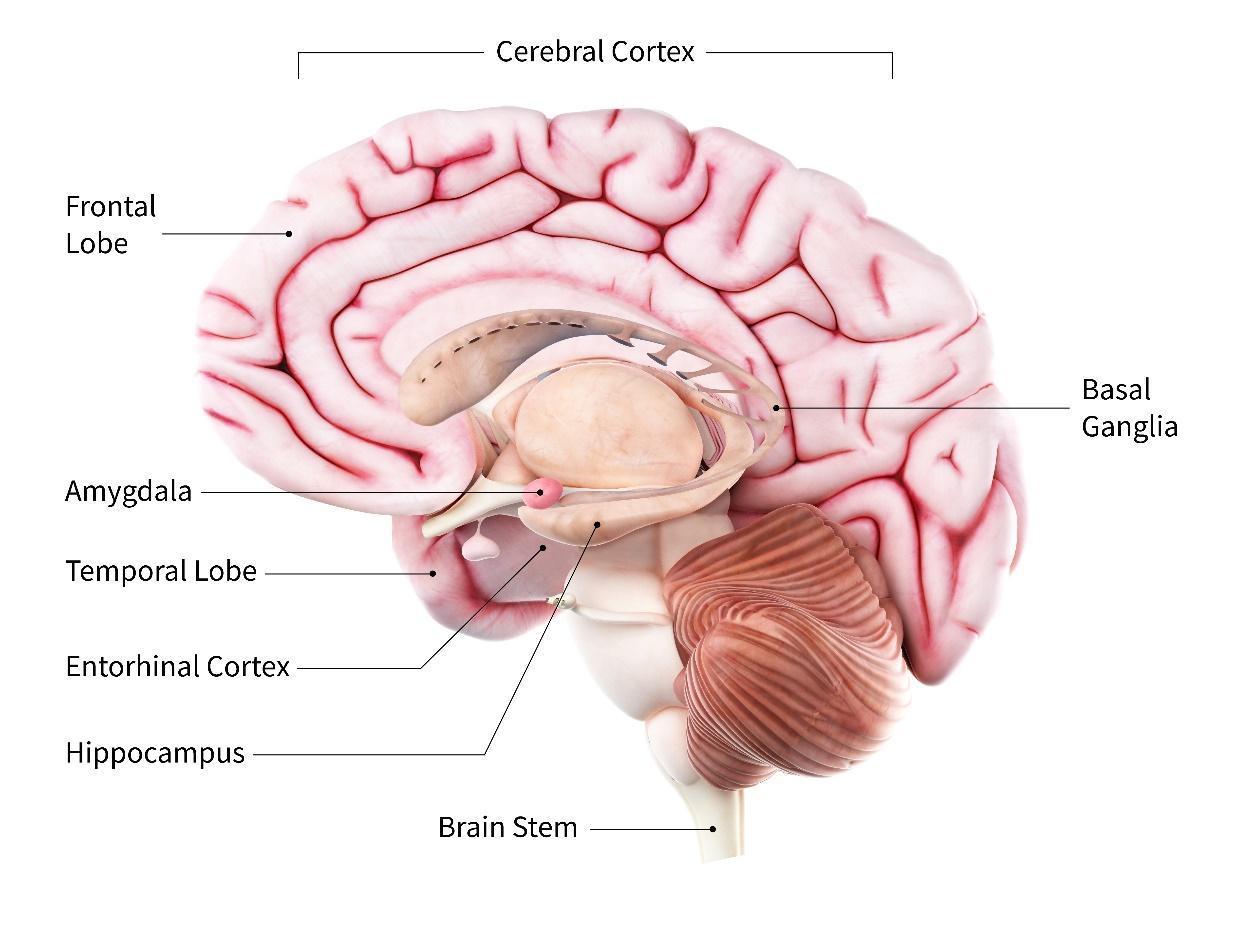
Source: National Institute on Aging, National Institutes of Health
Dementia or Alzheimer's Disease
Dementia is an umbrella term for characteristic difficulties with memory, language, problem-solving, and other thinking skills.16 The most common type of dementia is AD.1 In AD, dementia involves changes in behavior, reasoning, remembering, and thinking.1 People can also have dementia-like symptoms without having AD.17
Causes for dementia-like symptoms include the following:17
Depression
Delirium
Excessive alcohol consumption
Lyme disease
Medication side effects
Thyroid problems
Untreated sleep apnea
Often, treatment can reverse these conditions. People concerned about dementia should seek medical advice because the differences between normal age-related cognitive changes, medication-induced changes, and AD’s warning signs are subtle.17
A team approach to patients with these complex symptoms helps optimize outcomes. These patients require interventions to address unmet needs related to home support, personal safety, daily activities, legal assistance, advance care planning, and care financing. The individuals and their caregivers are faced with comorbid conditions, incontinence, hygiene, mobility, and other issues. It can be a challenge to connect the affected person and caregiver with needed services. Table 1 describes examples of opportunities to collaborate or refer.
Table 1
Integration of Interprofessional Team-Based Dementia Care18
| Team Member | Care Issue | ||||||
|---|---|---|---|---|---|---|---|
| Co-morbidity | Hygiene | Nutrition | Sleep | Anxiety/ depression | Communication | Caregiver respite | |
| Primary Care Provider | √ | √ | √ | √ | |||
| Nurse | √ | √ | √ | √ | √ | √ | √ |
| Home Care Services | √ | √ | |||||
| Occupational Therapist | √ | √ | |||||
| Behavioral Health Therapist | √ | ||||||
Speech Therapist | √ | ||||||
| Nutritionist | √ | ||||||
| Social Worker | √ | √ | √ | ||||
Warning Signs and Risk Factors of Alzheimer's Disease
Age, family history, and genetics are risk factors for AD. The greatest risk factor is age.1 Only 5.2% of people ages 65 to 74 have AD compared to 13.8% of people ages 75 to 84, and 33.3% of people ages 85 or older.10 In spite of this, age is insufficient on its own to cause AD.1
Family history plays a role in the development of AD. People with a first-degree relative (parent or sibling) diagnosed with AD are more likely to develop the disease. People with more than one first-degree relative with AD have an even higher risk.1
Many genes increase the risk of AD, but the apolipoprotein E (APOE) gene has the strongest impact.1,19 People with the e4 allele are more likely to have beta-amyloid accumulation and AD at a younger age than those with the e2 or e3 allele.1 Studies suggest that geographical background and genetic ancestry alter the extent to which APOE-e4 contributes to cognitive decline. Additionally, patients with Down Syndrome have an increased risk of developing AD.1 Scientists believe this is related to having three copies of chromosome 21 (trisomy 21). The gene encoding the amyloid precursor protein (APP) is located on chromosome 21.1 In patients with AD, an enzyme cleaves APP into beta-amyloid fragments, which accumulate as plaques in the brain.1 Also, an estimated 1% of people have a rare genetic mutation causing AD. Inheriting this mutation, called dominantly inherited AD, guarantees disease development within a normal lifespan. Researchers are conducting studies to better understand the role of genetics in the development of AD.1,19
Table 2 lists ten early warning signs identified by the Alzheimer’s Association.20
Table 2
| 10 Early Signs of Alzheimer’s Disease* | ||
|---|---|---|
| Signs | Alzheimer’s Disease Examples | Age-related Changes |
| Memory loss disrupting daily life | Forgetting recently learned information | Forgetting appointments, but remembering later |
| Challenges with planning or solving problems | Difficulty following a familiar recipe | Occasional errors when managing household bills |
| Difficulty completing familiar tasks | Unable to remember the rules of a favorite game | Sometimes needing help with the settings on the microwave |
| Confusion with time or place | Trouble understanding something not happening immediately | Confusion about the day of the week, but figuring it out later |
| Trouble understanding visual images and spatial relationships | Difficulty reading and driving | Cataracts causing vision changes |
| New problems with words in speaking or writing | Uses wrong names for familiar objects | Difficulty finding the right word |
| Misplacing things and losing ability to retrace steps | Placing belongings in unusual places | Misplacing belongings sometimes, but able to retrace steps to find them |
| Poor judgment | Paying less attention to grooming | Neglecting to change car oil |
| Withdrawal from work or social activities | Changes in the ability to hold or follow conversations | Sometimes feeling uninterested in social obligations |
| Changes in mood and personality | Easily upset, confused, suspicious, depressed, fearful, anxious | Becoming irritable when a routine is disrupted |
*Adapted from the Alzheimer's Association20
Modifiable Risk Factors of Alzheimer's Disease
Thankfully, growing evidence suggests healthy behaviors may reduce the risk of cognitive decline.1,21,22 Patients can improve brain health by doing the following:1,21,22
Consuming alcohol in moderation
Getting enough sleep
Increasing physical activity
Maintaining a healthy weight
Managing blood sugar
Preventing and managing hypertension and hypercholesterolemia
Quitting smoking
Staying engaged
Diagnostic Biomarkers
The brain undergoes pathological changes even before symptoms appear.1,21 These changes include the accumulation of extracellular cortical plaques that can manifest decades in advance. Progressive brain damage occurs during a prolonged preclinical phase. Even patients in stage 1 have positive biomarkers in brain positron emission tomography (PET) and/or cerebrospinal fluid (CSF) and plasma biofluid data.1,21 Without biomarkers, Alzheimer’s is often misdiagnosed. Blood-based biomarkers (BBMs) are advantageous compared with PET and CSF testing.1 They are less expensive, more accessible, and more acceptable to patients.23 Blood-based biomarkers may enable early detection of Alzheimer's disease and help streamline diagnostic processes.23 However, BBMs may not be appropriate, in several patient situations, such as the following:24
comorbidities that may affect BBM levels (e.g., acute brain injury, severe chronic kidney disease)
concomitant medications that may impact BBM levels (e.g., neprilysin inhibitors, drugs disrupting the blood-brain barrier)
limited life expectancy
The Alzheimer’s Association 2025 diagnostic guideline is a framework appropriate for any practice setting.24 It focuses on BBMs, most commonly used as indicators of brain amyloid.24 Markers such as glial fibrillary acid protein and neurofilament light chain were excluded in the updated guideline.24 The guideline discusses plasma assays for phosphorylated-tau (p-tau) and amyloid beta fibrils (Aβ), measuring analytes such as the following:24
P-tau127
Ratio of p-tau217 to non-p-tau217 x 100
P-tau181
P-tau231
Aβ42/Aβ40
Overall, the Alzheimer’s Association good practice statement recommends holding off on a BBM test until a comprehensive clinical evaluation by a provider.24 Diagnosing can include BBMs, but providers should avoid using them as a standalone test.24
The clinical practice guideline recommends that providers obtain a brain magnetic resonance imaging (MRI) and routine Tier 1 laboratory tests for all patients evaluated for cognitive impairment.24 These Tier 1 tests are referred to as the “cognitive lab panel” because they check for common conditions that can contribute to cognitive and behavioral impairments.24
Table 3 below outlines the Tier 1 laboratory Tests.
Table 3
| Tier 1 laboratory tests | |
|---|---|
| Cognitive Panel Tests | Evaluating |
| TSH | Abnormalities are common in older adults and may cause treatable neuropsychiatric symptoms |
| Vitamin B12 | |
| Homocysteine | Hyperhomocysteinemia associated with functional B12 deficiency is not always detected by B12 plasma levels Cardio and cerebrovascular risk |
| CBC with differential | Hyper/hyponatremia Hypomagnesiumia Hyper/hypocalcemia Anemia |
| CMP (including Ca, Mg, LFTs) | Dehydration suggested by BUN:Cr > 20:1 Hyper/hypoglycemia Uremia Hepatic dysfunction |
| ESR | Inexpensive screens for inflammation/autoimmunity, infection, or neoplasm |
| CRP | |
| BUN = blood urea nitrogen; Ca = calcium; CBC = complete blood count; CMP = comprehensive metabolic panel; Cr = creatinine; CRP = C-reactive protein; ESR = erythrocyte sedimentation rate; LFTs = liver function tests; Mg = magnesium; TSH = thyroid-stimulating hormone | |
Early Detection of Alzheimer's Disease
Early diagnosis of AD provides medical, emotional, and social benefits.1,25 Patients diagnosed early have the best chance to benefit from treatment. Earlier access to treatment results in reduced cognitive and functional decline. Treatments to address the symptoms may help decrease memory loss and confusion. Also, patients have an opportunity to participate in clinical trials to advance research. Early detection gives patients time to prioritize their health. Optimizing and controlling modifiable risk factors may preserve cognition.25 Patients who benefit from early detection also have more time to plan their futures and confront their lives complicated by AD.1,25
Receiving an early AD diagnosis validates the observed symptoms and may reduce anxiety for patients. Family and loved ones have an opportunity to maximize time together. Planning for the future may reduce family burden and prevent disagreements. Patients can review legal documents, discuss finances, and identify care preferences. Families can address safety issues, such as driving or wandering, which are problems associated with later stages.25
Dementia is one of the costliest conditions in society.26 Early detection can reduce healthcare system costs through proactive interventions.1,25 The Alzheimer’s Association studied the impact of an early diagnosis on potential cost savings. They reported that the United States economy could save an estimated $7 trillion in medical and long-term care costs for patients with AD.1,26 These large cost savings result from a smaller spike in costs immediately before and after diagnosis (during the MCI phase) and lower medical and long-term costs for people diagnosed and managing MCI and dementia.1
Healthcare professionals in the community, hospitals, and other settings can refer patients at risk for AD to available inpatient or outpatient services.27 Easy-open caps or pill organizers may be recommended.28 Simplify communication with short sentences and avoid lengthy explanations. During consultation, allow the patient plenty of time (possibly 20 seconds) to respond to questions.28
Counseling Caregivers of Patients with Alzheimer's Disease
Inevitably, as the population ages, the number of caregivers grows. Scientists advocate for home-based care because it benefits patients with AD. Family members providing informal care at home can increase patients’ lifespan and delay disease progression.29
Family caregivers focus on the patient, so they may be less likely than the general population to practice self-care and preventative healthcare. Caregivers report sleep disturbances, poor eating habits, lack of exercise, failure to rest when ill, and postponing or avoiding scheduling medical appointments for themselves. Also, family caregivers have an increased risk for depression and are more likely to have a chronic illness (e.g., hypercholesterolemia, hypertension, obesity, or overweight).30
A recent study looked at the transformative process of becoming a caregiver and the evolving role.31 It requires ongoing adaptation shaped by the disease’s progression, the relationship between caregiver and patient, and support systems. Connecting with peers who share similar caregiving experiences can decrease stress and improve quality of life. This connection reduces isolation and fosters mutual resilience.31
Caregiver Support with Respite Care
On an airplane, the crew advises passengers to put their oxygen masks on before helping others. Only when caregivers prioritize themselves can they effectively support the individual in their care.32 Caregiving is often rewarding, but it can become stressful and tiresome.33 One option for caregivers is to maintain their health. This may occur through short breaks. Research demonstrates that a few hours per week of respite, or consistent breaks away from caregiving responsibilities, can improve a caregiver’s well-being.34,35 Adult daycare or short-term nursing home care services offer respite care. Family, friends, government agencies, or volunteers can also provide respite care.34,36
Healthcare team members can encourage caregivers to recuperate while emphasizing that their patients are receiving care in a safe environment. Caregivers can use their time away to run errands, catch up with friends and family, or just relax.36 Caregivers may feel guilty about needing outside help or enjoying the time provided by respite.33,36
Tips healthcare team members can give to caregivers to help alleviate their burnout or guilt include the following:36,37
Advise caregivers that their feelings of guilt, anger, and frustration are normal, and by facing them, they can work through them
Advise caregivers that taking a break can recharge them as they continue to cope
Encourage caregivers to make new connections and speak with other caregivers who have used respite
Propose that caregivers inform others of their request for time away
Support and remind caregivers that their caregiving tasks are helpful
Healthcare team members can provide caregivers with education on how to request help from family and friends. Importantly, caregivers should make their limits and needs known. Suggestions to offer caregivers include the following:35
Being ready to answer when someone asks the caregiver, “What can I do to help?” the caregiver should name a time block or task they need help with
Be empathetic and remind the caregiver to ask for future assistance if someone is unable to help at a specific time
E-mail, text, or call friends and family when help is needed, if caregivers are reluctant to ask directly
Set up a shared online calendar for others to sign up, share tasks, or provide regular respite
Developing a Care Plan
Besides prearranged breaks, caregivers can also use respite care in unexpected situations. Emergencies, unplanned circumstances, or unexpected trips necessitate immediate care by an alternative caregiver.36,38 On these occasions, caregivers should have an easily accessible written care plan.36,38
Care plans summarize a patient’s medical conditions and specific care needs.38 Care plans should include medication doses and administration schedules. Health insurance information, the identities of healthcare providers and their contact information, and a list of emergency contacts are recommended to include. Care plans improve overall medical management for patients, and caregivers should update them regularly to keep content up to date.38
Care Plan Resource Caregivers can use the comprehensive care plan template provided by the Disease Control and Prevention (CDC) at the following link: cdc.gov/caregiving/media/pdfs/Complete-Care-Plan-Form-5081.pdf |
|---|
Resources for Caregivers
Online support groups and resources offer caregivers an opportunity to share experiences, get support, and find new resources. The CDC recommends the following support resources:39
The Dementia Dialogues® is a free, 5-module, evidence-informed nationally registered training course. The link to its website is https://osa-sc.org/programs/dementia-dialogues
The Family Caregiving Alliance offers an opportunity to discuss caregivers’ stresses, challenges, and rewards. The link to its website is caregiver.org/connecting-caregivers/support-groups
The AARP Caregiver Support Starts Here. The link to its website is https://www.aarp.org/caregiving/211-help/
Alzheimer's Association’s Alzheimer's and Dementia Caregiver Support provides caregiver support. The link to its website is https://www.alz.org/help-support/caregiving
National Institute on Aging Caregiving resource. The link to its website is https://www.nia.nih.gov/health/caregiving
Since caregiving can lead to burnout, prevention is crucial to avoid depression.40 Burnout symptoms include the following:36
Difficulty coping with daily demands
Exhaustion
Frustration
Impatience
Overwhelming feelings
Healthcare team members can play a key role in helping caregivers identify and recognize their own warning signs of frustration. This can help alert caregivers that they need to take immediate action to calm down. Common warning signs include the following:41
Chest pains
Compulsive eating
Desire to strike out
Excessive alcohol consumption
Headache
Increased smoking
Knot in throat
Lack of patience
Shortness of breath
Stomach cramps
There are a variety of ways for caregivers to calm themselves. It may seem overly simplistic, but caregivers can slowly count to ten and take deep breaths. They can take a walk or relocate to another room to collect their thoughts. Caregivers can also talk with a friend, listen to music, meditate, pray, sing, or take a relaxing bath.41
Managing Medications
Approximately 87.7% of people aged 62 to 85 are prescribed medication, with 35.8% of them taking at least five medications.42 It is therefore not surprising that the vast majority of caregivers need help or advice about medications.42
Eight medications are FDA-approved for AD.43-51 Six manage symptoms (brexpiprazole, donepezil, galantamine, rivastigmine, memantine, and memantine + donepezil), and two (lecanemab and donanemab) slow cognitive decline.1,52 After a time, the caregiver may comment that the patient is getting less benefit from the medication.
Table 4
| Medications Used for Alzheimer’s Disease | |||
|---|---|---|---|
| Classification | Medication | Administration and Frequency | Side Effects |
| Atypical antipsychotic | Brexpiprazole43 | Oral tablet, daily | Common cold symptoms, dizziness, hyperglycemia, hypertension, stroke |
| Cholinesterase inhibitors | Donepezil44 | Oral tablet, ODT, or solution, daily | Diarrhea, fatigue, insomnia, muscle cramps, nausea, vomiting, weight loss |
| Galantamine45 | Oral extended-release capsule, daily, or oral tablet or solution, twice daily | Decreased appetite, diarrhea, dizziness, headache, nausea, vomiting, weight loss | |
| Rivastigmine46,47 | Oral capsule or solution, twice daily, or transdermal patch, replaced daily | Anorexia, nausea, decreased appetite, diarrhea, indigestion, muscle weakness, vomiting, weight loss | |
| NDMA antagonist | Memantine48 | Oral extended-release capsule, tablet, or solution, daily | Confusion, constipation, diarrhea, dizziness, headache |
| NDMA antagonist + cholinesterase inhibitor | Memantine + Donepezil49 | Oral extended-release capsule, daily | Anorexia, diarrhea, dizziness, ecchymosis*, headache, nausea, vomiting |
| Monoclonal antibodies | Donanemab50 | IV, 30 minutes every 4 weeks | ARIA, brain swelling and bleeding, infusion-related reactions |
| Lecanemab51 | IV, over 1 hour every 2 weeks | ARIA, brain swelling and bleeding, headache, cough, diarrhea, nausea, vomiting, fever, chills, body aches, fatigue, high blood pressure, low blood pressure, and low oxygen | |
ARIA = amyloid-related imaging abnormalities Ecchymosis = small bruising from leaking blood vessels IV = intravenous NDMA = N-Nitrosodimethylamine ODT = orally disintegrating tablets | |||
Mild to Moderate Disease
In mild-to-moderate AD, cholinesterase inhibitors (e.g., donepezil, galantamine, and rivastigmine) are used to reduce cognitive and behavioral symptoms.1,44-47 However, these are not the only medications the patient may be prescribed. Caregivers of individuals with Alzheimer’s may be faced with unplanned responsibilities (e.g., multiple physicians, multiple medications, and multiple office or clinic visits).42 Counseling with caregivers may include discussing with them the risks of drug interactions. For example, donepezil and galantamine have the potential to interfere with anticholinergic medications;53 and patients taking rivastigmine should avoid using beta-blockers, for example, due to the risk of bradycardia.46,47
In addition, unlike orally administered medications indicated for AD, lecanemab and donanemab are administered intravenously (IV), which requires trained medical professionals and must be administered in a clinical setting.50,51 They also require monitoring with magnetic resonance imaging (MRI) to assess the risk of intracerebral hemorrhage.54 Intracerebral hemorrhage has been reported in patients also taking antithrombotics, antiplatelets, or anticoagulants.39,40
A caregiver may express frustration at having to take the patient for scans, screenings, IV injections, or monitoring. This is an opportunity for team members to explain, in simpler terms, that before initiating treatment, the healthcare team needs to screen patients with PET scans or CSF to confirm amyloid-beta pathology.55 After initiating treatment, monitoring is needed to avoid potentially risky concurrent therapies.54
Lecanemab and donanemab have a boxed warning for amyloid-related imaging abnormalities (ARIA).50,51 Typically, ARIA resolves over time, and patients with temporary, localized brain swelling are asymptomatic.54,56 Amyloid-related imaging abnormalities can be signals of serious and life-threatening events. Symptoms associated with ARIA include headache, confusion, visual changes, dizziness, nausea, and difficulty walking.54,56 Shared decision-making can determine whether a treatment’s potential benefits outweigh its risks.54,56
Moderate to Severe Disease
Caregivers may read about memantine and ask questions. It can decrease symptoms, potentially enabling patients to maintain independent daily functioning longer.48,49 Since memantine acts differently from cholinesterase inhibitors, combining it with a cholinesterase inhibitor is acceptable (e.g., donepezil + memantine).49 Patients taking memantine, alone or in combination with donepezil, should avoid concurrent use of N-methyl-D-aspartate (NMDA) antagonists (e.g., ketamine, dextromethorphan) and medications that alkalinize urine (e.g., carbonic anhydrase inhibitors and sodium chloride).48,49 Donepezil’s drug interactions mentioned earlier also apply to the combination medication.48,49
The interprofessional team members are optimally positioned to ask a caregiver to share the patient's symptoms with them. This offers the pharmacist opportunities to recommend medications that may alleviate symptoms. Brexpiprazole, for example, treats agitation associated with AD but has a boxed warning for increased mortality in elderly patients with dementia-related psychosis.43
Managing Behavioral Symptoms
Aggression, agitation, anxiety, depression, restlessness, sleeplessness, and wandering are common AD symptoms that a caregiver may discuss with the healthcare team.57 Treating these symptoms may help patients maintain dignity and independence for longer and relieve caregiver stress.
Managing behavior changes can also make everyday life less stressful for a person with Alzheimer’s, their caregivers, and their loved ones. Caregivers can be counseled on doing any of the following when confronted with behavioral changes:58
Be patient, try not to show frustration, and avoid arguing.
Caregivers should reassure the person that they are there to help.
Learn how to communicate with someone with Alzheimer’s (see the resource below).
Redirect their attention to a new object or activity, such as listening to music, reading a book, or going for a walk.
Create a comforting home setting by reducing noise and clutter and keeping well-loved objects (such as photos) around the home.
Try to keep the person on a routine by bathing, dressing, and eating at the same time each day.
Find ways for the person to be physically active, which can improve mood and sleep.
Resource Communicating With Someone Who Has Alzheimer’s Disease https://www.nia.nih.gov/health/alzheimers-changes-behavior-and-communication/communicating-someone-who-has-alzheimers |
|---|
Patient Case
Mrs. L., a 74-year-old woman, is brought to the clinic by her daughter. The daughter reports that over the past year, Mrs. L. has become increasingly forgetful, repeats questions, misplaces household items, and misses paying bills. The daughter informs the nurse that Mrs. L also struggles with driving directions and managing her medications.
What screening and evaluation should occur?
The physician assesses reversible causes of memory loss, such as medication effects, thyroid dysfunction, vitamin B12 deficiency, depression, and sleep problems. A cognitive screen results support mild Alzheimer’s disease.
What is a medication option for this patient?
Once daily donepezil is initiated to manage cognitive symptoms, and counseling the daughter on expected benefits, common adverse effects, and the need for adherence.
What team members might be appropriate for this family?
The pharmacist reviews the medications and identifies an over-the-counter anticholinergic used as a sleep aid. The pharmacist recommends discontinuation and informs the physician. The nurse coordinates follow-up, and the patient is referred to a social worker to connect the family with a support group, caregiver education, and transportation resources. The daughter is encouraged to use a pill organizer and to contact the team if symptoms worsen.
Summary
Alzheimer’s is a progressive disease that begins with mild memory loss and leads to a patient’s inability to complete simple daily tasks. Currently, there is no cure. Available interventions temporarily manage symptoms or slow disease progression for some patients. Scientists lack a complete understanding of AD’s underlying biology. It is a progressive brain disease occurring when abnormal proteins accumulate in the brain and neurons degenerate. Age, family history, and genetics are risk factors for AD. Many genes increase AD’s risk. The APOE gene has the strongest impact.
Early diagnosis of AD provides medical, emotional, and social benefits. Patients diagnosed early have the best chance to benefit from treatment. Dementia is one of the costliest conditions in society. Early detection helps reduce these costs.
Family caregivers are less likely than the general population to practice self-care and preventative healthcare. Caregivers report sleep disturbances, poor eating habits, lack of exercise, failure to rest when ill, and postponing or avoiding scheduling medical appointments for themselves. Also, family caregivers have an increased risk of depression and are more likely to have a chronic illness. Caregivers can enhance their resilience and reduce isolation by connecting with others in a similar role.
Healthcare team members can encourage caregivers to take time for themselves by suggesting respite and other self-care and recuperation activities. Caregivers can use their time away to run errands, catch up with friends and family, or just relax.
Approximately 87.7% of people aged 62 to 85 are prescribed medication, with 35.8% of them taking at least five medications. It is therefore not surprising that the vast majority of caregivers need help or advice about medications. Healthcare team members can screen patient profiles for inappropriate medications and recommend discontinuation to the prescriber.
References
2026 Alzheimer's disease facts and figures. Alzheimers Dement. 2026;22:e71345. Published 2026 Apr 21. doi:10.1002/alz.71345
DiBello JR, Lu Y, Swartz J, et al. Patterns of use of symptomatic treatments for Alzheimer's disease dementia (AD). BMC Neurol. 2023;23(1):400. Published 2023 Nov 9. doi:10.1186/s12883-023-03447-5
Cummings JL, Zhou Y, Yang Y, et al. Alzheimer's disease drug development pipeline: 2026. Alzheimers Dement (N Y). 2026;12:e70251. Published 2026 May 5. doi:10.1002/trc2.70251
Rajanna S, Gundale PP, Dev Mahadevaiah A. Advancements in the treatment of Alzheimer's disease: a comprehensive review. Dement Neuropsychol. 2025;19:e20240204. Published 2025 Apr 7. doi:10.1590/1980-5764-DN-2024-0204
Jebelli J, Hamper MC, Van Quelef D, Caraballo D, Hartmann J, Kumi-Diaka J. The Potential Therapeutic Effects of Low-Dose Ionizing Radiation in Alzheimer's Disease. Cureus. 2022;14(3):e23461. Published 2022 Mar 24. doi:10.7759/cureus.23461
Centers for Disease Control and Prevention. Caregiving. Caregiving for a person with Alzheimer’s disease or a related dementia. Alzheimer’s disease and healthy aging. Updated September 3, 2024. Accessed July 11, 2026. https://www.cdc.gov/caregiving/about/index.html
Blinka MD, Liu C, Sheehan OC, Rhodes JD, Roth DL. Family caregivers emphasise patience and personal growth: a qualitative analysis from the Caregiving Transitions Study. Age Ageing. 2022;51(2):afab266. Published 2022 Feb 7. doi:10.1093/ageing/afab266
Vu M, Mangal R, Stead T, Lopez-Ortiz C, Ganti L. Impact of Alzheimer's Disease on Caregivers in the United States. Health Psychol Res. 2022;10(3):37454. Published 2022 Aug 20. doi:10.52965/001c.37454
Sołtys A, Wnuk M. Psychological Mechanisms of Caregiver Involvement in Caregiving for Individuals with Alzheimer's Disease: Analysis of the Moderated Mediation Model. J Clin Med. 2025;14(14):5134. Published 2025 Jul 19. doi:10.3390/jcm14145134
Rawat P, Sehar U, Bisht J, Selman A, Culberson J, Reddy PH. Phosphorylated Tau in Alzheimer's Disease and Other Tauopathies. Int J Mol Sci. 2022;23(21):12841. Published 2022 Oct 25. doi:10.3390/ijms232112841
Palmqvist S, Whitson HE, Allen LA, et al. Alzheimer's Association Clinical Practice Guideline on the use of blood-based biomarkers in the diagnostic workup of suspected Alzheimer's disease within specialized care settings. Alzheimers Dement. 2025;21(7):e70535. doi:10.1002/alz.70535
National Institutes of Health. National Institute on Aging. Infographic: Understanding Different Types of Dementia. NIH-NIA. Last updated: June 5, 2025. Accessed July 11, 2026. https://www.nia.nih.gov/health/alzheimers-and-dementia/understanding-different-types-dementia
Sperling RA, Aisen PS, Beckett LA, et al. Toward defining the preclinical stages of Alzheimer's disease: recommendations from the National Institute on Aging-Alzheimer's Association workgroups on diagnostic guidelines for Alzheimer's disease. Alzheimers Dement. 2011;7(3):280-292. doi:10.1016/j.jalz.2011.03.003
National Institutes of Health. National Institute on Aging. Scientific images. NIH-NIA. Last updated: June 29, 2026. Accessed July 11, 2026. https://www.nia.nih.gov/news/aging-alzheimers-resources-multimedia#scientific
National Institutes of Health. National Institute on Aging. What Happens to the Brain in Alzheimer's Disease? NIH-NIA. Content reviewed: January 19, 2024. Accessed July 11, 2026. https://www.nia.nih.gov/health/alzheimers-causes-and-risk-factors/what-happens-brain-alzheimers-disease
Cipriani G, Danti S, Picchi L, Nuti A, Fiorino MD. Daily functioning and dementia. Dement Neuropsychol. 2020;14(2):93-102. doi:10.1590/1980-57642020dn14-020001
Funayama M, Kurose S, Takata T, et al. Identifying reversible psychiatric dementia mimics in new memory clinic outpatients. J Alzheimers Dis Rep. 2025;9:25424823251329804. Published 2025 Mar 21. doi:10.1177/25424823251329804
Crooks E, Geldmacher D. Interprofessional team-based dementia care: integrating professional, health system, and community resources. Practical Neurol. 2023;34–41.
Blanchard JW, Akay LA, Davila-Velderrain J, et al. APOE4 impairs myelination via cholesterol dysregulation in oligodendrocytes. Nature. 2022;611(7937):769-779. doi: 10.1038/s41586-022-05439-w
Alzheimer's Association. 10 early signs and symptoms of Alzheimer's and dementia. Updated 2026. Accessed June 7, 2026. https://www.alz.org/alzheimers-dementia/10_signs
Sanborn V, Davis JD, Korthauer LE. Health Behavior Change to Mitigate Dementia Risk: An Updated Review. Curr Geriatr Rep. 2024;13(3):162-171. doi:10.1007/s13670-024-00421-y
Centers for Disease Control and Prevention. Healthy body, healthier brain. Alzheimer’s disease and healthy aging. Updated November 9, 2021. Accessed July 12, 2026. https://stacks.cdc.gov/view/cdc/148386
Pahlke S, Kahale LA, Mahinrad S, et al. Blood-based biomarkers for detecting Alzheimer's disease pathology in cognitively impaired individuals within specialized care settings: A systematic review and meta-analysis. Alzheimers Dement. 2025;21(11):e70828. doi:10.1002/alz.70828
Palmqvist S, Whitson HE, Allen LA, et al. Alzheimer's Association Clinical Practice Guideline on the use of blood-based biomarkers in the diagnostic workup of suspected Alzheimer's disease within specialized care settings. Alzheimers Dement. 2025;21(7):e70535. doi:10.1002/alz.70535
Alzheimer’s Association. Why get checked? alz.org. 2026. Accessed July 12, 2026. https://www.alz.org/alzheimers-dementia/diagnosis/why-get-checked
Hurd MD, Martorell P, Delavande A, Mullen KJ, Langa KM. Monetary costs of dementia in the United States. N Engl J Med. 2013; 368: 1326-1334.
Nasrallah IM, Polacek C, Frech FH, et al. Early Alzheimer's disease patient care pathway and health system readiness: A framework for integrated care. Alzheimers Dement (N Y). 2025;11(4):e70162. Published 2025 Nov 3. doi:10.1002/trc2.70162
Zerafa N, Scerri C. Knowledge and pharmacological management of Alzheimer's disease by managing community pharmacists: a nationwide study. Int J Clin Pharm. 2016;38(6):1416-1424. doi:10.1007/s11096-016-0380-8
Hellis E, Mukaetova-Ladinska EB. Informal Caregiving and Alzheimer's Disease: The Psychological Effect. Medicina (Kaunas). 2022;59(1):48. Published 2022 Dec 27. doi:10.3390/medicina59010048
Roepke SK, Chattillion EA, von Känel R, et al. Carotid plaque in Alzheimer caregivers and the role of sympathoadrenal arousal. Psychosom Med. 2011;73(2):206-213. doi:10.1097/PSY.0b013e3182081004
Dellafiore F, Diamanti O, Guardamagna L, et al. The Transition to Caregiver in Advanced Alzheimer's Disease: From Emotional Connection to Care Responsibility-A Grounded Theory Approach. Nurs Rep. 2025;15(8):284. Published 2025 Aug 4. doi:10.3390/nursrep15080284
Family Caregiver Alliance. Taking care of you: self-care for family caregivers. caregiver.org. 2026. Accessed July 12, 2026. https://www.caregiver.org/resource/taking-care-you-self-care-family-caregivers/
Centers for Disease Control and Prevention. Healthy Habits: Caring for Yourself When Caring for Another. Updated September 3, 2024. Accessed July 12, 2026. https://www.cdc.gov/aging/publications/features/caring-for-yourself.html
Zarit SH, Whetzel CA, Kim K, et al. Daily stressors and adult day service use by family caregivers: effects on depressive symptoms, positive mood, and dehydroepiandrosterone-sulfate. Am J Geriatr Psychiatry. 2014;22(12):1592-1602. doi:10.1016/j.jagp.2014.01.013
Alzheimer’s Association. Respite care. alz.org. 2026. Accessed July 12, 2026. https://www.alz.org/help-support/caregiving/care-options/respite-care
Family Caregiver Alliance. Respite tips: taking a break from giving care to someone in need. caregiver.org. 2026. Accessed July 12, 2026. https://www.caregiver.org/resource/respite-tips-taking-break-giving-care-someone-need/?via=caregiver-resources,caring-for-yourself,stress
Alzheimer’s Association. Grief and Loss as Alzheimer's Progresses. alz.org. 2026. Accessed July 12, 2026. https://www.alz.org/help-support/caregiving/caregiver-health/grief-loss-as-alzheimers-progresses
Centers for Disease Control and Prevention. Steps for Creating and Maintaining a Care Plan. Updated September 3, 2024. Accessed April 11, 2026. https://www.cdc.gov/caregiving/guidelines/index.html
Centers for Disease Control and Prevention. Helping Dementia Caregivers. Updated September 3, 2024. Accessed April 11, 2026. https://www.cdc.gov/caregiving/resources/helping-alzheimers-caregivers.html
Pudelewicz A, Talarska D, Bączyk G. Burden of caregivers of patients with Alzheimer's disease. Scand J Caring Sci. 2019;33(2):336-341. doi:10.1111/scs.12626
Family Caregiver Alliance. Dementia, caregiving, and controlling frustration. caregiver.org. 2026. Accessed July 12, 2026. https://www.caregiver.org/resource/dementia-caregiving-and-controlling-frustration/?via=resource,taking-care-you-self-care-family-caregivers
Muñoz-Contreras MC, Segarra I, López-Román FJ, Galera RN, Cerdá B. Role of caregivers on medication adherence management in polymedicated patients with Alzheimer's disease or other types of dementia. Front Public Health. 2022;10:987936. Published 2022 Oct 24. doi:10.3389/fpubh.2022.987936
REXULTI- brexpiprazole tablet REXULTI- brexpiprazole kit. Prescribing Information. Otsuka American Pharmaceutical Inc. Updated May 6, 2026. Accessed July 12, 2026. https://dailymed.nlm.nih.gov/dailymed/drugInfo.cfm?setid=2d301358-6291-4ec1-bd87-37b4ad9bd850
ARICEPT- donepezil hydrochloride tablet, film coated ARICEPT ODT- donepezil hydrochloride tablet, orally disintegrating. Prescribing Information. Eisai Inc. Updated December 30, 2021. Accessed July 12, 2026. https://dailymed.nlm.nih.gov/dailymed/drugInfo.cfm?setid=98e451e1-e4d7-4439-a675-c5457ba20975
GALANTAMINE HYDROBROMIDE capsule, extended release. Prescribing Information. Sun Pharmaceutical Industries, Inc. Updated October 26, 2023. Accessed July 12, 2026. https://dailymed.nlm.nih.gov/dailymed/drugInfo.cfm?setid=d1697161-ebe8-42b0-83e7-c9de4412546c
RIVASTIGMINE TARTRATE capsule. Prescribing Information. Chartwell RX, LLC. Updated October 6, 2023. Accessed July 12, 2026. https://dailymed.nlm.nih.gov/dailymed/drugInfo.cfm?setid=2bb5e0d6-f677-4021-9888-3ff90979ef7d
RIVASTIGMINE patch, extended release. Prescribing Information. Northstar Rx LLC. Updated November 14, 2025. Accessed July 12, 2026. https://dailymed.nlm.nih.gov/dailymed/drugInfo.cfm?setid=8b809739-8381-4cc1-ab4a-5b17ab902a3d
NAMZARIC- memantine hydrochloride and donepezil hydrochloride capsule NAMZARIC- memantine hydrochloride and donepezil hydrochloride kit. Prescribing Information. Allergan, Inc. Updated March 6, 2026. Accessed July 12, 2026. https://dailymed.nlm.nih.gov/dailymed/drugInfo.cfm?setid=90fedc32-19e5-480c-afc6-f35a5cf4b9aa
MEMANTINE HYDROCHLORIDE AND DONEPEZIL HYDROCHLORIDE capsule, extended release. Prescribing Information. Vitruvias Therapeutics, Inc. Updated June 20, 2025. Accessed July 12, 2026. https://dailymed.nlm.nih.gov/dailymed/drugInfo.cfm?setid=c888a2b2-92c6-46ae-99ea-21de616208b6
KISUNLA- donanemab-azbt injection, solution. Prescribing Information. Eli Lilly and Company. Updated December 30, 2025. Accessed July 12, 2026. https://dailymed.nlm.nih.gov/dailymed/drugInfo.cfm?setid=190352d4-ef62-4679-b4fa-e846e2766afa
LEQEMBI- lecanemab injection, solution LECANEMAB AUTOINJECTOR- lecanemab-irmb injection, solution. Prescribing Information. Eisai Inc.Updated June 30, 2026. Accessed July 12, 2026. https://dailymed.nlm.nih.gov/dailymed/drugInfo.cfm?setid=9d1ff786-e577-410a-a273-c4d7d0e4e975
Atri A, Dickerson BC, Clevenger C, et al. Alzheimer's Association clinical practice guideline for the Diagnostic Evaluation, Testing, Counseling, and Disclosure of Suspected Alzheimer's Disease and Related Disorders (DETeCD-ADRD): Executive summary of recommendations for primary care. Alzheimers Dement. 2025;21(6):e14333. doi:10.1002/alz.14333
Pasqualetti G, Tognini S, Calsolaro V, Polini A, Monzani F. Potential drug-drug interactions in Alzheimer patients with behavioral symptoms. Clin Interv Aging. 2015;10:1457-1466. Published 2015 Sep 8. doi:10.2147/CIA.S87466
Cummings J, Apostolova L, Rabinovici GD, et al. Lecanemab: Appropriate Use Recommendations. J Prev Alzheimers Dis. 2023;10(3):362-377. doi:10.14283/jpad.2023.30
Leuzy A, Bollack A, Pellegrino D, et al. Considerations in the clinical use of amyloid PET and CSF biomarkers for Alzheimer's disease. Alzheimers Dement. 2025;21(3):e14528. doi:10.1002/alz.14528
Schreiber CP, Kovacik A, Bishop J, Helman J. Amyloid-related Imaging Abnormalities (ARIA) in the Context of Alzheimer's Disease and Amyloid-targeting Therapies: An Introduction for Advanced Practice Providers. Drugs Aging. 2025;42(12):1103-1111. doi:10.1007/s40266-025-01253-x
National Institutes of Health. National Institute on Aging. Alzheimer’s Caregiving: Managing Personality and Behavior Changes. NIH-NIA. Content reviewed: July 11, 2024. Accessed July 11, 2026. https://www.nia.nih.gov/health/alzheimers-changes-behavior-and-communication/alzheimers-caregiving-managing-personality-and
National Institutes of Health. National Institute on Aging. Communicating With Someone Who Has Alzheimer’s Disease. NIH-NIA. Content reviewed: July 11, 2024. Accessed July 11, 2026. https://www.nia.nih.gov/health/alzheimers-changes-behavior-and-communication/communicating-someone-who-has-alzheimers
DISCLAIMER
The information provided in this course is general in nature, and it is designed solely to provide participants with continuing education credit(s). This course and materials are not meant to substitute for the independent, professional judgment of any participant regarding that participant’s professional practice, including but not limited to patient assessment, diagnosis, treatment, and/or health management. Medical and pharmacy practices, rules, and laws vary from state to state, and this course does not cover the laws of each state; therefore, participants must consult the laws of their state as they relate to their professional practice.
Healthcare professionals must consult their employer, healthcare facility, hospital, or other organization for guidelines, protocols, and procedures to follow. The information provided in this course does not replace those guidelines, protocols, and procedures, but is for academic purposes only, and this course’s limited purpose is for the completion of continuing education credits.
Participants are advised and acknowledge that information related to medications, their administration, dosing, contraindications, adverse reactions, interactions, warnings, precautions, or accepted uses is constantly changing. Any person taking this course understands that such a person must make an independent review of medication information before any patient assessment, diagnosis, treatment and/or health management. Any discussion of off-label use of any medication, device, or procedure is informational only, and such uses are not endorsed hereby.
Nothing contained in this course represents the opinions, views, judgments, or conclusions of RxCe.com LLC. RxCe.com LLC is not liable or responsible to any person for any inaccuracy, error, or omission with respect to this course or course material.
© RxCe.com LLC 2026: All rights reserved. No reproduction of all or part of any content herein is allowed without the prior, written permission of RxCe.com LLC.
RxCe.com
© RxCe.com LLC 2025: All rights reserved.