
PAIN MANAGEMENT WITH OPIOIDS, AND CONTROLLED SUBSTANCES: POTENTIAL MISUSE AND ALTERNATIVE TREATMENT OPTIONS
Faculty:
L. Austin Fredrickson, MD, FACP
L. Austin Fredrickson is an Associate Professor of Internal Medicine at Northeast Ohio Medical University, where he serves as core faculty and teaches diagnostics, therapeutics, clinical skills, and health humanities. He is board-certified in general internal medicine and practices rural primary care.
Sandra Rogers, MD
Sandra Rogers, MD, is a primary care physician in Texas. She is board-certified in Family Medicine and Internal Medicine by the American Board of Family Medicine and the American Board of Internal Medicine. She completed her dual residency at Eastern Virginia Medical School in Norfolk, Virginia. She has been practicing in Allen, Texas for over 20 years.
Kristina (Tia) Neu, RN
Kristina (Tia) Neu is a licensed Registered Nurse and author currently developing in-service training for healthcare professionals. She is a National Board-Certified Health & Wellness and Lifestyle Medicine Coach. Her experience spans several areas of healthcare, including psychiatric nursing, medical nursing, motivational health coaching, chronic case management, dental hygiene, cardiac technology, and surgical technology.
Pamela Sardo, PharmD, BS
Pamela Sardo, PharmD, BS, is a licensed pharmacist and freelance medical writer. She is the founder and principal at Sardo Solutions in Texas. Pam received her BS from the University of Connecticut and her PharmD from the University of Rhode Island. Pam’s career spans many years in retail, clinics, hospitals, long-term care, Veterans Affairs, and managed health care responsibilities across a broad range of therapeutic classes and disease states.
Abstract
Prescription opioids and other controlled substances are used to treat moderate to severe pain. Individuals taking opioids over a long period of time can also develop cravings. Although most people who take opioids long-term do not develop a substance use disorder, a small percentage of people experience a continuing, compulsive need for opioids, which is characteristic of an opioid use disorder. The same may be said of other controlled substances. There is a wide range of clinical practice guidelines for treating pain. Nonpharmacologic therapy and nonopioid medications are preferred for the initial treatment of chronic pain. Opioids as first-line or routine therapy for chronic pain should only be considered when the benefits outweigh the risks.
Accreditation Statements
In support of improving patient care, RxCe.com LLC is jointly accredited by the Accreditation CouncilTM for Continuing Medical Education (ACCME®), the Accreditation Council for Pharmacy Education (ACPE®), and the American Nurses Credentialing Center (ANCC®), to provide continuing education for the healthcare team.

This activity was planned by and for the healthcare team, and learners will receive 2 Interprofessional Continuing Education (IPCE) credits for learning and change.
Joint Universal Activity Number: The Joint Accreditation Universal Activity Numbers assigned to this activity are as follows:
Pharmacists: JA4008424-0000-26-018-H08-P
Pharmacy Technicians: JA4008424-0000-26-018-H08-T
Credits: 2 contact hour(s) (0.2 CEU(s)) of continuing education credit.
Credit Types:
IPCE Credits - 2 Credits
AAPA Category 1 Credit™️ - 2 Credits
AMA PRA Category 1 Credit™️ - 2 Credits
Pharmacy - 2 Credits
Type of Activity: Knowledge and Application
Media: Computer-Based Training (i.e., online courses)
Estimated time to complete activity: 2 contact hour(s) (0.2 CEU(s)), including Course Test and course evaluation.
Release Date: February 10, 2026 Expiration Date: February 10, 2029
Target Audience: This educational activity is for Physicians, Physician Assistants, Pharmacists, and Pharmacy Technicians
How to Earn Credit: From February 10, 2026, through February 10, 2029, participants must:
Read the “learning objectives” and “author and planning team disclosures;”
Take the “Educational Activity Pre-Test;”
Study the section entitled “Educational Activity;” and
Complete the Educational Activity Post-Test and Activity Evaluation. The Educational Activity Post-Test will be graded automatically. Following successful completion of the Educational Activity Post-Test with a score of 70% or higher, a statement of participation will be made available immediately. (No partial credit will be given.)
CME Credit: Credit for this course will be uploaded to CPE Monitor® for pharmacists. Physicians may receive AMA PRA Category 1 Credit™️ and use these credits toward Maintenance of Certification (MOC) requirements. Physician Assistants may earn AAPA Category 1 CME credit, reportable through PA Portfolio. All learners shall verify their individual licensing board’s specific requirements and eligibility criteria.
Statement of Need
Pain management with opioids and other controlled substances remains common in treating moderate to severe pain, but even short courses can contribute to long-term use, misuse, social harms, and opioid use disorder in a subset of patients. Healthcare professionals report variability in applying CDC-aligned prescribing practices, stratifying patient risk factors, and integrating non-opioid and nonpharmacologic options into multifaceted care plans. Interprofessional teams face gaps in consistent use of tools such as opioid risk assessment, prescription drug monitoring programs, and naloxone co-prescribing. Additional factors include addressing deficits in counseling on safe use, storage, and disposal of controlled substances. This activity aims to improve team-based strategies to optimize patient-centered pain management, mitigate misuse and diversion, and reduce opioid-related adverse outcomes across a broad range of healthcare settings.
Learning Objectives: Upon completion of this educational activity, participants should be able to:
Appraise whether a patient has an opioid use disorder
Describe characteristics of appropriate opioid prescribing
Discuss non-opioid treatments for patients presenting with pain
Summarize the reason for using prescription drug monitoring programs like Michigan’s Automated Prescription System
Provide components of patient/caregiver education to individuals receiving treatment for pain
Disclosures
The following individuals were involved in developing this activity: L. Austin Fredrickson, MD, FACP; Sandra Rogers, MD; Kristina (Tia) Neu, RN; and Pamela Sardo, PharmD, BS. None of the individuals involved in developing this activity has a conflict of interest or financial relationships related to the subject matter. There are no financial relationships or commercial or financial support relevant to this activity to report or disclose by RxCe.com or any of the individuals involved in the development of this activity.
© RxCe.com LLC 2026: All rights reserved. No reproduction of all or part of any content herein is allowed without the prior, written permission of RxCe.com LLC.
Educational Activity Pre-Test
Which of the following statements describes a patient with an opioid use disorder (OUD)?
A patient has an OUD if the patient experiences adverse effects from the opioid medication, such as constipation or confusion.
A patient has an OUD if the patient requires a long-acting opioid to treat pain.
A patient has an OUD if the patient has a continuing, compulsive need for opioids.
A patient has an OUD if the patient has had at least one opioid overdose.
According to CDC guidelines, when should opioids be considered for the treatment of chronic pain?
As the first-line or routine therapy
Only when benefits outweigh the risks and non-opioid therapies are insufficient
For all patients with moderate pain
When nonpharmacologic therapy is unavailable
When educating patients about acetaminophen, what is the preferred maximum daily dose for most adults without hepatic impairment?
1000 mg
2000 mg
3000 mg
6000 mg
Educational Activity
Pain Management with Opioids and Controlled Substances: Potential Misuse and Alternative Treatment Options
Introduction
Treating pain can be a challenge for healthcare teams and their patients. Multi-faceted treatment plans combine treatment options to provide a comprehensive approach to pain management. Opioids and other controlled substances are commonly part of pain management plans and are used to treat moderate to severe pain. However, opioids and other controlled substances are subject to misuse, and persons taking them may develop a substance use disorder. Healthcare teams must address the risk of misuse by adhering to state and federal laws regarding the prescription, dispensing, and disposal of controlled substances. Preventing misuse may also be accomplished through patient assessment and counseling.
Use of Opioids to Treat or Manage Pain
Opioids are a class of natural, semi-synthetic, and synthetic drugs that include prescription medications and illegal drugs.1 Prescription opioids are used to treat moderate to severe pain.1 This class of prescription drugs includes oxycodone, fentanyl, buprenorphine, methadone, oxymorphone, hydrocodone, codeine, and morphine, as well as several others.1-4
Opioids act on receptors in the brain, spinal cord, and peripheral nervous system by decreasing the pain response.5,6 This makes them effective in managing pain.5,6 In addition, they can also block inflammatory responses to stimuli in the nervous system. Glutamate and substance P are the two main neurotransmitters involved in pain signals.7-9 Because opioids can work at all of these levels, they can inhibit pain signals very effectively. A 2018 meta-analysis found that the benefits of opioids in the treatment of chronic, non-cancer pain were generally similar to those of non-opioid therapies.10
While opioids can relieve pain and make people feel better, they can also have harmful effects. They can cause drowsiness, confusion, nausea, constipation, euphoria, and slowed breathing.7 Moreover, extended opioid use can cause the person to develop a tolerance to the drugs and crave them.5,6 Once a person becomes dependent on opioids after extended use, they experience withdrawal symptoms if they stop using them.5,6
Although most people who take opioids long-term do not develop a substance use disorder, a small percentage of people experience a continuing, compulsive need for opioids, which is characteristic of an opioid use disorder.11 Opioid use disorder is a chronic disease that can cause major health, social, and economic problems. Besides affecting an individual’s personal life, chronic opioid use may also lead to overdose and death.11
Consider this Question: Which of the following statements best describes a patient with an opioid use disorder (OUD)?
|
|---|
The patient in this example has a “continuing, compulsive need for opioids.” This is characteristic of an opioid use disorder.11 Therefore, the correct answer is option c.
Guidelines for Prescribing Opioids
Opioids are generally safe when prescribed by a physician for a short period of time for pain relief. Physicians should reserve chronic opioid therapy for serious pain-related problems for which the effectiveness of opioids has been demonstrated and for patients whose use as directed can be assured through monitoring and risk-benefit calculation.12 These diagnoses may include, but are not limited to, refractory chronic late-stage oncology and pancreatitis-associated pain.13
There is a wide range of clinical practice guidelines for treating pain.14,15 The Centers for Disease Control and Prevention published a guideline to assist in the prescribing decision-making of opioids to treat chronic pain. This guideline is not intended for prescribers treating patients with active cancer or who are receiving palliative or end-of-life care.16 Under these guidelines, nonpharmacologic therapy and nonopioid medications are preferred for the initial treatment of chronic pain.16 These guidelines do not recommend opioids as first-line or routine therapy for chronic pain and suggest they only be considered when the benefits outweigh the risks.16 Guidelines recommend that prescribers establish realistic goals of therapy before initiating treatment, and suggest opioid therapy be continued only when benefits significantly outweigh the risks.
When determining an opioid regimen for their patient, clinicians should select an immediate-release formulation, starting their patient at the lowest effective dose for the shortest duration of time possible. The goal is to provide adequate pain control while minimizing negative effects, such as constipation, nausea, vomiting, sedation, respiratory depression, or confusion, that may develop with these drugs, which were described above. Guidelines recommend reevaluating risks and benefits for patients and monitoring for adverse effects prior to increasing doses, and evaluations should occur 30 days or less post-opioid initiation.17 Monitoring should include urine drug monitoring.18 The long-term use of these drugs can lead to tolerance. In addition, clinicians should consider a patient’s potential for a substance use disorder, diversion, potential overdoses, and misuse of the drug.10,19
Assessing Opioid Misuse and Dependence
People taking opioids are at risk of developing a substance use disorder.10,11 This has led to greater regulation of long- and short-acting prescription opioids.10,11 Limits as to the quantity prescribed have been legislatively controlled to help reduce the number of patients developing a prescription substance use disorder, and to reduce the number of opioid overdoses.20,21 Quantities prescribed and dispensed are also impacted by professional judgment, prescribing guidelines, and institutional policies.21
There are multiple risk stratification tools to evaluate patients and prescribing decisions. One is the Opioid Risk Tool.22 This tool should be administered to patients upon an initial visit before beginning opioid therapy for pain management. The tool can be scored in one minute. It asks about family and personal history of substance misuse, preadolescent sexual behavior, psychological disease, age, and scores according to gender. A score of 3 or lower indicates low risk for future opioid abuse, a score of 4 to 7 indicates moderate risk for opioid abuse, and a score of 8 or higher indicates a high risk for opioid abuse.
Opioid Risk Tool22 Link: https://nida.nih.gov/sites/default/files/opioidrisktool.pdf |
|---|
Alternative Non-Opioid, Pharmacological Treatments
for Pain Management
As mentioned above, opioids are generally safe for pain relief when prescribed short-term by a physician.12 However, a risk-benefit calculation may suggest that alternative treatments should be considered. Essential components of clinical pain care and pain relief must be provided to the patient through appropriate pharmacological and non-pharmacological treatment options. Non-opioid pharmacological alternatives may include non-opioid analgesics, anticonvulsants, corticosteroids, antidepressants, buprenorphine (a partial opioid agonist-antagonist), suzetrigine (a sodium channel blocker), and topical lidocaine. Some of the alternative medication treatments may be on the Controlled Substances Schedule and are also subject to misuse.
Non-Opioid Analgesics
Nonsteroidal Anti-inflammatory Drugs
Nonsteroidal anti-inflammatory drugs (NSAIDs) work by inhibiting cyclooxygenase enzymes, COX-1 and COX-2. COX-1 is responsible for the production of prostaglandins involved in physiological functions, such as renal homeostasis and platelet aggregation.23 COX-2 is expressed in inflammatory cells and produces prostaglandins that mediate inflammation, pain, and fever.23 Nonselective NSAIDs (such as diclofenac and ibuprofen) inhibit COX-1 and COX-2, whereas selective inhibitors (celecoxib) block COX-2. These drugs are indicated for mild to moderate pain relief. They reduce inflammation and can help to control high fever. They are useful in treating musculoskeletal pain.23,24 However, their adverse effects may limit their use. NSAIDs can cause gastrointestinal side effects, including nausea, abdominal pain, and gastrointestinal (GI) irritation or bleeding. GI effects are time and dose-dependent. Additionally, the use of NSAIDs can cause hypertension and renal dysfunction.23 Topical NSAIDs, such as diclofenac, are effective for osteoarthritis and limit systemic side effects. Gastrointestinal effects can occur across all age groups, but the risk increases with age.23 It is important for clinicians to identify patients at risk for these side effects to determine the safest regimens for their patients.
Acetaminophen
Acetaminophen functions in the central nervous system and is effective in reducing mild to moderate pain and reducing fever.25 Due to concerns for hepatotoxicity, it is not recommended as a first-line treatment for chronic back pain, and its overall use for the management of chronic pain is limited. It may be beneficial as an adjunct therapy for patients with mild to moderate musculoskeletal pain.26,27 Acetaminophen does not have the same anti-inflammatory effects as NSAIDs; however, NSAIDs may lead to gastrointestinal bleeding, which is less likely with acetaminophen.23,25,28,29 Acetaminophen also has a few drug-drug interactions. The biggest concern with the use of this drug is hepatotoxicity. Acetaminophen is found in many products, and the maximum daily dose is 4000 mg per day. Preferably, doses over 3000 mg per day should be avoided. The maximum recommended dose per day is 2000-3000mg for older patients with hepatic impairment.30
Co-analgesics
Other medications may be combined with analgesics to provide more effective pain control. The World Health Organization (WHO) has developed a pain control ladder to guide clinicians in selecting and administering medications for pain relief.28 The WHO recommends combining medications such as adjuvants and opioid analgesics to provide more effective relief when compared to using one type of analgesic at a time. Therefore, when possible, the patient may experience better pain relief when medications are administered in combination.28
Anticonvulsants
Pregabalin
Pregabalin is an FDA-approved controlled substance utilized for pain-associated diagnoses, including neuropathic pain associated with diabetic peripheral neuropathy, postherpetic neuralgia, fibromyalgia pain, and neuropathic pain associated with spinal cord injury.31 The dosing in each patient is individualized.31
It is not active at opiate receptors. The mechanism is not fully understood, but it binds with high affinity to the alpha2-delta site (a subunit of voltage-gated calcium channels) in central nervous system tissues. Binding to the alpha2-delta subunit reduces calcium influx in the neurons and decreases the release of excitatory neurotransmitters, which may explain pregabalin's analgesic effects.31,32
Pregabalin can cause side effects, including dizziness, drowsiness, weight gain, swelling, and difficulty concentrating. Physician consultation is recommended before discontinuing pregabalin, as abruptly stopping the medication can lead to withdrawal symptoms.31
Pregabalin has been reported to cause euphoria in recreational drug users similar to that produced by diazepam.33 In clinical trials, 4% reported euphoria when taking pregabalin, but some patient populations had higher reported rates, up to 12%.33 In addition, rapid discontinuation of pregabalin can cause diarrhea, headache, insomnia, and other signs and symptoms that are often seen in patients who have a physical dependence on a drug.33 Abrupt discontinuations have caused some to experience syndromes like those of benzodiazepine or alcohol withdrawal. Signs and symptoms of substance use disorder, like craving, addictive behavior, tolerance, and withdrawal, have been reported in patients taking pregabalin.33 If the patient has a history of a substance use disorder, particularly involving benzodiazepines, or alcoholism, the patient should be monitored for potential misuse.33
Gabapentin
Gabapentin is helpful for the treatment of neuropathic pain.34,35 Approximately 73.1 million prescriptions for gabapentin were dispensed in 2024.36 Gabapentin is reportedly the seventh most commonly prescribed medication in the United States.37 Its growth in use coincided with efforts to address the opioid crisis. Gabapentinoids (such as gabapentin and pregabalin) were viewed as alternative treatments to opioids, but the expanded use of these medications has led to concern for a growing rate of misuse.38 Gabapentin’s expanded use to treat pain has also led to its co-ingestion with prescribed or illicit opioids, implicating it in opioid-related deaths from respiratory depression.37
Patients prescribed gabapentin and opioids may be at higher risk of opioid-related death.39 This risk was greater at higher prescription doses of gabapentin.39 Clinicians co-prescribing opioids and gabapentin should proceed with caution. Clinicians should determine whether combining these drugs is necessary; if so, the patient should be monitored closely and doses adjusted accordingly.39
Gabapentin, like pregabalin, reduces pain transmission by binding to voltage-gated calcium channels and decreasing the release of excitatory neurotransmitters.34 Gabapentin does not exhibit affinity for benzodiazepine, opiate (mu, delta, or kappa), or cannabinoid 1 receptor sites.34
Side effects may include drowsiness, dizziness, and peripheral edema.34 Side effects may also include the risk of dementia and cognitive impairment.35 A 2025 study investigated this risk.35 The study reviewed patient records for adult patients who received six or more gabapentin prescriptions to treat chronic low back pain. This study found that gabapentin may be associated with an increased risk of dementia and cognitive impairment, particularly in adults aged 35–49 years (an age group not ordinarily experiencing these conditions).35 Further studies are needed to confirm these findings35
To mitigate gabapentin’s side effects, start with low doses and titrate up slowly.34 With respect to an increased risk of dementia and cognitive impairment, physicians should monitor cognitive outcomes in patients prescribed gabapentin.35
Corticosteroids
Corticosteroids may also be used as an adjuvant therapy. Corticosteroids may be administered in combination with analgesics to reduce swelling and inflammation and alleviate pain.40 However, the evidence is weak for corticosteroids’ efficacy for pain control in more challenging cases, such as with cancer patients.41
Antidepressants
Certain types of antidepressants have been found effective for the treatment of neuropathic pain. These include tricyclic antidepressants (TCAs) and serotonin-norepinephrine reuptake inhibitors (SNRIs).42,43 Tricyclic antidepressants can affect how pain is perceived by interfering with the reuptake of the neurotransmitters serotonin and norepinephrine in the brain and, in doing so, interfere with the transmission of pain impulses. Examples include nortriptyline and amitriptyline. While TCAs have shown efficacy in treating neuropathic pain, they elicit numerous side effects, most notably anticholinergic effects (drowsiness, urinary retention, dry mouth), cardiovascular effects, and weight gain. When dosing TCAs, clinicians should start at a low dose and increase it slowly as tolerated by the patient.42,43
Serotonin-norepinephrine reuptake inhibitors work by inhibiting the reuptake of serotonin and norepinephrine. Venlafaxine and duloxetine have been used to manage neuropathic pain. Duloxetine is specifically approved for the treatment of diabetic neuropathy, chronic low back pain, and osteoarthritis.44 Side effects of SNRIs include weight loss, insomnia, fatigue, dizziness, and abdominal pain.
Buprenorphine
Buprenorphine was developed as an alternative for the treatment of pain.45 As a partial opioid agonist-antagonist, it is used in the treatment of opioid use disorder. As a long-acting, high-affinity partial agonist at the mu-opioid receptor, buprenorphine reduces withdrawal and craving.45 There are multiple dosage forms and manufacturers. It blocks exogenous opioid effects, including respiratory depression. Buprenorphine has logistical advantages over methadone, such as greater flexibility of treatment setting and less risk of adverse effects.46
Suzetrigine
Suzetrigine is a sodium channel blocker indicated for the treatment of moderate to severe acute pain in adults.47 By selectively inhibiting these channels, suzetrigine prevents the transmission of pain signals to the spinal cord and brain.47 It should be swallowed whole and not chewed or crushed. Concomitant use with strong CYP3A inhibitors is contraindicated, and it can diminish the effects of some forms of birth control.47 Patients should avoid food or drink containing grapefruit. It is also recommended to avoid use with strong CYP3A inducers.47
Topical Lidocaine
Lidocaine is available in multiple forms, including topical gels and transdermal patches of both 4% and 5%.48 The 5% patches have FDA approval for postherpetic neuralgia. Several studies have evaluated the efficacy of controlling orthopedic post-operative pain and decreasing opioid use with mixed results. Aside from the risk of topical skin sensitization, there are relatively few side effects.48
Nonpharmacological Treatments for Pain Management
Integrated Pain Treatment Plans
Integrated care encompasses a blend of mental health and primary care services, including pharmacological treatments.49 Guidelines and clinical evidence support these alternative therapies within a personalized, interdisciplinary treatment plan. Patients with chronic pain may benefit from these nonpharmacological therapies. These methods may impact the body through physical or psychological means and help patients manage pain.50,51
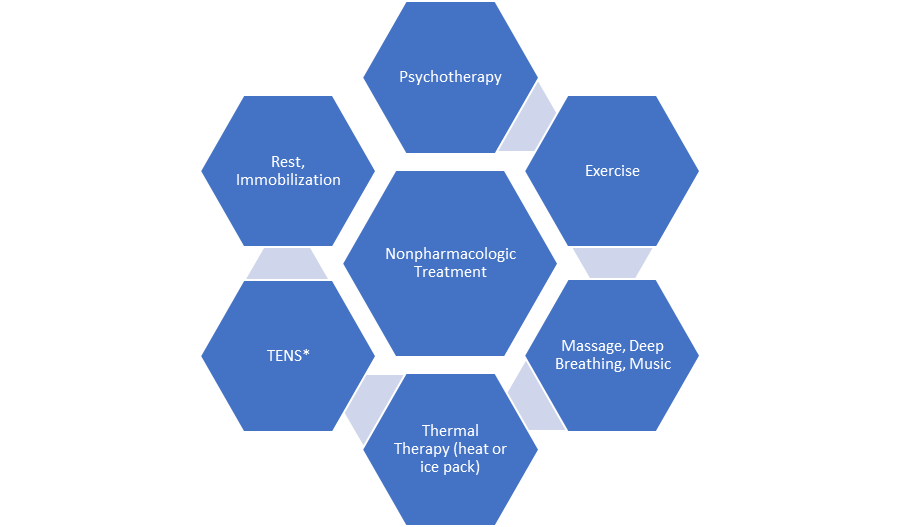
Some studies show that these alternative therapies may reduce the severity of pain generally, and they may benefit patients presenting with cancer pain.52 One study of 206 veterans in a VA Medical Center used two mind-body medical interventions: cognitive-behavioral therapy and acceptance and commitment therapy. These techniques were shown to decrease anxiety and provide effective treatment for chronic pain.53 Figure 1 summarizes some examples of nonpharmacologic treatments for patients presenting with pain.
Figure 1
Auxiliary Nonpharmacologic Treatment Options for Pain

*TENS -Transcutaneous Electrical Nerve Stimulation
Physical Interventions
Some of the more common physical interventions for pain management include massage, heat or cold (thermal) therapy,54 and transcutaneous electrical nerve stimulation (TENS),55,56 exercise regimens, acupuncture, yoga, tai chi,49,50 and biofeedback.57,58
Psychotherapies
Mind-body or psychological therapy52,53 may include cognitive-behavioral therapy,50,51 patient education (e.g., coping skills training, community support,49,52 hypnosis, and relaxation techniques.49,52,59-61 Distraction methods, such as watching television or reading a book, auditory measures, such as listening to music, or a physical distraction, or deep breathing, can provide some relief.59
Responsible Opioid Prescribing Practices
Responsible prescribing of opioids includes prescribing immediate-release opioids instead of extended-release or long-acting opioids upon initiation of opioid therapy for chronic pain.16 The lowest effective dosage, frequency, and duration should always be prescribed, along with careful reassessment of the individual risks and benefits of medications. When treating acute pain, 3 days or less of medication is often sufficient, and more than 7 days of therapy are rarely needed. When starting therapy for chronic pain or escalating the dose, clinicians should evaluate the benefits and harms with patients within 1 to 4 weeks of the dose change. They should continue to assess the patient every three months, or more frequently if necessary.16 A thorough review of a patient’s history should also be done to ensure safe treatment with opioids.16
Naloxone prescription availability, overdose prevention education, and basic risk reduction messaging (may include information about other medications a patient is taking and letting the patient know that mixing medications can be fatal) can all be lifesaving interventions available through the prescribers. Prescribers may also suggest that patients create an “overdose plan” that includes signs of overdose, how to administer naloxone, and to call 911 and share that information with friends, partners, and/or caregivers.16
A patient may also benefit from a treatment agreement, also known as a “pain contract.” The contract may, for example, require the patient use only one prescriber and one pharmacy.62
Stigma and Addiction
Accumulating evidence suggests that stigma is pervasive in patients suffering from chronic pain.63 Determinants include features of pain itself and intersectional factors, including comorbid conditions and social marginalization.63 Public stigma and feelings of self-stigma are possible with the use of opioids and controlled substances for pain. Stigma can contribute to suboptimal care.
Patients with substance use disorders (SUD) are up to three times more likely to be discharged against medical advice than those without SUD.64 Undertreated withdrawal, ongoing craving to use drugs, uncontrolled acute and chronic pain, stigma, and discrimination by hospital staff are possible reasons.
The burden of this stigma reflects broader social inequities.52 The pain community should implement anti-stigma interventions to enable compassion and equity for people with pain. Interventions may help individuals effectively manage internalized stigma, including feelings of shame and related self-critical thoughts.52 Interventions should be tailored to the needs and strengths of diverse groups to ensure that they do not perpetuate exclusionary practices.52
Counseling Patients on Opioid and Controlled Substance Use
According to CDC guidelines, patients should be educated on the benefits, common risks, serious risks, and alternatives to opioid treatments for pain.16 This counseling should take place before outpatient opioid therapy begins.16 However, substance use counseling is not frequently provided to patients who are taking opioids.65,66 This is even the case for patients at significant risk of a substance use disorder.65,66 Counseling patients about education may help reduce opioid-related overdose mortality.65,66
Highlights of the CDC’s recommended elements for communication and discussion with patients before prescribing outpatient opioid therapy for acute pain.16 Clinicians should tailor their counseling to the individual patient's specific needs and circumstances. The following is a non-exhaustive list:16
Advise patients that short-term opioid use can lead to unintended long-term opioid use.
Advise patients of the need for a plan for the discontinuation or tapering of opioid use as soon as feasible, to minimize withdrawal symptoms, if opioids have been used around the clock for more than a few days.
Review communication mechanisms and protocols patients can use to tell clinicians of severe or uncontrolled pain and to arrange for timely reassessment and management.
Advise patients about serious adverse effects of opioids, including potentially fatal respiratory depression and the development of a potentially serious opioid use disorder.
Advise patients about common effects of opioids, such as constipation, dry mouth, nausea, vomiting, drowsiness, confusion, tolerance, physical dependence, and withdrawal symptoms when stopping opioids. To prevent constipation associated with opioid use, advise patients to increase hydration, fiber intake, and maintain or increase physical activity. Prophylactic stimulant laxative such as senna, with or without a stool softener.
If formulations are prescribed that combine opioids with acetaminophen, advise patients of the risks of taking additional over-the-counter products containing acetaminophen.
Clearly communicate that patients may not reach a pain-free status. To help patients assess when a dose of opioids is needed, explain that the goal is to reduce pain to make it manageable.
Discuss the effects that opioids might have on a person’s ability to operate a vehicle or other machinery safely.
Discuss increased risks for opioid use disorder, respiratory depression, and death at higher dosages, along with the importance of taking only the opioids prescribed (i.e., not taking more opioids than prescribed or taking them more often).
Review increased risks for respiratory depression when opioids are taken with benzodiazepines, other sedatives, alcohol, nonprescribed or illicit drugs (e.g., heroin), or other opioids.
Discuss risks to household members and other persons if opioids are intentionally or unintentionally shared with others.
Discuss storage of opioids in a secure and preferably locked location, options for safe disposal of unused opioids, and the value of having naloxone available.
Discuss planned use of precautions to reduce risks, including naloxone for overdose reversal and clinician use of PDMP information.
Utilizing Prescription Drug Monitoring Programs
All 50 states and the District of Columbia have implemented PDMPs. prescription drug monitoring programs (PDMPs).67 Prescription drug monitoring programs can help to track opioid prescribing and influence the trajectory of the opioid crisis, as was the case in Pennsylvania.68 Another example is Michigan's Prescription Monitoring Program (MAPS).69 Michigan's Prescription Monitoring Program is used to track Schedule II to V controlled substance prescriptions dispensed in or into Michigan. It is a tool used by prescribers and dispensers to assess patient risk and is also used to prevent drug abuse and diversion at the prescriber, pharmacy, and patient levels. Michigan's Prescription Monitoring Program enables practitioners to determine if patients are receiving controlled substances from other providers and to assist in the prevention of prescription drug misuse. Registration for MAPS online is easy and only takes a few minutes. Michigan's Prescription Monitoring Program online is available 24/7 to request MAPS reports. The prescription monitoring solution provides state government agencies with accurate, real-time data that complies with their regulations and enables healthcare professionals (and their delegates) to access it. Clinicians must familiarize themselves with their state's prescription drug monitoring program and comply with applicable laws.
Michigan Automated Prescription System (MAPS) Resources Link: https://www.michigan.gov/lara/bureau-list/bpl/health/maps |
|---|
Barriers to utilizing PDMPs exist.70 They include system-related challenges and negative perceptions by the clinicians who may access this resource.
Treating Opioid Overdose with Opioid Antagonists
Naloxone
Naloxone has been used for decades to reverse an overdose and resuscitate individuals who have overdosed on opioids.71 Individuals who are candidates for naloxone availability have a history of overdose and/or they have a substance use disorder.71 Patients who are taking benzodiazepines with opioids, individuals who are at risk for returning to a high dose of opioids that they can no longer tolerate (including former inmates recently released from prison or patients leaving detoxification facilities), and patients who are taking higher doses of opioids (more than 50 MME/day) are also high priority candidates.71
Readily available naloxone for people who are likely to witness an overdose (family members, partners, close friends, etc.) can prevent unnecessary deaths. All patients prescribed opioids should have the option to have naloxone readily available, as they all have a risk of opioid overdose. Healthcare professionals can open the topic of discussion with patients on the risks of opioid therapy as well as the benefits of readily available naloxone.16,71
The FDA-approved routes of administration of naloxone for treating opioid overdose include intravenous, intranasal, intramuscular, subcutaneous, and intraosseous endotracheal use.71 Intranasal naloxone and naloxone auto-injectors that deliver a therapeutic dose of naloxone in an overdose situation are specifically useful for overdose in the community setting, i.e., outside of a medical setting.72-76
Nalmephene
Nalmephene is an opioid antagonist indicated for the emergency treatment of known or suspected overdose induced by natural or synthetic opioids in adults and pediatric patients aged 12 years and older, as manifested by respiratory and/or central nervous system depression.77 It is intended for immediate administration as emergency therapy in settings where opioids may be present. It is not a substitute for emergency medical care. It has a longer half-life than naloxone.77 Most common adverse reactions are nasal discomfort, headache, nausea, dizziness, hot flush, vomiting, anxiety, fatigue, nasal congestion, throat irritation, rhinalgia, decreased appetite, dysgeusia, erythema, and hyperhidrosis.77
Controlled Substances Act and Other Regulations
Controlled substances are drugs, medications, or chemicals regulated by the Controlled Substances Act (CSA) and state law.78-80 A substance’s classification as a controlled substance is determined by several factors, including a substance’s potential for misuse. Not all drugs listed as controlled substances are narcotics.78-80 The CSA is the primary law that governs controlled substances.
The CSA is enforced by the Drug Enforcement Administration (DEA).79,80 It is important to understand not only federal DEA laws but also state-controlled-substance regulations, and to follow whichever is more stringent. Drugs regulated by the CSA all have the potential for misuse. While opioid analgesics make up a substantial number of controlled substances, other classes of drugs are included, such as anabolic steroids, stimulants, hallucinogens, and depressants.81
Schedules of Controlled Substances
Drugs, substances, and certain chemicals used to make drugs are classified into five distinct categories or, more specifically, “schedules.”80,81
Table 1
DEA Schedules: Characteristics, Examples, Misuse
Dependency Potential80,81
| Schedule | Characteristics | Examples |
|---|---|---|
| Schedule I | Highest potential for misuse, abuse, or dependency; no accepted medical use; unsafe even under supervision. | Heroin |
| Schedule II | High misuse, abuse, dependency potential; no refills; each prescription must be written on a separate blank; partial fills allowed. | Oxycodone, Morphine, Methadone |
| Schedule III | Moderate misuse, abuse, dependency potential; refills allowed (max 5 in 6 months); partial fills allowed. | Buprenorphine/naloxone, Codeine/acetaminophen |
| Schedule IV | Lower misuse, abuse, and dependency potential than Schedules I-III; more limited dependence risk; similar refill rules to Schedule III. | Alprazolam, Diazepam, Tramadol, Clonazepam, Midazolam, Temazepam |
| Schedule V | Lowest misuse, abuse, dependency potential; refills permitted, may refill up to 6 months; partial fills allowed | Pregabalin |
A substance’s placement within a schedule depends on several factors, most notably the drug’s acceptable medical use and potential for misuse.80,81 Table 1 above provides details about the schedules.
Drug Enforcement Administration
The Drug Enforcement Administration (DEA) was created in 1973 as the primary organization dedicated to the control of drug use at the federal level. Prior to its implementation, multiple organizations controlled different aspects of drug enforcement. The DEA was established to combine these duties.82
The DEA, which operates under the Department of Justice, enforces controlled substance laws and regulations. Among many other tasks, the DEA investigates and prosecutes those who violate the CSA and works to track and act against those involved with illicit drug trafficking.82
On December 29, 2022, the Consolidated Appropriations Act of 2023 enacted a new one-time, eight-hour training requirement for all Drug Enforcement Administration (DEA)-registered practitioners on the treatment and management of patients with opioid or other substance use disorders.83 The DEA requires the registrant to track and monitor providers who prescribe and dispense controlled substances, thereby limiting access to these drugs to the public and maintaining accountability.83
Stock Ordering of Controlled Substances
Schedule CII drugs must be ordered for pharmacy or facility use by using a DEA Form 222 or the electronic Controlled Substance Ordering System (CSOS).84 Only staff with a power of attorney authority (established by a signed power of attorney form that must be kept on premises) can sign a DEA Form 222 or CSOS orders electronically.84 There are separate intake and recordkeeping requirements for each, depending on whether paper DEA Form 222s or CSOS ordering is used.84
Schedule CIII through V drugs can be ordered through normal ordering channels; however, wholesalers and distributors will require certain registration documentation before initially shipping any controlled substance to a pharmacy or facility.
Storage, Recordkeeping, and Disposal of Controlled Substances
Per the CSA, Schedule II through V controlled substances can be stored in one of the two following manners:85
In a “securely locked, substantially constructed cabinet;”
Dispersed in with non-controlled stock in such a way as to obstruct theft/diversion (in general, this is interpreted to mean organized in alphabetical order intermixed with non-controls, rather than by schedule or some other grouping);
Other means provided that the manner of storage has received prior DEA approval.
Specific record-keeping and inventory management requirements (at the federal and, in some cases, state levels) must be followed; however, these are beyond the scope of this course.
Security Features
Security features enhance the storage of controlled substances. Controlled substances are typically stored in locked, substantially constructed safes or steel cabinets that meet specific requirements depending on the substance's schedule. Access to storage areas should be restricted to a minimal number of authorized personnel with key or electronic access. Perimeter security is an important consideration. The area where these agents are stocked should have secure doors, windows, alarm systems, and surveillance cameras. Proper recordkeeping and inventory controls are required.
Healthcare professionals often face the dilemma of how to dispose of expired, broken, spilled, or otherwise unusable controlled substances that are still in inventory. Note that this type of disposal is distinct from “wastage” (which is the disposal of an unused portion of a drug that has been removed from inventory for immediate administration to a patient and which has not been entirely administered to the patient, such as with vial overfill). According to the CSA, there are two methods of disposal:86-88
Destroy on-site using a method that makes the controlled substances completely irretrievable
Preferred method: Transfer to a “reverse distributor” for off-site disposal
Both disposal methods are commonly used. Note that methods such as dissolving in water or flushing down the toilet do not meet the “irretrievable” requirement.86-88
It is feasible to instruct a patient with unusable controlled substances to mix them with cat litter, used coffee grounds, or dirt, place them in a bag, and discard the bag in the trash to prevent retrieval.89
Small and affordable options (such as Rx DestroyerTM) are popular methods for irretrievably destroying controlled substances. Additional requirements apply for drugs that are also hazardous substances.
The DEA Form 41, “REGISTRANT RECORD OF CONTROLLED SUBSTANCES DESTROYED,” must be witnessed by two employees, and it is kept on-site.88 The DEA Form 41 is not submitted to the DEA, and it must be available in the case of audit or inspection. DEA Form 41 should not be used to document wastage.88 Each pharmacy or facility should have established policies for adjusting inventories to account for destruction (and safeguards to prevent inventory adjustments from being used to mask diversion).
When transferring to a reverse distributor, the pharmacy must receive a DEA Form 222 for recordkeeping, as it is technically acting as the supplier for the reverse distributor in this transaction.87
State-Level Scheduling and Regulations
States can schedule drugs differently from the CSA. For instance, gabapentin is not a controlled substance under the CSA, but it is a controlled substance in the states of Kentucky, Tennessee, and West Virginia.90 The State of Texas requires electronic prescribing of all controlled medications unless there is a waiver or emergency.91 Federal and state laws regarding controlled substances change from time to time. Clinicians need to check the schedules in each state to stay up to date.
Patient Case
A 52-year-old man presents to the clinic with a 4 year history of chronic low back pain related to degenerative disc disease and lumbar surgery. The pain has worsened, and he has trouble sleeping through the night. Acetaminophen, NSAIDs, and physical therapy provided only partial relief. He takes lisinopril, metformin, and OTC ibuprofen as needed.
What is the next step recommended for this patient?
The physician conducts a pain assessment, including pain intensity, function, psychological history, and screening for substance use disorder. Neuropathic pain is confirmed to also be present. An opioid risk assessment reveals a moderate risk for opioid misuse. The PDMP report shows he received two short courses of hydrocodone-acetaminophen from the ER within the past 6 months. The interprofessional team of physician, pharmacist, and physical therapist recommends optimizing nonopioid treatment and nonpharmacologic interventions.
Describe the prescription and other considerations for this patient?
Prescribe a trial of a nonsteroidal anti-inflammatory prescription with gastroprotective strategies. Initiate a titration of a gabapentenoid for the neuropathic features of his pain. Referrals are made for structured exercise and cognitive-behavioral therapy. The pharmacist reviews potential drug interactions, educates regarding OTC use and avoiding duplicate therapy with OTCs, and counsels on risks of combining gabapentinoids and opioids.
Return to Patient Case
The patient returns to the clinic 3 months later, expressing only partial pain relief.
What might be the next step?
Shared decision-making could include a cautious trial of immediate-release opioid therapy and discussion of realistic treatment goals of improved function rather than complete pain relief. The plan should be to prescribe the lowest effective dose for the shortest duration, with the next appointment in 30 days.
The patient should be advised of potential adverse effects, cautioned about driving, operating machinery, alcohol intake, and safe disposal of medication. The patient should be co-prescribed naloxone, and the patient, family members, partners, or close friends should be educated on recognizing an overdose and how to respond.
Summary
Pain is often a complex experience involving physical, psychological, and social factors. Prescription opioids are used to treat moderate to severe pain; however, although most people who take opioids long-term do not develop a substance use disorder, a small percentage of people experience a continuing, compulsive need for opioids, which is characteristic of an opioid use disorder. Therefore, a risk-benefit analysis should be conducted to determine whether an alternative treatment plan is warranted. Alternative pain management plans may include pharmacological and non-pharmacological treatment options.
Interprofessional teams are crucial to effective pain management, bringing diverse expertise together to develop a multifaceted treatment plan through shared decision-making. Healthcare professionals' personalized treatment strategies potentially lead to reduced pain, improved quality of life, and fewer clinic or hospital visits. Mechanisms for patient assessment, monitoring, and follow-up can also bridge the gap between clinical guidelines and the implementation of pain care.
References
National Institute on Drug Abuse. Opioids. NIH-NIDA. November 2024. Accessed May 28, 2025. https://nida.nih.gov/research-topics/opioids#references
Lambert DG. Opioids and opioid receptors; understanding pharmacological mechanisms as a key to therapeutic advances and mitigation of the misuse crisis. BJA Open. 2023;6:100141. Published 2023 May 17. doi:10.1016/j.bjao.2023.100141
Drewes AM, Jensen RD, Nielsen LM, et al. Differences between opioids: pharmacological, experimental, clinical and economical perspectives. Br J Clin Pharmacol. 2013;75(1):60-78. doi:10.1111/j.1365-2125.2012.04317.x
Manchikanti L, Kaye AM, Knezevic NN, et al. Responsible, Safe, and Effective Prescription of Opioids for Chronic Non-Cancer Pain: American Society of Interventional Pain Physicians (ASIPP) Guidelines. Pain Physician. 2017;20(2S):S3-S92.
National Institute on Drug Abuse. Prescription Opioids DrugFacts. NIH-NIDA. June 2021. Accessed May 28, 2025. https://nida.nih.gov/publications/drugfacts/prescription-opioids
Savage SR, Kirsh KL, Passik SD. Challenges in using opioids to treat pain in persons with substance use disorders. Addict Sci Clin Pract. 2008;4(2):4-25. doi:10.1151/ascp08424
Mercer Lindsay N, Chen C, Gilam G, Mackey S, Scherrer G. Brain circuits for pain and its treatment. Sci Transl Med. 2021;13(619):eabj7360. doi:10.1126/scitranslmed.abj7360
Gatchel R, Ray C, Spights K, Garner T, Beggs E, Hulla R, Salas E, Humphrey M, Castro A. The Neuroscience of Pain. Pract Pain Manag. 2016;16(5).
Yam MF, Loh YC, Tan CS, Khadijah Adam S, Abdul Manan N, Basir R. General Pathways of Pain Sensation and the Major Neurotransmitters Involved in Pain Regulation. Int J Mol Sci. 2018;19(8):2164. Published 2018 Jul 24. doi:10.3390/ijms19082164
Busse JW, Wang L, Kamaleldin M, et al. Opioids for Chronic Noncancer Pain: A Systematic Review and Meta-analysis. JAMA. 2018;320(23):2448-2460. doi:10.1001/jama.2018.1847
Volkow ND, McLellan AT. Opioid Abuse in Chronic Pain--Misconceptions and Mitigation Strategies. N Engl J Med. 2016;374(13):1253-1263. doi:10.1056/NEJMra1507771
Ballantyne JC. "Safe and effective when used as directed": the case of chronic use of opioid analgesics. J Med Toxicol. 2012;8(4):417-23. doi: 10.1007/s13181-012-0257-8.
Shah I, Sheth SG, Kothari DJ. Pain management in chronic pancreatitis incorporating safe opioid practices: Challenge accepted. World J Gastroenterol. 2021;27(23):3142-3147. doi: 10.3748/wjg.v27.i23.3142
Oliveira CB, Maher CG, Pinto RZ, Traeger AC, Lin CC, Chenot JF, van Tulder M, Koes BW. Clinical practice guidelines for the management of non-specific low back pain in primary care: an updated overview. Eur Spine J. 2018;27(11):2791-2803. doi: 10.1007/s00586-018-5673-2
Lin I, Wiles L, Waller R, et al. What does best practice care for musculoskeletal pain look like? Eleven consistent recommendations from high-quality clinical practice guidelines: systematic review. Br J Sports Med. 2020;54(2):79-86. doi: 10.1136/bjsports-2018-099878
Dowell D, Ragan KR, Jones CM, Baldwin GT, Chou R. CDC Clinical Practice Guideline for Prescribing Opioids for Pain - United States, 2022. MMWR Recomm Rep. 2022;71(3):1-95. Published 2022 Nov 4. doi:10.15585/mmwr.rr7103a1
Department of Veterans Affairs. VA/DoD Clinical Practice Guidelines: The Use of Opioids in the Management of Chronic Pain. VA. 2022. Accessed May 30, 2025. https://www.healthquality.va.gov/guidelines/Pain/cot/VADoDOpioidsCPGProviderSummary.pdf
Argoff CE, Alford DP, Fudin J, et al. Rational Urine Drug Monitoring in Patients Receiving Opioids for Chronic Pain: Consensus Recommendations. Pain Med. 2018;19(1):97-117. doi:10.1093/pm/pnx285
Nazarian A, Negus SS, Martin TJ. Factors mediating pain-related risk for opioid use disorder. Neuropharmacology. 2021;186:108476. doi:10.1016/j.neuropharm.2021.108476
Davis CS, Lieberman AJ. Laws limiting prescribing and dispensing of opioids in the United States, 1989-2019. Addiction. 2021;116(7):1817-1827. doi:10.1111/add.15359
Barnes M, Giampa J, Caron M. Opioid Prescribing and Physician Autonomy: A Quality of Care Perspective. HSS J. 2019;15(1):20-26. doi:10.1007/s11420-018-09666-8
Webster LR, Webster RM. Predicting aberrant behaviors in opioid-treated patients: preliminary validation of the Opioid Risk Tool. Pain Med. 2005 Nov-Dec;6(6):432-42. doi: 10.1111/j.1526-4637.2005.00072.x
Wongrakpanich S, Wongrakpanich A, Melhado K, Rangaswami J. A Comprehensive Review of Non-Steroidal Anti-Inflammatory Drug Use in The Elderly. Aging Dis. 2018;9(1):143-150. Published 2018 Feb 1. doi:10.14336/AD.2017.0306
El-Tallawy SN, Nalamasu R, Salem GI, LeQuang JAK, Pergolizzi JV, Christo PJ. Management of Musculoskeletal Pain: An Update with Emphasis on Chronic Musculoskeletal Pain. Pain Ther. 2021;10(1):181-209. doi:10.1007/s40122-021-00235-2
Martinez V, Beloeil H, Marret E, Fletcher D, Ravaud P, Trinquart L. Non-opioid analgesics in adults after major surgery: systematic review with network meta-analysis of randomized trials. Br J Anaesth. 2017;118(1):22-31. doi:10.1093/bja/aew391
Ennis ZN, Dideriksen D, Vaegter HB, Handberg G, Pottegård A. Acetaminophen for Chronic Pain: A Systematic Review on Efficacy. Basic Clin Pharmacol Toxicol. 2016;118(3):184-189. doi:10.1111/bcpt.12527
Moore RA, Derry S, Wiffen PJ, Straube S, Aldington DJ. Overview review: Comparative efficacy of oral ibuprofen and paracetamol (acetaminophen) across acute and chronic pain conditions. Eur J Pain. 2015;19(9):1213-1223. doi:10.1002/ejp.649
Cuomo, A, et al. Multimodal approaches and tailored therapies for pain management: the trolley analgesic model. J Pain Res. 2019; 12:711–714.
Katz JA. COX-2 inhibition: what we learned--a controversial update on safety data. Pain Med. 2013 Dec;14 Suppl 1:S29-34. doi: 10.1111/pme.12252. PMID: 24373107.
Yoon E, Babar A, Choudhary M, Kutner M, Pyrsopoulos N. Acetaminophen-Induced Hepatotoxicity: a Comprehensive Update. J Clin Transl Hepatol. 2016;4(2):131-142. doi:10.14218/JCTH.2015.00052
LYRICA- pregabalin capsule LYRICA- pregabalin solution. Prescribing information. Parke-Davis Div of Pfizer Inc. Updated June 15, 2020. Accessed February 8, 2026. https://dailymed.nlm.nih.gov/dailymed/drugInfo.cfm?setid=60185c88-ecfd-46f9-adb9-b97c6b00a553
Taylor CP, Angelotti T, Fauman E. Pharmacology and mechanism of action of pregabalin: the calcium channel alpha2-delta (alpha2-delta) subunit as a target for antiepileptic drug discovery. Epilepsy Res. 2007;73(2):137-150. doi:10.1016/j.eplepsyres.2006.09.008
PREGABALIN capsule. Prescribing Information. Alembic Pharmaceuticals Inc. Updated July 29, 2025. Accessed February 7, 2026. https://dailymed.nlm.nih.gov/dailymed/drugInfo.cfm?setid=cf7b4b67-b017-47ac-af3f-bde5bd07bb0c#section-9
NEURONTIN- gabapentin capsule NEURONTIN- gabapentin tablet, film coated NEURONTIN- gabapentin solution. Prescribing information. Parke-Davis Div of Pfizer Inc. Updated July 12, 2022. Accessed February 8, 2026. https://dailymed.nlm.nih.gov/dailymed/drugInfo.cfm?setid=ee9ad9ed-6d9f-4ee1-9d7f-cfad438df388
Eghrari NB, Yazji IH, Yavari B, Van Acker GM, Kim CH. Risk of dementia following gabapentin prescription in chronic low back pain patients. Reg Anesth Pain Med. Published online July 10, 2025. doi:10.1136/rapm-2025-106577
Drug Enforcement Administration Diversion Control Division. Gabapentin. Published March 2025. Accessed February 8, 2026. https://www.deadiversion.usdoj.gov/drug_chem_info/gabapentin.pdf
Mattson CL, Chowdhury F, Gilson TP. Notes from the Field: Trends in Gabapentin Detection and Involvement in Drug Overdose Deaths - 23 States and the District of Columbia, 2019-2020. MMWR Morb Mortal Wkly Rep. 2022;71(19):664-666. Published 2022 May 13. doi:10.15585/mmwr.mm7119a3
McAnally H, Bonnet U, Kaye AD. Gabapentinoid Benefit and Risk Stratification: Mechanisms Over Myth. Pain Ther. 2020;9(2):441-452. doi:10.1007/s40122-020-00189-x
Gomes T, Juurlink DN, Antoniou T, Mamdani MM, Paterson JM, van den Brink W. Gabapentin, opioids, and the risk of opioid-related death: A population-based nested case-control study. PLoS Med. 2017;14(10):e1002396. Published 2017 Oct 3. doi:10.1371/journal.pmed.1002396
Busillo JM, Cidlowski JA. The five Rs of glucocorticoid action during inflammation: ready, reinforce, repress, resolve, and restore. Trends Endocrinol Metab. 2013;24(3):109-119. doi:10.1016/j.tem.2012.11.005
Haywood A, Good P, Khan S, et al. Corticosteroids for the management of cancer-related pain in adults. Cochrane Database Syst Rev. 2015;2015(4):CD010756. Published 2015 Apr 24. doi:10.1002/14651858.CD010756.pub2
Schneider J, Patterson M, Jimenez XF. Beyond depression: Other uses for tricyclic antidepressants. Cleve Clin J Med. 2019;86(12):807-814. doi:10.3949/ccjm.86a.19005
Fornasari D. Pharmacotherapy for Neuropathic Pain: A Review. Pain Ther. 2017;6(Suppl 1):25-33. doi:10.1007/s40122-017-0091-4
Hirase T, Hirase J, Ling J, et al. Duloxetine for the Treatment of Chronic Low Back Pain: A Systematic Review of Randomized Placebo-Controlled Trials. Cureus. 2021;13(5):e15169. Published 2021 May 22. doi:10.7759/cureus.15169
SUBOXONE- buprenorphine hydrochloride, naloxone hydrochloride film, soluble. Prescribing information. Indivior Inc. Updated January 8, 2026. Accessed February 8, 2026. https://dailymed.nlm.nih.gov/dailymed/drugInfo.cfm?setid=8a5edcf9-828c-4f97-b671-268ab13a8ecd
Koehl JL, Zimmerman DE, Bridgeman PJ. Medications for management of opioid use disorder. Am J Health Syst Pharm. 2019;76(15):1097-1103. doi: 10.1093/ajhp/zxz105
JOURNAVX- suzetrigine tablet, film coated. Prescribing information. Vertex Pharmaceuticals Incorporated. Updated January 26, 2026. Accessed February 8, 2026. https://dailymed.nlm.nih.gov/dailymed/drugInfo.cfm?setid=f0976da4-1d20-4517-945c-b60ed2f41c12
Lee D, Campbell RE, Leider ML, Pepe MM, Tucker BS, Tjoumakaris FP. Efficacy of transdermal 4% lidocaine patches for postoperative pain management after arthroscopic rotator cuff repair: a prospective trial. JSES Int. 2021;6(1):104-110. Published 2021 Oct 26. doi:10.1016/j.jseint.2021.09.006
Leasure WB, Leasure EL. The Role of Integrated Care in Managing Chronic Pain. Focus (Am Psychiatr Publ). 2017;15(3):284-291. doi:10.1176/appi.focus.20170014
Myers SP, Vigar V. The State of the Evidence for Whole-System, Multi-Modality Naturopathic Medicine: A Systematic Scoping Review. J Altern Complement Med. 2019;25(2):141-168. doi:10.1089/acm.2018.0340
Islam S, Frey N. Psychotherapy for the Treatment of Acute Musculoskeletal Pain: A Review of Clinical Effectiveness and Guidelines [Internet]. Ottawa (ON): Canadian Agency for Drugs and Technologies in Health; 2020 Apr 17. Accessed May 30, 2025. https://www.ncbi.nlm.nih.gov/books/NBK563005/
Maindet C, Burnod A, Minello C, George B, Allano G, Lemaire A. Strategies of complementary and integrative therapies in cancer-related pain-attaining exhaustive cancer pain management. Support Care Cancer. 2019;27(8):3119-3132. doi: 10.1007/s00520-019-04829-7
Cosio D, Swaroop S. The Use of Mind-body Medicine in Chronic Pain Management: Differential Trends and Session-by-Session Changes in Anxiety. J Pain Manag Med. 2016;2(2):114.
Chandler A, Preece J, Lister S. Using heat therapy for pain management. Nurs Stand. 2002;17(9):40-42. doi:10.7748/ns2002.11.17.9.40.c3297
Vance CG, Dailey DL, Rakel BA, Sluka KA. Using TENS for pain control: the state of the evidence. Pain Manag. 2014;4(3):197-209. doi:10.2217/pmt.14.13
Sluka KA, Bjordal JM, Marchand S, Rakel BA. What makes transcutaneous electrical nerve stimulation work? Making sense of the mixed results in the clinical literature. Phys Ther. 2013;93(10):1397-1402. doi:10.2522/ptj.20120281
Frank DL, Khorshid L, Kiffer JF, Moravec CS, McKee MG. Biofeedback in medicine: who, when, why and how?. Ment Health Fam Med. 2010;7(2):85-91.
Berry ME, Chapple IT, Ginsberg JP, Gleichauf KJ, Meyer JA, Nagpal ML. Non-pharmacological Intervention for Chronic Pain in Veterans: A Pilot Study of Heart Rate Variability Biofeedback. Glob Adv Health Med. 2014;3(2):28-33. doi:10.7453/gahmj.2013.075
Webster RK, Rubin GJ. Influencing Side-Effects to Medicinal Treatments: A Systematic Review of Brief Psychological Interventions. Front Psychiatry. 2019;9:775. Published 2019 Feb 5. doi:10.3389/fpsyt.2018.00775
Luberto CM, Hall DL, Park ER, Haramati A, Cotton S. A Perspective on the Similarities and Differences Between Mindfulness and Relaxation. Glob Adv Health Med. 2020;9:2164956120905597. Published 2020 Feb 5. doi:10.1177/2164956120905597
Vambheim SM, Kyllo TM, Hegland S, Bystad M. Relaxation techniques as an intervention for chronic pain: A systematic review of randomized controlled trials. Heliyon. 2021;7(8):e07837. Published 2021 Aug 20. doi:10.1016/j.heliyon.2021.e07837
Pacheco S, Nguyen LMT, Halphen JM, et al. Adherence to Opioid Patient Prescriber Agreements at a Safety Net Hospital. Cancers (Basel). 2023;15(11):2943. Published 2023 May 27. doi:10.3390/cancers15112943
Scott W, Buchman DZ, VasiIiou VS. The multi-dimensional stigma of chronic pain: A narrative review. Curr Opin Psychol. 2025;62:101980. doi: 10.1016/j.copsyc.2024.101980
Simon R, Snow R, Wakeman S. Understanding why patients with substance use disorders leave the hospital against medical advice: A qualitative study. Subst Abus. 2020;41(4):519-525. doi: 10.1080/08897077.2019.1671942
Evoy KE, Leonard CE, Covvey JR, et al. Receipt of Substance Use Counseling Among Ambulatory Patients Prescribed Opioids in the United States. Subst Abuse. 2020;14:1178221819894588. Published 2020 May 22. doi:10.1177/1178221819894588
Mello MJ, Lee LK, Christison-Lagay E, et al. Counseling for opioids prescribed at discharge of hospitalized adolescent trauma patients. Inj Epidemiol. 2023;10(Suppl 1):53. Published 2023 Oct 23. doi:10.1186/s40621-023-00465-2
American Association of Nurse Practitioners. Issues at a Glance: Prescription Drug Monitoring Programs (PDMP). AANP, Reviewed and Revised August 2025. Accessed February 8, 2026. https://www.aanp.org/advocacy/advocacy-resource/policy-briefs/issues-at-a-glance-prescription-drug-monitoring-programs-pdmp
Adalbert JR, Syal A, Varshney K, George B, Hom J, Ilyas AM. The prescription drug monitoring program in a multifactorial approach to the opioid crisis: PDMP data, Pennsylvania, 2016-2020. BMC Health Serv Res. 2023;23(1):364. Published 2023 Apr 13. doi:10.1186/s12913-023-09272-3
State of Michigan. Licensing and Regulatory Affairs. MAPS Users. michigan.gov. 2025. Accessed February 8, 2026. https://www.michigan.gov/lara/bureau-list/bpl/health/maps/MAPS%20users
Tay E, Makeham M, Laba TL, Baysari M. Prescription drug monitoring programs evaluation: A systematic review of reviews. Drug Alcohol Depend. 2023;247:109887. doi:10.1016/j.drugalcdep.2023.109887
National Institute on Drug Abuse. Opioids. Naloxone Drug Facts. NIH-NIDA. January 2022. Accessed May 31, 2025. https://nida.nih.gov/publications/drugfacts/naloxone
KLOXXADO- naloxone hcl spray. Prescribing Information. Hikma Specialty USA Inc. Updated August 25, 2025. Accessed February 7, 2026. https://dailymed.nlm.nih.gov/dailymed/drugInfo.cfm?setid=ebf0f833-c1c0-487c-8f29-01fa8c61b6cb
ZIMHI- naloxone hydrochloride injection, solution. Prescribing Information. ZMI Pharma Inc. Updated December 4, 2025. Accessed February 7, 2026. https://dailymed.nlm.nih.gov/dailymed/drugInfo.cfm?setid=523c0909-bff6-4010-988a-53de18b7cb3f
Wermeling DP. Review of naloxone safety for opioid overdose: practical considerations for new technology and expanded public access. Ther Adv Drug Saf. 2015;6(1):20-31. doi:10.1177/2042098614564776
Rzasa Lynn R, Galinkin JL. Naloxone dosage for opioid reversal: current evidence and clinical implications. Ther Adv Drug Saf. 2018;9(1):63-88. doi:10.1177/2042098617744161
Dietze P, Jauncey M, Salmon A, et al. Effect of Intranasal vs Intramuscular Naloxone on Opioid Overdose: A Randomized Clinical Trial [published correction appears in JAMA Netw Open. 2020 Apr 1;3(4):e206593. doi: 10.1001/jamanetworkopen.2020.6593.]. JAMA Netw Open. 2019;2(11):e1914977. Published 2019 Nov 1. doi:10.1001/jamanetworkopen.2019.14977
OPVEE- nalmefene hydrochloride spray. Prescribing information. Indivior Inc. Updated January 8, 2026. Accessed February 8, 2026. https://www.accessdata.fda.gov/drugsatfda_docs/label/2023/217470Orig1s000.pdf
Wallace LS. Terminology matters: patient understanding of "opioids" and "narcotics". Pain Pract. 2013;13(2):104-8.
Department of Justice. Pharmacist’s Manual: An Informational Outline of the Controlled Substances Act. DOJ-DEA. 2022. https://www.deadiversion.usdoj.gov/GDP/(DEA-DC-046R1)(EO-DEA154R1)_Pharmacist's_Manual_DEA.pdf
21 U.S.C. § 811
21 C.F.R § 1308.11-15. last amended 5/29/2025.
US Department of Justice Drug Enforcement Administration. DEA history (n.d.). Accessed June 2, 2025. https://www.dea.gov/about/history
US Department of Justice Drug Enforcement Administration. Medication Assisted Treatment. (n.d.). Accessed February 8, 2026. https://www.deadiversion.usdoj.gov/pubs/docs/mate_training.html
21 C.F.R § 1305, et seq.
21 C.F.R § 1301.72
21 C.F.R § 1317.90
21 C.F.R § 1317.95
US Department of Justice Drug Enforcement Administration Division of Diversion Control. Destruction of controlled substances (n.d.). Form Expires 04/30/2027. Accessed February 8, 2026. https://www.deadiversion.usdoj.gov/21cfr_reports/surrend/41_form.pdf
US Food and Drug Administration. Drug Disposal: Dispose "Non-Flush List" Medicine in Trash. FDA. October 31, 2024. Accessed February 8, 2026. https://www.fda.gov/drugs/disposal-unused-medicines-what-you-should-know/drug-disposal-dispose-non-flush-list-medicine-trash
Grauer JS, Cramer JD. Association of State-Imposed Restrictions on Gabapentin with Changes in Prescribing in Medicare. J Gen Intern Med. 2022;37(14):3630-3637. doi: 10.1007/s11606-021-07314-2
Texas Health and Safety Code, § 481.0755
DISCLAIMER
The information provided in this course is general in nature, and it is designed solely to provide participants with continuing education credit(s). This course and materials are not meant to substitute for the independent, professional judgment of any participant regarding that participant’s professional practice, including but not limited to patient assessment, diagnosis, treatment, and/or health management. Medical and pharmacy practices, rules, and laws vary from state to state, and this course does not cover the laws of each state; therefore, participants must consult the laws of their state as they relate to their professional practice.
Healthcare professionals must consult their employer, healthcare facility, hospital, or other organization for guidelines, protocols, and procedures to follow. The information provided in this course does not replace those guidelines, protocols, and procedures, but is for academic purposes only, and this course’s limited purpose is for the completion of continuing education credits.
Participants are advised and acknowledge that information related to medications, their administration, dosing, contraindications, adverse reactions, interactions, warnings, precautions, or accepted uses is constantly changing. Any person taking this course understands that such a person must make an independent review of medication information before any patient assessment, diagnosis, treatment and/or health management. Any discussion of off-label use of any medication, device, or procedure is informational only, and such uses are not endorsed hereby.
Nothing contained in this course represents the opinions, views, judgments, or conclusions of RxCe.com LLC. RxCe.com LLC is not liable or responsible to any person for any inaccuracy, error, or omission with respect to this course or course material.
© RxCe.com LLC 2026: All rights reserved. No reproduction of all or part of any content herein is allowed without the prior, written permission of RxCe.com LLC.
RxCe.com
© RxCe.com LLC 2025: All rights reserved.