
ABSCESS MANAGEMENT: A GUIDE FOR THE HEALTHCARE TEAM
Faculty:
L. Austin Fredrickson, MD, FACP
L. Austin Fredrickson is an Associate Professor of Internal Medicine at Northeast Ohio Medical University, where he serves as core faculty and teaches diagnostics, therapeutics, clinical skills, and health humanities. He is board-certified in general internal medicine and practices rural primary care.
Liz Fredrickson, PharmD, BCPS
Liz Fredrickson, PharmD, BCPS, is an Associate Professor of Pharmacy Practice and Pharmaceutical Sciences at the Northeast Ohio Medical University (NEOMED) College of Pharmacy, where she is course director of the Parenteral Products and Basic Pharmaceutics Lab courses.
Pamela Sardo, PharmD, BS
Pamela Sardo, PharmD, BS, is a freelance medical writer and licensed pharmacist. She is the founder and principal at Sardo Solutions in Texas. Pam received her BS from the University of Connecticut and her PharmD from the University of Rhode Island. Pam’s career spans many years in retail, clinics, hospitals, long-term care, Veterans Affairs, and managed health care responsibilities across a broad range of therapeutic classes and disease states.
Abstract
Abscesses are collections of pus in the dermis or deeper skin tissues and are commonly caused by methicillin-resistant Staphylococcus aureus (MRSA) infections. Furuncles, or boils, result from staphylococcal infections that affect a hair follicle and the surrounding tissue. Treatment of abscesses requires understanding their common risk factors, pathophysiology, etiology, and epidemiology, as well as knowledge of clinical manifestations and diagnosis. Additionally, effective abscess management requires a comprehensive, patient-centered approach facilitated by a well-coordinated interprofessional care team. The Interprofessional Education Collaborative (IPEC) competencies provide a framework to optimize collaboration among healthcare professionals. These competencies are critical to ensuring safe, efficient, and high-quality care. When healthcare professionals respect each other's expertise, work cohesively, and prioritize the patient’s well-being, outcomes are optimized. By integrating evidence-based practices and fostering collaboration, healthcare teams can achieve better outcomes and minimize complications for patients with abscesses.
Accreditation Statements
In support of improving patient care, RxCe.com LLC is jointly accredited by the Accreditation CouncilTM for Continuing Medical Education (ACCME®), the Accreditation Council for Pharmacy Education (ACPE®), and the American Nurses Credentialing Center (ANCC®), to provide continuing education for the healthcare team.

Joint Universal Activity Number: The Joint Accreditation Universal Activity Numbers assigned to this activity are as follows:
Pharmacists: JA4008424-0000-26-146-H01-P
Pharmacy Technicians: JA4008424-0000-26-146-H01-T
Credits: 2 contact hour(s) (0.2 CEU(s)) of continuing education credit.
Credit Types:
Pharmacy - 2 Credits
Type of Activity: Application
Media: Computer-Based Training (i.e., online courses)
Estimated time to complete activity: 2 contact hour(s) (0.2 CEU(s)), including Activity Pre-Test, Post-Test, and Activity Evaluation.
Release Date: July 1 , 2026 Expiration Date: December 30, 2027
Target Audience: This educational activity is for Pharmacists and Pharmacy Technicians.
How to Earn Credit: From July 1, 2026, through December 30, 2027, participants must:
Read the “learning objectives” and “author and planning team disclosures;”
Take the “Educational Activity Pre-Test;”
Study the section entitled “Educational Activity;” and
Complete the Educational Activity Post-Test and Activity Evaluation. The Educational Activity Post-Test will be graded automatically. Following successful completion of the Educational Activity Post-Test with a score of 70% or higher, a statement of participation will be made available immediately. (No partial credit will be given.)
CE and CME Credits: Credits for this course will be uploaded to CPE Monitor® for pharmacists and pharmacy technicians.
Statement of Need
Abscesses are collections of pus in the dermis or deeper skin tissues and are commonly caused by methicillin-resistant Staphylococcus aureus (MRSA) infections. Clinicians need to know the common risk factors, pathophysiology, etiology, epidemiology, clinical manifestations, and diagnosis of abscesses. This activity provides learning to address knowledge gaps related to abscess management.
Learning Objectives: Upon completion of this educational activity, participants should be able to:
Describe clinical manifestations of abscesses
Recall treatment strategies for furuncles and carbuncles
Compare and contrast antibiotics used in the management of abscesses
Educate patients and caregivers on the appropriate management of abscesses
Describe the collaborative roles and responsibilities of healthcare professionals, including pharmacists and physicians, in the diagnosis and treatment of abscesses
Disclosures
The following individuals were involved in planning, developing, and/or authoring this activity: L. Austin Fredrickson, MD, FACP; Liz Fredrickson, PharmD, BCPS; and Pamela Sardo, PharmD, BS. None of the individuals involved in developing this activity has a conflict of interest or financial relationships related to the subject matter. There are no financial relationships or commercial or financial support relevant to this activity to report or disclose by RxCe.com or any of the individuals involved in the development of this activity.
© RxCe.com LLC 2026: All rights reserved. No reproduction of all or part of any content herein is allowed without the prior, written permission of RxCe.com LLC.
Educational Activity Pre-Test
Which of the following physical signs is commonly associated with carbuncles?
Presence of a single lesion
Presence of broad, swollen, deep follicular masses
Lack of systemic signs such as fever
Lesions that drain spontaneously
Which of the following is an appropriate management strategy for abscesses?
The treatment of abscesses always involves the use of systemic antibiotics
Large furuncles can be treated with moist heat to encourage drainage
Topical therapies, including clindamycin or mupirocin, can be prescribed
Small furuncles always require incision and drainage
Which antibiotic is commonly used to treat abscesses with suspected methicillin-resistant Staphylococcus aureus (MRSA) infections?
Amoxicillin
Cephalexin
Trimethoprim-sulfamethoxazole
Penicillin
Educational Activity
Abscess Management: A Guide for the Healthcare Team
Introduction
Abscesses are collections of pus in the dermis or deeper skin tissues and are commonly caused by infections with methicillin-resistant Staphylococcus aureus. Furuncles, or boils, result from staphylococcal infections that affect a hair follicle and the surrounding tissue. This course provides an overview of the common risk factors, pathophysiology, etiology, and epidemiology of abscesses. The clinical manifestations and diagnosis of abscesses will also be reviewed using a patient-centered approach within an interdisciplinary healthcare team framework.
Defining Abscesses
Abscesses are collections of pus in the dermis or deeper skin tissues. They can form in other areas of the body, but this review will focus on skin and soft tissue abscesses. Abscesses are commonly caused by methicillin-resistant Staphylococcus aureus (S. aureus), known as MRSA infections.1,2 Abscesses can also be caused by methicillin-sensitive S. aureus (MSSA), which is susceptible to beta-lactam antibiotics and presents with fewer barriers to treatment than MRSA.1
Beyond MRSA and MSSA, other bacteria, such as anaerobes and Streptococcus species, can also contribute to abscess formation. Nonbacterial pathogens such as viruses, fungi, and parasites can cause abscesses, but this is less likely. There are different types of abscesses, including furuncles and carbuncles. Furuncles, or boils, result from infections that affect a hair follicle and the surrounding tissue. Carbuncles are larger clusters of interconnected furuncles beneath the skin, leading to deeper infection, suppuration, and potential scarring.3
Classification of SSTIs
Skin and soft tissue infections (SSTIs) are a heterogeneous group of diseases that can pose significant challenges for patients in community and hospital settings.4 Although the incidence rate of SSTIs has remained stable, effective treatment of SSTIs can significantly reduce disease morbidity and the utilization of healthcare services.5 Skin and soft tissue infections, including abscesses, are associated with important terminology and abbreviations with which the healthcare team should be familiar. These are defined in Table 1.
Table 1
SSTI Terminology5-8
| Term | Abbreviation | Definition | Examples |
| Skin and soft tissue infection | SSTI | Infections of various etiology and severity that involve the skin, subcutaneous tissue, fascia, and muscle. | Cellulitis, impetigo, abscesses |
| complicated SSTIs | cSSTIs | Severe infections that involve deeper soft tissues and rapid progression | Complicated cellulitis, complex abscesses |
| Acute bacterial skin and skin structure infections | ABSSI | A subset of SSTIs that encompasses more severe bacterial infection with lesion size area of ≥75 cm2 | Cellulitis, erysipelas, major cutaneous abscess, wound infections |
Skin and soft tissue infections can be categorized as primary or secondary.6 In the case of primary bacterial skin infections, areas of skin that were once healthy are infected by a single pathogen.6 Conversely, secondary skin infections involve infection of previously damaged skin and are typically caused by multiple bacteria (polymicrobial).6 SSTIs can also be classified as uncomplicated (simple) or complicated (necrotizing or non-necrotizing).6,9,10 Examples of simple infections include cellulitis, erysipelas, folliculitis, furuncles, and carbuncles.7 Furuncles and carbuncles occur when follicular infections extend to the subcutaneous area of the skin.6
With complicated infections, deeper skin structures, such as fascia, are infected, and patients often require surgery.5 Examples include deep abscesses, decubitus ulcers, and necrotizing fasciitis.9 Patients with complicated infections are also commonly immunocompromised in some manner and may have conditions such as diabetes or human immunodeficiency virus (HIV).6 These infections can be classified according to their severity, need for therapeutic intervention, and the presence of comorbidities. Table 2 details this classification system.9
Table 2
Classification of SSTIs9
| Class | Description |
| 1 | Simple infection with no systemic signs or symptoms indicating spread and no uncontrolled comorbidities that could complicate treatment. Infection is amenable to outpatient management with either topical or oral antimicrobials |
| 2 | Infection with systemic signs or symptoms indicating spread with stable comorbidities or infection without systemic spread but with uncontrolled comorbidities. May require inpatient treatment with parenteral antibiotics |
| 3 | Infection with signs and symptoms of systemic spread or uncontrolled comorbidities. Inpatient treatment with parenteral antibiotics is required. |
| 4 | Infection with signs of potentially fatal sepsis that requires parenteral antibiotics. Inpatient management is required, and surgery may be indicated. |
Etiology and Epidemiology
In the United States (US), SSTIs result in over 14 million outpatient visits and nearly 900,000 inpatient admissions annually, accounting for between 3% and 30% of all emergency department (ED) visits.5-7 An increase in community-associated methicillin-sensitive S. aureus (MSSA) has been seen in conjunction with increases in ED visits secondary to abscesses within recent years.11
As stated, abscesses are most frequently caused by S. aureus, which can present as MSSA or MRSA.1-3 Risk factors for MRSA include intravenous drug use, homelessness, dental disease, contact sports, incarceration, and previous MRSA infection and colonization.1-3 However, not every patient will present with MRSA risk factors. One study examining the management of skin abscesses treated in the emergency department found no significant correlation between the extent of surrounding cellulitis or abscess size and the likelihood of obtaining MRSA-positive cultures.12 This calls into question the ongoing myth that MRSA is “bigger” or “worse” than MSSA, but this claim is not backed up by evidence.12
Furuncles and carbuncles can appear in younger, healthy individuals but are more frequently observed in patients who are obese, have compromised immune systems (e.g., neutrophil dysfunction), are older, and/or have diabetes.3 Contributing factors include bacterial colonization on the skin or nasal passages, hot and humid climates, and blocked or abnormal hair follicles (e.g., comedones in acne).3 Effective interprofessional collaboration is critical to identifying risk factors and addressing health determinants such as homelessness, intravenous drug use, and access to care, which are significant risk factors for MRSA.
Pathophysiology of SSTIs and Abscesses
Healthy skin is a primary defense mechanism against infections and a barrier between humans and their environment.6 It supports a diverse microbiome of bacteria and fungi and several host factors that protect against infections.6 The continuous renewal of the epidermal layer leads to the shedding of skin bacteria, and sebaceous secretions are hydrolyzed to form free fatty acids, inhibiting bacterial growth.6 Additionally, the commensal skin microbiome prevents colonization by more pathogenic bacteria.6
Factors that can predispose a person to skin infections include the following:6
High concentrations of bacteria (more than 105 microorganisms)
Excessive moisture of the skin
Inadequate blood supply
Availability of bacterial nutrients
Damage to the corneal layer, allowing bacterial penetration
Although the skin and subcutaneous tissues are typically highly resistant to infections, under certain conditions, they can become vulnerable.6 Intact skin is the best defense against SSTIs, as most occur due to the disruption of normal host defenses through skin puncture, surgery, increased tissue tension secondary to fluid stasis, or underlying diseases such as diabetes.6,9 Skin and soft tissue infections can either originate from a neighboring site or be due to embolic spread from a site further away.9
Clinical Presentation and Diagnosis
Effective abscess diagnosis and management require a comprehensive, patient-centered approach facilitated by a well-coordinated interprofessional care team. The Interprofessional Education Collaborative (IPEC) for Interprofessional Collaborative Practice competencies provides a framework to optimize collaboration among healthcare professionals.13 The IPEC comprises 22 professional organizations that represent the majority of health profession education programs in the United States, and these competencies are critical to ensuring safe, efficient, and high-quality care.13
Signs and Symptoms of Skin and Soft Tissue Infections
Common signs and symptoms of SSTIs include erythema (redness), warmth, edema, and pain at the affected site.9 Patients may also have systemic signs of infection, which indicate the severity and magnitude of the infection.9 Such signs include fever and other systemic manifestations.9 Furuncles are commonly found on the face, breast, neck, and buttocks and appear as nodules or pustules.3 Patients can experience pain and discomfort if attached to a structure such as the nose or finger.3 Carbuncles are clusters of furuncles, and patients may experience fever.3 The clinical presentation of furuncles and carbuncles is described in Table 3, and a photograph of an unruptured skin abscess is pictured in the image below.4
Table 3
Clinical Presentation of Furuncles and Carbuncles6
| Condition | Clinical Presentation |
Furuncles ___________ Carbuncles |
|
Skin Abscess14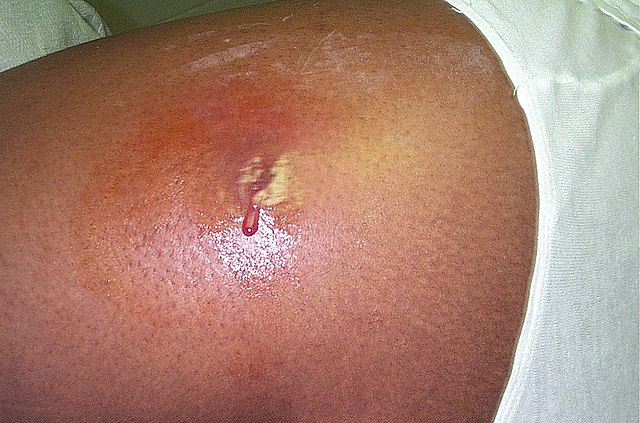
Diagnosing Abscesses
The diagnosis of abscesses should begin with a thorough patient history to identify potential risk factors.9 The physical examination involves inspecting the affected area for signs of infection, including erythema, edema, tenderness, and the presence of any lesions.9 Lesions can be cultured.3 The differential diagnosis for abscesses is presented in Table 4.1
Table 4
Differential Diagnosis for Abscesses1
| Condition | Description | Preferred Treatment |
| Epidermal inclusion cyst with inflammation or infection | These cysts can become inflamed, swollen, and superinfected. Initial erythema may be sterile inflammation, but it can become infected with S. aureus. | Incision and drainage (I&D), antibiotics if cellulitis is present. Removal when non- inflamed may allow intact cyst removal. |
| Cellulitis with swelling and no pocket of pus | Infected skin without abscess. Needle aspiration may help determine if an abscess is present. Cellulitis alone should show no fluctuance (i.e., no sign of pus accumulation) | Needle aspiration to check for abscess. No incision if only cellulitis. |
| Hidradenitis suppurativa | Recurrent inflammatory cysts around pilosebaceous units (axilla, inguinal, breast, buttocks). Often better treated with intralesional triamcinolone than I&D. | Intralesional triamcinolone injections are often more effective than I&D. |
| Acne cysts | More sterile inflammation than true abscess; often better treated with triamcinolone injection than I&D. | Triamcinolone injection is preferred over I&D. |
| Pilonidal disease | Cysts, abscesses, or sinus tracts around the coccygeal area are often due to ingrown hairs. It can develop into a complex abscess that may require surgery to prevent recurrence. | Surgical intervention is required to prevent recurrence. |
Management of Abscesses
Collaborative Practice Considerations
To promote optimal patient outcomes, it is essential for team members to clearly understand and differentiate their roles, scopes of practice, and responsibilities. As such, teams should implement collaborative care plans delineating roles, responsibilities, and timelines for managing abscesses.15 These plans include input from all team members—physicians, pharmacists, nurses, care coordinators, and social workers—to ensure that care is timely, efficient, and equitable.15 For example, in patients with recurrent abscesses, these plans might integrate pharmacists’ recommendations for antimicrobial stewardship and social workers’ input on addressing social determinants of health.15
Clear communication within the care team will also help ensure the appropriate application of evidence-informed guidelines. This will foster efficient collaboration and minimize redundancy, ensuring that each professional’s unique expertise contributes to patient-centered care. Constructive feedback within the team can help refine these processes, and active listening and shared decision-making together allow for alignment on goals, ensuring timely and effective care.
Additionally, cultural humility is vital to building trust and engaging patients effectively, particularly in diverse populations or underserved communities.16 Team members must recognize and respect cultural beliefs and practices that may influence health-seeking behaviors, such as reluctance to undergo invasive procedures or challenges adhering to prescribed regimens due to language barriers or health literacy issues.16 Team members can increase their focus on addressing social determinants of health and risk factors, such as access to care, smoking, obesity, and economic barriers, that contribute to recurrent abscesses. This shift could involve scheduling regular multidisciplinary meetings to discuss high-risk patients. Collaborative communication and shared decision-making tailored to the patient’s cultural context can enhance adherence and satisfaction with care.
Table 5 describes common barriers and solutions to interprofessional collaborative practices in the context of abscess management.
Table 5
Barriers and Solutions to Interprofessional Collaborative Practice
| Barrier | Description | Solution |
| Lack of time for collaborative discussions | Healthcare providers face heavy workloads, limiting time for discussions. | Implement protected time for team meetings to discuss cases and align goals. |
| Poor communication between team members | Communication gaps or a lack of structured communication tools lead to misalignment. | Adopt structured communication tools like SBAR (Situation, Background, Assessment, Recommendation) to standardize discussions. |
| Unclear roles and responsibilities among professionals | Team members lack clarity on their own and others' roles in managing abscesses. | Clearly define roles and responsibilities during team onboarding and case planning. |
| Power imbalances and professional hierarchies | Traditional hierarchies lead to dominance by some professionals, stifling input from others. | Promote shared leadership and decision-making practices to balance power dynamics. |
| Limited training in interprofessional collaboration | Few professionals are trained in collaborative care approaches, impacting team dynamics. | Incorporate interprofessional collaboration training into professional education and continuing education programs. |
Guideline and Panel Recommendations
The IDSA guidelines recommend against starting antibiotics in patients with uncomplicated lesions after incision and drainage.17 More recently, an international panel formed new recommendations that investigated the use of antibiotics for abscesses based on benefits, risks, cost, quality of available evidence, and patient preferences.18 These new guidelines are intended for adults and children who have uncomplicated skin abscesses, including the following:18
Abscess of any size
First occurrence or recurrence of an abscess
An abscess caused by an unknown pathogen
Selected antibiotics should be effective against MRSA.3,18 The panel found that the use of trimethoprim/sulfamethoxazole (TMP-SMX) or clindamycin, in combination with incision and drainage, reduces the risk of treatment failure by about 5% at one month and recurrence by approximately 8% at three months, compared to using no antibiotics. Moderate-quality evidence found that both antibiotics reduce pain, hospitalizations, and infections in household contacts.18 There is no significant difference in treatment failure or recurrence rates between TMP-SMX and clindamycin.18 TMP-SMX, taken twice daily, is typically inexpensive, while clindamycin, taken three to four times daily, may be costly in some areas.18
Adverse effects also differ between these antibiotics.18 Clindamycin is associated with a higher risk of diarrhea and gastrointestinal issues, while TMP-SMX is associated with nausea and a lower risk of diarrhea.18 TMP-SMX may be preferred for patients wanting to avoid gastrointestinal side effects, while clindamycin might be more suitable for those prioritizing recurrence prevention.14 Patient preferences should guide the decision.18 Overall, the panel gave a weak recommendation favoring TMP-SMX over clindamycin, with either antibiotic preferred over incision and drainage (I&D) alone.18
Notably, cephalosporins do not reduce treatment failure rates compared to incision and drainage alone, even in areas with high MRSA rates.18 Consequently, the panel strongly advises against cephalosporin use, as TMP-SMX or clindamycin are more effective.18
General Management Strategies
Managing abscesses effectively requires a collaborative approach to ensure patient-centered, safe, and efficient care. The following recommendations provide a framework for treatment and highlight the critical roles of team members, guided by communication and teamwork competencies, as well as patient education.2,5
Gram stain and culture of pus from carbuncles and abscesses are recommended, but treatment without cultures is reasonable in most patients.
Carbuncles, abscesses, and large furuncles of mild severity should be treated with incision and drainage. Communication between team members ensures procedures are conducted promptly.
Administration of antibiotics with activity against S. aureus as an adjunct to incision and drainage should be based on the presence or absence of systemic signs of infection.
Antibiotic therapy is required for abscesses that are associated with extensive cellulitis, rapid progression, or poor response to initial drainage; that involve specific sites (e.g., face, hands, genitalia); and that occur in children and older adults, or in those with significant comorbid illness or immunosuppression.
Antibiotics with activity against MRSA are recommended for patients with carbuncles or abscesses of higher severity who have failed initial antibiotic therapy, have severe systemic signs of infection, or are immunocompromised. Appropriate antibiotic selection by the care team ensures safety and efficacy through antimicrobial stewardship.
Treating these infections involves using local care measures, such as warm, moist compresses.5 Topical therapies can be tried, including clindamycin, erythromycin, mupirocin, or benzoyl peroxide.4 These should be applied 2-4 times daily for one week.5 If furuncles are small, they can be treated with moist heat to encourage pus drainage, while larger furuncles and carbuncles may need to be incised and drained.5
Antibiotics are generally unnecessary for single lesions less than 5mm in size; however, more severe infections require antibiotic therapies.3 Systemic antibiotics should be considered for the following:3
Lesions > 5 mm or < 5 mm that do not resolve with drainage
Multiple lesions
Evidence of expanding cellulitis
Immunocompromised patients
Patients at risk of endocarditis
Fever
Options include trimethoprim-sulfamethoxazole, doxycycline, or minocycline for 5-10 days.3 These antibiotics will cover any potential MRSA.3 Often, these infections will resolve without medical or surgical involvement.3,5 Patients who require but do not respond to systemic antibiotic therapies or have recurrent infections will need culture and sensitivity testing to guide further antibiotic therapies.3,5
Table 6 describes furuncles and carbuncles treatment options.
Table 63
Treatment of Furuncles and Carbuncles
| Generic Name | Mechanism of Action | Dose | Adverse Effects |
| Doxycycline or minocycline | Inhibits protein synthesis by binding to the 30S and possibly the 50S ribosomal subunit(s) of susceptible bacteria | 100 mg orally every 12 hours | Photosensitivity, esophageal injury, diarrhea |
| Clindamycin | Reversibly binds to 50S ribosomal subunits, preventing peptide bond formation, thus inhibiting bacterial protein synthesis | 300-600 mg orally every 6-8 hours | Diarrhea, hypersensitivity reactions |
| Trimethoprim-sulfamethoxazole | Inhibits folic acid synthesis (two mechanisms) | 800/160 mg to 1600/320 mg orally twice daily | Rash, nausea, hyperkalemia |
Recurrent Abscesses
It is common for furuncles to recur.3 Patients can prevent recurrences by using hand soap with either chlorhexidine gluconate with isopropyl alcohol or 2-3% chloroxylenol.3 It is essential for the care team to address underlying factors such as obesity, diabetes, and occupational exposures for patients with recurring furuncles.3 In some cases, rifampin may be needed. Table 7 summarizes information from the ISDA regarding the prevention of abscesses.1
Table 7
Recommendation for the Prevention of Recurrent Abscesses1
| Search for local causes of recurrent abscess (e.g., pilonidal cyst, hidradenitis suppurativa, or foreign material) |
| Drain and culture recurrent abscesses early in the course of infection |
| Treat with a 5- to 10-day course of antibiotics based on the pathogen isolated from culture |
| Consider a 5-day decolonization regimen (intranasal mupirocin, chlorhexidine washes, hot water washing of personal items) for recurrent S. aureus infections |
| Evaluate adult patients for neutrophil disorders if abscesses began in early childhood |
Patient Education
Patient education regarding abscess care and prevention is crucial. By integrating interprofessional teamwork and communication strategies, healthcare teams can provide comprehensive patient education for abscesses, ultimately reducing recurrence and improving health outcomes. Strategies may include the following:19-21
Using non-technical language to ensure understanding and empower patients to participate in their care
Employing shared leadership by involving patients as active participants in their care plans
Reflecting on team performance to improve the effectiveness of patient education strategies and adjust as needed based on outcomes
Specifically, patients and/or caregivers should be educated to keep the abscess covered 24 hours a day and to remove the bandage only to wash the area once a day.22 Healthcare providers should advise patients to be cautious for worsening symptoms and to reach out to the care team if they notice any persistent redness, pain, or purulent drainage.22 Additional counseling points are summarized in Table 8.23
Table 8
Patient Education for Abscesses23
| Category | Details |
| Signs & Symptoms of Abscesses |
|
| Self-Care Guidelines |
|
| When to Seek Medical Care |
|
| Infection Prevention |
|
The Role of Pharmacy Technicians
Pharmacy technicians play a vital role in supporting patients with SSTIs and more by performing tasks that ensure the smooth functioning of pharmacy operations and enhance patient care. They assist pharmacists by accurately filling prescriptions and ensuring that patients receive the correct medications in the appropriate doses. In addition to filling prescriptions, pharmacy technicians help manage inventory, ensuring that essential antibiotics and other related supplies are readily available. This involves monitoring stock levels, placing orders, and checking for expired medications, thereby maintaining a reliable supply of necessary treatments for SSTIs. Keeping the pharmacy well-stocked and organized can help prevent treatment delays and contribute to the overall efficiency of pharmacy services.
Summary
Effective management of abscesses requires a strong understanding of their associated risk factors and pathophysiology, as well as knowledge pertaining to diagnosis and available management strategies. Pharmacy team members play crucial roles in preventing and managing abscesses through interprofessional collaboration with healthcare teams and by providing patient and caregiver education.
References
Usatine RP. Abscess. In: Usatine RP, Smith MA, Mayeaux, Jr. EJ, Chumley HS. eds. The Color Atlas and Synopsis of Family Medicine, 3e. McGraw-Hill Education; 2019. Accessed October 23, 2024.
Huak L. Antibiotics for Uncomplicated Skin Abscesses After Incision and Drainage: BMJ Rapid Recommendation. Am Fam Physician. 2018;98(5):323-324.
MERCK Manual. Furuncles and Carbuncles. https://www.merckmanuals.com/professional/dermatologic-disorders/bacterial-skin-infections/furuncles-and-carbuncles. Accessed December 2, 2024.
Bouza E, Burillo A. Current international and national guidelines for managing skin and soft tissue infections. Curr Opin Infect Dis. 2022;35(2):61-71. doi:10.1097/QCO.0000000000000814
Blanes Hernández R, Rodríguez Pérez M, Fernández Navarro J, Salavert Lletí M. Current approach to skin and soft tissue infections. Thinking about continuity of care. Rev Esp Quimioter. 2023;36 Suppl 1(Suppl 1):37-45. doi:10.37201/req/s01.10.2023
Fish DN. Skin and Soft Tissue Infections. In: DiPiro JT, Yee GC, Haines ST, Nolin TD, Ellingrod VL, Posey L. eds. DiPiro’s Pharmacotherapy: A Pathophysiologic Approach, 12th Edition. McGraw Hill; 2023.
Ki V, Rotstein C. Bacterial skin and soft tissue infections in adults: A review of their epidemiology, pathogenesis, diagnosis, treatment and site of care. Can J Infect Dis Med Microbiol. 2008;19(2):173-184. doi:10.1155/2008/846453
Wingate B, Kehr H. Management of Complicated Skin and Soft Tissue Infections in Hospitalized Patients. US Pharm. 2007;32(4):HS5-HS12
Ramakrishnan K et al. Skin and Soft Tissue Infections. Am Fam Physician. 2015;92(6):474-483.
Spelman D, et al. Cellulitis and skin abscess: Epidemiology, microbiology, clinical manifestations, and diagnosis. Uptodate. 2024.
Pallin DJ, Egan DJ, Pelletier AJ, Espinola JA, Hooper DC, Camargo CA Jr. Increased US emergency department visits for skin and soft tissue infections, and changes in antibiotic choices, during the emergence of community-associated methicillin-resistant Staphylococcus aureus. Ann Emerg Med. 2008;51(3):291-298. doi:10.1016/j.annemergmed.2007.12.004
Olderog CK, Schmitz GR, Bruner DR, Pittoti R, Williams J, Ouyang K. Clinical and epidemiologic characteristics as predictors of treatment failures in uncomplicated skin abscesses within seven days after incision and drainage. J Emerg Med. 2012;43(4):605-611. doi:10.1016/j.jemermed.2011.09.037
Interprofessional Education Collaborative. IPEC Core Competencies for Interprofessional Collaborative Practice: Version 3. Washington, DC: Interprofessional Education Collaborative. 2023.
Centers for Disease Control and Prevention. Coignard, B., Hageman, J. Public Health Image Library. Details. CDC. 2005. https://phil.cdc.gov/details.aspx?pid=7826. Accessed December 28, 2024.
Shallcross LJ, Hayward AC, Johnson AM, Petersen I. Incidence and recurrence of boils and abscesses within the first year: a cohort study in UK primary care. Br J Gen Pract. 2015;65(639):e668-76. doi: 10.3399/bjgp15X686929
Centers for Disease Control and Prevention. Health Equity and Antimicrobial Resistance. CDC. Undated. https://www.cdc.gov/antimicrobial-resistance/media/pdfs/Health-Equity-Antibiotic-Resistance-FS-508.pdf. Accessed December 2, 2024.
Stevens DL, Bisno AL, Chambers HF, et al. Practice guidelines for the diagnosis and management of skin and soft tissue infections: 2014 update by the Infectious Diseases Society of America [published correction appears in Clin Infect Dis. 2015 May 1;60(9):1448. doi: 10.1093/cid/civ114. Dosage error in article text]. Clin Infect Dis. 2014;59(2):e10-e52. doi:10.1093/cid/ciu444
Vermandere M, Aertgeerts B, Agoritsas T, et al. Antibiotics after incision and drainage for uncomplicated skin abscesses: a clinical practice guideline. BMJ. 2018;360:k243. Published 2018 Feb 6. doi:10.1136/bmj.k243
Langberg EM, Dyhr L, Davidsen AS. Development of the concept of patient-centredness - A systematic review. Patient Educ Couns. 2019;102(7):1228-1236. doi:10.1016/j.pec.2019.02.023
Montori VM, Ruissen MM, Hargraves IG, Brito JP, Kunneman M. Shared decision-making as a method of care. BMJ Evid Based Med. 2023;28(4):213-217. doi:10.1136/bmjebm-2022-112068
Anderson JE, Lavelle M, Reedy G. Understanding adaptive teamwork in health care: Progress and future directions. J Health Serv Res Policy. 2021;26(3):208-214. doi:10.1177/1355819620978436
Treatment of Your Abscess. University of California Berkley. Accessed December 2024. https://uhs.berkeley.edu/sites/default/files/AbscessTreatment.pdf . Accessed December 28, 2024.
Schmitz G, Goodwin T, Singer A, et al. The treatment of cutaneous abscesses: comparison of emergency medicine providers' practice patterns. West J Emerg Med. 2013;14(1):23-28. doi:10.5811/westjem.2011.9.6856
DISCLAIMER
The information provided in this course is general in nature, and it is designed solely to provide participants with continuing education credit(s). This course and materials are not meant to substitute for the independent, professional judgment of any participant regarding that participant’s professional practice, including but not limited to patient assessment, diagnosis, treatment, and/or health management. Medical and pharmacy practices, rules, and laws vary from state to state, and this course does not cover the laws of each state; therefore, participants must consult the laws of their state as they relate to their professional practice.
Healthcare professionals must consult their employer, healthcare facility, hospital, or other organization for guidelines, protocols, and procedures to follow. The information provided in this course does not replace those guidelines, protocols, and procedures, but is for academic purposes only, and this course’s limited purpose is for the completion of continuing education credits.
Participants are advised and acknowledge that information related to medications, their administration, dosing, contraindications, adverse reactions, interactions, warnings, precautions, or accepted uses is constantly changing. Any person taking this course understands that such a person must make an independent review of medication information before any patient assessment, diagnosis, treatment and/or health management. Any discussion of off-label use of any medication, device, or procedure is informational only, and such uses are not endorsed hereby.
Nothing contained in this course represents the opinions, views, judgments, or conclusions of RxCe.com LLC. RxCe.com LLC is not liable or responsible to any person for any inaccuracy, error, or omission with respect to this course or course material.
© RxCe.com LLC 2026: All rights reserved. No reproduction of all or part of any content herein is allowed without the prior, written permission of RxCe.com LLC.
RxCe.com
© RxCe.com LLC 2025: All rights reserved.