
A NEW SPIN ON MIXOLOGY: MECHANISMS AND CONSEQUENCES OF DRUG-ALCOHOL INTERACTIONS
Faculty:
L. Austin Fredrickson, MD, FACP
L. Austin Fredrickson is an Associate Professor of Internal Medicine at Northeast Ohio Medical University, where he serves as core faculty and teaches diagnostics, therapeutics, clinical skills, and health humanities. He is board-certified in general internal medicine and practices rural primary care.
Kelsey Giara, PharmD, RPh
Kelsey Giara is a pharmacist and freelance medical writer based in New Hampshire. She writes about a variety of healthcare topics for various publications and has significant experience in continuing medical education, needs assessments, grant writing, and medical communications.
Pamela Sardo, PharmD, BS
Pamela Sardo, PharmD, BS, is a freelance medical writer and licensed pharmacist. She is the founder and principal at Sardo Solutions in Texas. Pam received her BS from the University of Connecticut and her PharmD from the University of Rhode Island. Pam’s career spans many years in retail, clinics, hospitals, long-term care, Veterans Affairs, and managed health care responsibilities across a broad range of therapeutic classes and disease states.
Abstract
Alcohol has the potential to interact with many medications through various mechanisms, including raising blood alcohol levels, altering other drugs’ metabolism, interfering with medication effectiveness, or exacerbating adverse effects. Though some occur only among those who drink heavily (i.e., 3 or more drinks per occasion), many can still occur with lower alcohol consumption. Alcohol interacts with drugs in two major ways: pharmacokinetics (altering the body’s effects on the drug) and pharmacodynamics (altering the drug’s effects on the body). The effects of these interactions range from mild dizziness or drowsiness to severe or fatal consequences. Communicating to patients when to avoid alcohol and how alcohol interacts with their medication therapies is critical to ensuring safe and effective treatment of medical conditions and prevention of adverse effects.
Accreditation Statements
In support of improving patient care, RxCe.com LLC is jointly accredited by the Accreditation CouncilTM for Continuing Medical Education (ACCME®), the Accreditation Council for Pharmacy Education (ACPE®), and the American Nurses Credentialing Center (ANCC®), to provide continuing education for the healthcare team.


This activity was planned by and for the healthcare team, and learners will receive 2 Interprofessional Continuing Education (IPCE) credits for learning and change.
Joint Universal Activity Number: The Joint Accreditation Universal Activity Numbers assigned to this activity are as follows:
Pharmacists: JA4008424-0000-26-105-H01-P
Credits: 2 contact hour(s) (0.2 CEU(s)) of continuing education credit.
Credit Types:
IPCE Credits - 2 Credits
AAPA Category 1 Credit™️ - 2 Credits
AMA PRA Category 1 Credit™️ - 2 Credits
Pharmacy - 2 Credits
Type of Activity: Application
Media: Computer-Based Training (i.e., online courses)
Estimated time to complete activity: 2 contact hour(s) (0.2 CEU(s)), including Course Test and course evaluation
Release Date: June 24, 2026 Expiration Date: June 24, 2029
Target Audience: This educational activity is for Physicians, Physician Assistants, and Pharmacists.
How to Earn Credit: From June 24, 2026, through June 24, 2029, participants must:
Read the “learning objectives” and “author and planning team disclosures;”
Take the “Educational Activity Pre-Test;”
Study the section entitled “Educational Activity;” and
Complete the Educational Activity Post-Test and Activity Evaluation. The Educational Activity Post-Test will be graded automatically. Following successful completion of the Educational Activity Post-Test with a score of 70% or higher, a statement of participation will be made available immediately. (No partial credit will be given.)
CE and CME Credits: Credits for this course will be uploaded to CPE Monitor® for pharmacists and pharmacy technicians. Physicians may receive AMA PRA Category 1 Credits™ and apply them toward Maintenance of Certification (MOC) requirements. Physician Assistants may earn AAPA Category 1 CME credits, reportable through PA Portfolio. All learners must verify their individual licensing board’s specific requirements and eligibility criteria.
Statement of Need
Healthcare professionals frequently encounter patients who use alcohol while taking prescription or over-the-counter medications. Alcohol is often not assessed as a drug during medication review. Alcohol can alter metabolism, can increase adverse effects, and contribute to serious outcomes, such as respiratory depression, bleeding, falls, hepatic injury, and treatment failures. Identifying clinically significant alcohol-medication interactions remains suboptimal. Gaps remain regarding recognizing patient-specific factors, especially in interprofessional teams. This activity is designed to reinforce and support safer screening, documentation, interprofessional communication, and referrals.
Learning Objectives: Upon completion of this educational activity, participants should be able to:
Describe alcohol consumption’s effects on the body
Recognize major pharmacokinetic and pharmacodynamic alcohol-drug interactions
Review best practices for discussing alcohol-drug interactions with patients
Disclosures
The following individuals were involved in planning, developing, and/or authoring this activity: L. Austin Fredrickson, MD, FACP; Kelsey Giara, PharmD, RPh; and Pamela Sardo, PharmD, BS. None of the individuals involved in developing this activity has any conflicts of interest or financial relationships related to the subject matter. There are no financial relationships or commercial or financial support relevant to this activity to report or disclose by RxCe.com or any of the individuals involved in the development of this activity.
© RxCe.com LLC 2026: All rights reserved. No reproduction of all or part of any content herein is allowed without the prior, written permission of RxCe.com LLC.
Educational Activity Pre-Test
Which of the following drugs can produce a flushing reaction when combined with alcohol?
Metronidazole
Acetaminophen
Clonazepam
Ketoconazole
Which of the following is an expected adverse effect of combining verapamil and alcohol?
Increased blood pressure
Elevated blood alcohol concentrations
Severe flushing and vasodilation
Potentially fatal pancreatitis
Which of the following is expected following acute alcohol consumption for a patient taking warfarin?
Increased risk of bleeding
Increased risk of stroke
Increased risk of liver toxicity
Nothing, only chronic alcohol use affects warfarin
Educational Activity
A New Spin on Mixology: Mechanisms and Consequences of Drug-Alcohol Interactions
Introduction
Ethanol—the type of alcohol commonly consumed in alcoholic beverages—is widely considered a lifestyle choice rather than a drug. However, this substance has the potential to interfere with a myriad of medications used for various conditions. The effects of these interactions range from mild to severe or even fatal. Knowing which medications have the potential to affect safe medication use is critical to ensure that patients are educated on when to avoid alcohol, what effects consuming alcohol will have on the treatment of other disease states, and when to report suspected alcohol-drug interactions to a provider. Given the vast number of drug-alcohol interactions, pharmacy teams should screen patients for alcohol use regularly.
Alcohol and the Body
The dangers of excessive alcohol consumption are well understood. Whether consumed in copious amounts on a single occasion or over time, alcohol interferes with many of the body’s organs and functions, which include the following:1
Brain: hinders communication pathways, changes mood and behavior, makes it harder to think clearly, and disrupts coordination
Heart: can cause cardiomyopathy (stretching of heart muscle), arrhythmias (irregular heartbeat), high blood pressure, and stroke
Liver: leads to a variety of problems and liver inflammations, including steatosis (fatty liver), alcoholic hepatitis, fibrosis, and cirrhosis
Pancreas: causes release of toxic substances that eventually lead to pancreatitis, a dangerous inflammation of the pancreas that causes swelling and pain and impairs the organ’s ability to make enzymes and hormones for proper digestion
Immune system: weakens the immune system, making the body a much easier target for disease
When a person ingests alcohol, a small amount (about 10%) is metabolized by the stomach. The remaining alcohol is absorbed into the bloodstream via the gastrointestinal (GI) tract, primarily in the stomach and the proximal small intestine.2 Once absorbed, alcohol is transported to the liver. A portion of the alcohol is metabolized during this first trip through the liver, while the remainder leaves the liver, enters the systemic circulation, and distributes throughout the body’s tissues. The first round of metabolism through the GI tract and liver is called “first-pass metabolism.” As a person ingests more alcohol, the amount eliminated via first-pass metabolism becomes an even smaller fraction.2
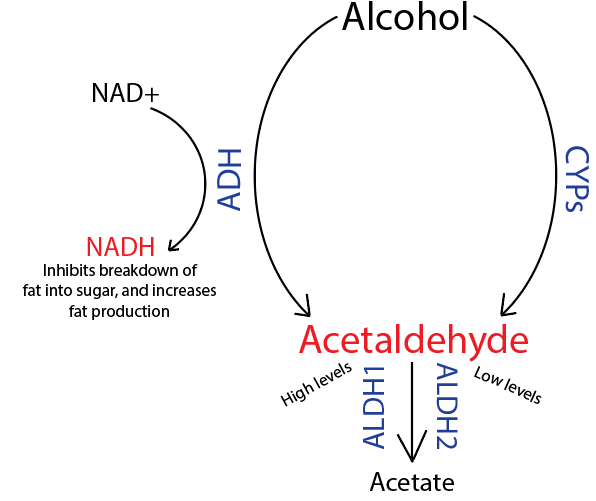
The liver is the primary site of alcohol metabolism. As shown in the Figure below, several enzymes contribute to the process, but the most important are alcohol dehydrogenase (ADH) and cytochrome P450 (CYP).2
Figure
Alcohol Metabolism in the Liver
___
ADH, alcohol dehydrogenase; ALDH, aldehyde dehydrogenase; CYP, cytochrome P450; NAD+, nicotinamide adenine dinucleotide; NADH, reduced nicotinamide adenine dinucleotide.
Alcohol has direct effects on the human body, as listed above, but is also broken down into metabolites that exert further effects on the body.3 One of these metabolites is acetaldehyde. Alcohol dehydrogenase helps to break down alcohol to acetaldehyde in the liver. Acetaldehyde is a toxic substance that contributes to many of alcohol’s adverse effects. The liver removes acetaldehyde by further metabolizing it with aldehyde dehydrogenase (ALDH) to acetate.2,3 Two forms of the enzyme exist—ALDH1 and ALDH2—located in different liver cell regions. ALDH1 is only active when acetaldehyde levels are high, while ALDH2 requires only low acetaldehyde levels to become activated.2
Many liver enzymes rely on the liver’s “redox state,” which refers to the concentrations of nicotinamide adenine dinucleotide (NAD+) and reduced NAD+ (NADH).2 Alcohol metabolism via ADH also causes NAD+ to convert to NADH, thereby increasing concentrations of NADH. Elevated NADH levels stimulate fat generation and interfere with other enzymes’ ability to break down fat into sugar molecules (gluconeogenesis). These metabolic changes can greatly impact the body’s general metabolism and functioning following alcohol consumption.2 This impact increases with age as a person’s metabolism changes and slows.4
Alcohol and Medications
Alcohol interacts with drugs in two major ways: pharmacokinetics and pharmacodynamics.2 Pharmacokinetics refers to the body’s effects on a drug, including the processes of absorption, distribution, metabolism, and excretion. Pharmacodynamics refers to a drug’s effects on the body. This includes how drugs interact with the body at a molecular and cellular level, leading to the observed physiological and therapeutic effects.
The most common way that alcohol interacts with drugs through pharmacokinetics is by altering metabolism. These interactions can alter the metabolism or activity of the medication and/or alcohol metabolism, resulting in potentially serious medical consequences. Pharmacodynamic interactions, on the other hand, refer to the additive effects of alcohol and certain medications, particularly in the central nervous system (CNS).2
Pharmacokinetic Drug-Alcohol Interactions
Pharmacokinetic drug-alcohol interactions manifest mainly because medications encounter delays in their breakdown and elimination processes because they need to compete with alcohol for processing by liver enzymes, including ADH and CYP enzymes.
How Drugs Affect Alcohol Metabolism
Research suggests that some medications can block first-pass metabolism, resulting in blood alcohol levels (BALs) higher than normal for a given amount of alcohol consumption.2 Examples include drugs that can inhibit ADH activity, including aspirin and histamine H2 receptor antagonists used to treat ulcers and heartburn (e.g., cimetidine). Medications that accelerate gastric emptying can also reduce first-pass metabolism in the stomach, including metoclopramide, a medication used to treat nausea.2
Several medications are known to inhibit ALDH, which may induce a flushing reaction upon consuming alcohol.2 One of those medications is disulfiram, a medication given to individuals with alcohol use disorder to deter drinking.2 If someone consumes alcohol while taking disulfiram, they experience a severe flushing reaction accompanied by potentially serious consequences like dilation (widening) of the blood vessels, low blood pressure, and rapid heartbeat. Other commonly used medications can also cause disulfiram-like reactions upon ingestion of even small amounts of alcohol, including second-generation cephalosporins, sulfamethoxazole-trimethoprim, isoniazid, and the antifungal metronidazole.2,5
Verapamil—a calcium channel blocker used to treat arrhythmia (irregular heartbeat), high blood pressure, and angina—is known to inhibit alcohol metabolism significantly.6 This leads alcohol to stay in the bloodstream longer than usual, causing prolonged elevated blood alcohol concentrations when individuals consume these together.
How Alcohol Affects Drug Metabolism
Alcohol can interfere with a drug’s intended medical purpose and mechanism of action. Alcohol can affect the metabolism of other drugs through two major pathways:2
Affecting CYP enzymes in the liver, which are responsible for metabolizing other drugs
Changing the liver’s ability to eliminate various substances from the body
The CYP enzyme most commonly implicated in drug-alcohol interactions is CYP2E1, but CYP3A4 and CYP1A2 may also be involved.2 In this case, drugs must compete with alcohol for breakdown by these CYP enzymes, leading to altered drug concentrations and potential efficacy changes or adverse effects.
If individuals drink alcohol heavily over time, the body may compensate by increasing the activity of these CYP enzymes. In this case, if alcohol is no longer present to compete for these CYPs, their increased activity results in drugs being eliminated from the body much faster.2 A classic example of this phenomenon is acetaminophen, the most widely used over-the-counter analgesic. Acetaminophen is partially metabolized by CYP2E1, which forms a metabolite called N-acetyl-p-benzoquinone imine (NAPQI), which is toxic to the liver.7 When patients take acetaminophen alone following chronic alcohol use, NAPQI formation increases, thereby increasing the risk of liver damage. Another example here is warfarin, an anticoagulant drug used to thin the blood to prevent blood clots and associated heart attack or stroke. People who chronically drink alcohol experience changes in the CYP system, causing warfarin to break down more slowly or more quickly, depending on the person’s drinking patterns.2 This leads to either dangerously high or insufficient warfarin activity, causing bleeding events or blood clots, respectively.
As discussed, when ADH breaks down alcohol into acetaldehyde, NADH is produced as a byproduct. Elevated NADH can prevent the liver from generating UDP-glucuronic acid, a substance that various medications must bind to before they can be excreted from the body.2
Heavy alcohol consumption also reduces liver glutathione levels, an antioxidant that prevents reactive oxygen species from damaging cells.2 Reduced glutathione levels increase the liver’s susceptibility to damage caused by toxic metabolites of some medications, including acetaminophen and isoniazid.
Additionally, alcohol may adversely affect the pharmacokinetics of erythromycin (a macrolide antibiotic).8 Research shows that acute alcohol consumption causes a delay in gastric emptying, resulting in delayed erythromycin absorption, lower peak concentrations, and faster elimination of the drug. It is unclear whether these pharmacokinetic changes lead to decreased erythromycin effectiveness.8 While acute alcohol intake appears not to affect doxycycline (a tetracycline antibiotic), chronic alcohol use appears to shorten the drug’s half-life, leading to subtherapeutic concentrations and decreased efficacy.8
Alcohol consumption is also shown to increase plasma levels of the beta blocker propranolol, which is used to treat hypertension and other cardiovascular conditions.6 Increased propranolol levels can exacerbate the drug’s intended and adverse effects, including dizziness, lightheadedness, fainting, and decreased heart rate.
Pharmacodynamic Drug-Alcohol Interactions
Pharmacodynamic drug-alcohol interactions do not affect drug metabolism through enzyme inhibition or activation. Instead, they involve the additive or synergistic effects of alcohol and certain drugs. Additive interactions refer to those where the combined effect of the drug and alcohol is equal to the sum of each independently. Synergistic interactions are even more dangerous, resulting in a combined effect greater than the sum of each independently.2
Respiratory Suppression and Overdose
Concomitant alcohol use is implicated in about one in five overdose deaths every year associated with prescription opioids (22.1%) and benzodiazepines (21.4%).9 Combining alcohol with opioids or benzodiazepines (e.g., alprazolam, clonazepam, diazepam, lorazepam, temazepam) causes synergistic effects on brain circuits involved in vital physiologic functions, particularly those controlling the respiratory system.10,11
Alcohol, opioids, or benzodiazepines suppress activity in respiratory circuits in the brainstem through various receptor systems. Opioids—including prescription (e.g., codeine, fentanyl, hydrocodone, morphine, oxycodone) and illicit (e.g., heroin)—work by binding to and activating opioid receptors on nerve cells in the brain, spinal cord, and other parts of the body. Opioid receptors are a type of protein called G protein-coupled receptors. When opioids bind these receptors, they block pain signals to the brain while simultaneously causing respiratory depression.12 A study found that taking even one tablet of oxycodone with a modest amount of alcohol can increase the risk of respiratory depression, causing breathing to become extremely shallow or stop altogether.13 This risk is so significant that prescription opioid labeling includes Boxed Warnings advising against mixing them with alcohol.14
Benzodiazepines work on the inhibitory transmitter GABA to reduce overactivity in the CNS and create a calming effect for individuals with many conditions, including anxiety, seizure disorders, and insomnia, among others.15 These drugs bind to GABA receptors and alter their shape to make it easier for GABA to bind and exert its inhibitory effects. Alcohol also uses GABA receptors as a primary site of action. It modifies the membrane surrounding the GABA receptor to improve GABA’s ability to bind.15 Benzodiazepines alone carry a low risk of acute toxicity, but their toxic effects are significantly enhanced, and the risk of overdose is heightened when they are combined with alcohol.15
Combining alcohol with opioids or benzodiazepines can cause the breathing rate to become so depressed that the brain no longer receives enough oxygen. This can lead to organ failure, brain complications, coma, or death.
Additive Risks of Adverse Effects
No medication comes without the risk of adverse effects, whether benign or serious. Despite exerting action through entirely different mechanisms, in many cases, concomitant alcohol use can exacerbate a medication’s already-established adverse effects. In older adults, the risk for adverse drug reactions is exacerbated by age-related changes in alcohol and medication absorption and metabolism.4
Combining benzodiazepines with alcohol also increases the risk of other CNS-related adverse effects. For example, benzodiazepines have significant effects on individuals operating a motor vehicle, including the following:16
delayed reaction times
decreased control over the vehicle’s lateral position
affected speed maintenance
impaired visual attention
increased effort in driving
Ingesting benzodiazepines and alcohol exacerbates these issues, creating detrimental effects on driving beyond those seen with either substance alone.16
Barbiturates—a medication class similar to benzodiazepines—cause similar additive adverse effects when combined with alcohol. Barbiturates are sedative or hypnotic (sleep-inducing) medications frequently used for anesthesia but also used in the community (e.g., phenobarbital for seizure disorders).2 Phenobarbital activates some of the same CNS molecules as alcohol, producing synergistic enhancements in the medication’s adverse effects. Pharmacists should warn patients taking barbiturates not to perform tasks requiring alertness, particularly after simultaneous alcohol use.
“Z-drugs” for insomnia (e.g., eszopiclone, zaleplon, zolpidem) also produce CNS-related effects that are exacerbated by alcohol consumption.6 For example, zolpidem is known to impair motor coordination and increase fall risk, cause memory impairments, including blackouts, and promote dangerous behaviors during sleep that patients do not recall. Combining the drug with alcohol significantly increases these risks. Additionally, zolpidem overdose is most commonly associated with alcohol consumption and usually warrants intensive care in the emergency department.6
Antidepressants exert their effects on the CNS to treat depression. Several antidepressant classes exist—including tricyclic antidepressants, selective serotonin reuptake inhibitors, monoamine oxidase inhibitors, and atypical antidepressants—which differ in their mechanisms of action and effects on different brain chemicals.6 These medications do share a common thread; they all have some sedative as well as some stimulating activity. Alcohol can increase antidepressant adverse effects on the CNS, including drowsiness and dizziness. It may also decrease patients' response to antidepressant therapy and affect treatment adherence. Monoamine oxidase inhibitors can cause a dangerous increase in blood pressure when combined with the amino acid tyramine, found in beer and wine, particularly red wine.6
Another CNS-associated adverse effect exacerbated by alcohol is seizure risk. Bupropion—an antidepressant and smoking cessation aid—can lower the threshold for seizures (i.e., make it easier for a seizure to be triggered in a patient’s body).6 Alcohol can lower this threshold even further, greatly increasing seizure risk in patients combining these substances.
Increased risk of bleeding is another adverse effect potentiated by alcohol. Anticoagulants (blood thinners) are especially risky with concomitant alcohol use. Both acute and long-term alcohol consumption (discussed previously) can affect warfarin’s ability to work properly. Acute ingestion of even a small amount of alcohol can increase the drug’s anti-clotting effects to stronger levels than necessary for medical purposes, thereby increasing the risk of significant bleeding.2 Alcohol can also increase the risk of bleeding in patients taking direct oral anticoagulants (DOACs), even without the CYP metabolism issues present with warfarin. Alcohol may cause GI irritation/inflammation, induce platelet dysfunction, and increase risk of falls and trauma, all of which increase a patient’s risk of bleeding.
Other cardiovascular medications, like antihypertensives used to treat hypertension, can also be problematic with acute alcohol consumption. In some individuals, alcohol ingestion causes an initial drop in blood pressure, which could add to the blood pressure-lowering effects of antihypertensives.6
Over-the-counter nonsteroidal anti-inflammatory drugs (NSAIDs)—including aspirin, ibuprofen, and naproxen—are associated with an increased risk of GI bleeding due to their effects on the lining of the GI tract.6 Combining these medications with alcohol increases this risk, as alcohol induces damage to the mucosa of the GI lining and can also cause GI bleeds alone.17 About one in five people hospitalized for GI bleeds is a heavy alcohol drinker, but studies show that consuming even a modest amount of alcohol is risky; one drink per day increases the risk of GI bleeding associated with NSAID use by about 37%.16,17
Liver toxicity is another concern associated with alcohol-drug combinations, given alcohol’s metabolism in the liver and the substance’s propensity to cause liver damage. Many medications are known to cause liver toxicity, so individuals should avoid concomitant alcohol use to prevent the additive potential for this effect. Examples include some antimicrobials—ketoconazole, griseofulvin, isoniazid, and rifampin, among others—and duloxetine, an antidepressant.6
Increased risk of accidents and injuries is also a concern with alcohol-drug combinations. Antihistamines used for allergies and cold symptoms, for example, can cause adverse effects like drowsiness, sedation, and low blood pressure.2 Older individuals are especially prone to experiencing these effects. Alcohol can substantially enhance the sedating effects of antihistamines, which increases the risk of falling. This can lead to significant injuries, especially in older adults. A summary of the common alcohol-medication interactions and their complications is listed below in Table 1.
| Practice Pointer: A medication’s prescribing label should note whether and how alcohol affects its safety and effectiveness. This information can be found in the FDA-approved prescribing information, on the DailyMed website, the NIH’s National Library of Medicine, or Drugs@FDA. |
Table 1
Common Alcohol-Medication Interactions and Risks
| Clinical Consequence | Medication Examples |
| Increased blood alcohol concentrations | Aspirin, cimetidine, metoclopramide, and verapamil |
| Flushing/disulfiram-like reactions | Disulfiram, some cephalosporins, TMP-SMX, isoniazid, and metronidazole |
| Hepatotoxicity | Acetaminophen, isoniazid, ketoconazole, griseofulvin, rifampin, and duloxetine |
| Bleeding | Warfarin, DOACs, NSAIDs, Aspirin |
| Respiratory depression/overdose | Opioids, benzodiazepines, and barbiturates |
| CNS depression, falls | Benzodiazepines, Z-drugs, and antihistamines |
| Altered drug efficacy | Erythromycin, doxycycline, and propranolol |
| Seizures | Bupropion |
| Hypertension | MAOIs with tyramine-containing alcoholic beverages (beer and wine) |
| Hypotension | Antihypertensives |
Engaging The Team
Given the vast number of drug-alcohol interactions noted, it is crucial to screen patients for alcohol use regularly. Reframing alcohol as a drug and using non-stigmatizing language are critical to this process. Healthcare team members must be prepared to identify potential drug-alcohol interactions, hepatic and renal function, and patient-specific factors impacting alcohol intake in all practice settings and be confident in intervening respectfully.
Multidisciplinary healthcare teams collaborate to identify and mitigate dangerous alcohol-medication interactions. Primary care medical oversight may extend to monitoring for a need for treatment for dependence.18 Pharmacists' medication reconciliation and review for possible medication substitution contribute to patient care. Nurse-patient interviews, with screening and the provision of personalized behavioral health interventions, are important in patient care.
Nurses are often the first point of contact and may administer evidence-based tools, such as the AUDIT-C (Alcohol Use Disorders Identification Test - Consumption) or full AUDIT, to identify high-risk individuals. Beyond physicians’ direct patient care and pharmacists’ pharmacokinetic and pharmacodynamic reviews, clinical social workers or psychologists provide personalized interventions, possibly identifying issues related to isolation, family dynamics, or other concerns. They address whether psychosocial triggers for alcohol are present. Addiction specialists or psychiatrists may receive referrals for complex or severe cases of alcohol use disorders.
Reframing Alcohol as a Drug
Alcohol use often feels like a difficult topic to broach with patients, creating a blind spot in patient care. Individuals often misperceive alcohol as a benign or inert substance with no pharmacologic effects. Others observe alcohol use as a lifestyle choice rather than considering its ability to affect medical status or health. Reframing the conversation is important to shift the conversation from an “alcohol problem” to “problems caused by alcohol.” Pharmacists are often quick to educate rather than discuss, which can come across as contentious or paternalistic. It is important to integrate alcohol into the medication review instead of another drug directly linked to the patient’s health conditions and other medications, rather than a separate “healthy living” issue.
Eliminating Stigma from the Conversation
Using non-stigmatizing language when discussing alcohol use is crucial as it helps reduce shame and encourages individuals to be forthcoming without fear of judgment.19 Using respectful and non-judgmental language like that in the Table below fosters a more supportive and understanding environment and helps encourage patients to consider alcohol as a drug, rather than a lifestyle choice.
Table 2
Non-Stigmatizing Language for Discussing Alcohol Use18
| DON’T Say | DO Say |
|---|---|
Substance abuser Alcoholic Addict User/abuser Drunk | A person with a substance use disorder |
Abuse Problem | Use/misuse Risky, unhealthy, or heavy use |
| Clean | Person in recovery Abstinent Not drinking |
Identifying Potential Sources of Alcohol
Just as it is important to address intentional alcohol consumption, some alcohol sources may be unintentional. For example, many prescription and over-the-counter drugs contain alcohol. Members of the healthcare team can help patients identify products that contain alcohol and may interact with their prescription medications, including many liquid medications for cough and cold symptoms, mouthwash, and other oral health preparations.
Nonaqueous solutions, typically available by prescription only, also contain alcohol:20
Elixirs: clear, sweetened, hydroalcoholic liquids intended for oral use (5% to 40% alcohol)
Spirits or essences: alcoholic or hydroalcoholic solutions of volatile substances (usually volatile oils) commonly used as flavoring agents (62% to 85% alcohol)
Tinctures: alcoholic or hydroalcoholic solutions prepared from vegetable or chemical substances (up to 50% alcohol)
Preservatives: pharmaceutical products must contain at least 15% alcohol to preserve the product from microbial growth if no other preservative agents are present
Recognizing these potentially unintentional sources of alcohol is clinically important when evaluating a patient with either suspected toxicity or unexplained medication effects. Consulting with the regional poison control center or a medical toxicologist can help prevent serious patient harm.
Patient Case
A 68-year-old woman presents to the clinic with her daughter for a tramadol refill and reports a recent fall. Her profile also includes zolpidem for insomnia, warfarin, and acetaminophen as needed for arthritis pain. She mentions she usually has 2-3 glasses of wine every evening.
What additional questions should be asked of the patient?
She reports recent dizziness, and her daughter reports that her mother has been more confused recently. The combination of alcohol with tramadol and zolpidem raises concern.
What patient counseling discussion points should be communicated?
The patient is reminded that alcohol is a drug that affects medication safety. Safer pain and sleep management options are discussed and prescribed.
Summary
Alcohol interacts with drugs through pharmacokinetics and pharmacodynamics. Pharmacokinetically, drug-alcohol interactions can alter the metabolism or activity of the medication and/or alcohol metabolism. Pharmacodynamic interactions, on the other hand, refer to the additive effects of alcohol and certain medications, particularly in the CNS. Concomitant alcohol use can also exacerbate a medication’s already-established adverse effects and interfere with a drug’s intended mechanism of action.
When in doubt, the patient care team should review reliable interaction checkers to identify potential alcohol-drug interactions. The medication's prescribing label should note whether and how alcohol affects its safety and effectiveness. The label can be found on the medication-specific paper label attached to the container, on the medication-specific manufacturer’s website, DailyMed website, the NIH’s National Library of Medicine, or from Drugs@FDA.
References
National Institute on Alcohol Abuse and Alcoholism. Alcohol's Effects on Health. Alcohol's Effects on Health: Research-based information on drinking and its impact. Updated: June 2025. Accessed June 16, 2026. https://www.niaaa.nih.gov/alcohols-effects-health/alcohols-effects-body
Weathermon R, Crabb DW. Alcohol and medication interactions. Alcohol Res Health. 1999;23(1):40-54.
Deehan GA Jr, Brodie MS, Rodd ZA. What is in that drink: the biological actions of ethanol, acetaldehyde, and salsolinol. Curr Top Behav Neurosci. 2013;13:163-184. doi:10.1007/7854_2011_198
Zanjani F, Allen H, Schoenberg N, Martin C, Clayton R. Acceptability of intervention materials to decrease risk for alcohol and medication interactions among older adults. Eval Program Plann. 2018;67:160-166. doi:10.1016/j.evalprogplan.2017.12.010
Noureldin M, Krause J, Jin L, Ng V, Tran M. Drug-Alcohol Interactions: A Review of Three Therapeutic Classes. US Pharm. 2010;35(11):29-40.
National Institute on Alcohol Abuse and Alcoholism. Alcohol-Medication Interactions: Potentially Dangerous Mixes. Last Revised 05/08/2025. Accessed June 16, 2026. https://www.niaaa.nih.gov/health-professionals-communities/core-resource-on-alcohol/alcohol-medication-interactions-potentially-dangerous-mixes
Rumack B, Heard K, Green J, et al. Effect of therapeutic doses of acetaminophen (up to 4 g/day) on serum alanine aminotransferase levels in subjects consuming ethanol: systematic review and meta-analysis of randomized controlled trials. Pharmacotherapy. 2012;32(9):784-791. doi:10.1002/j.1875-9114.2012.01122.x
Mergenhagen KA, Wattengel BA, Skelly MK, Clark CM, Russo TA. Fact versus Fiction: a Review of the Evidence behind Alcohol and Antibiotic Interactions. Antimicrob Agents Chemother. 2020;64(3):e02167-19. Published 2020 Feb 21. doi:10.1128/AAC.02167-19
Jones CM, Paulozzi LJ, Mack KA; Centers for Disease Control and Prevention (CDC). Alcohol involvement in opioid pain reliever and benzodiazepine drug abuse-related emergency department visits and drug-related deaths - United States, 2010. MMWR Morb Mortal Wkly Rep. 2014;63(40):881-885.
Boon M, Dorp E van, Broens S, Overdyk F. Combining opioids and benzodiazepines: effects on mortality and severe adverse respiratory events. Ann Palliat Med. 2020;9(2):54257-54557. doi:10.21037/apm.2019.12.09
van der Schrier R, Roozekrans M, Olofsen E, et al. Influence of Ethanol on Oxycodone-induced Respiratory Depression. Anesthesiology. 2017;126(3):534-542. doi:10.1097/ALN.0000000000001505
Corder G, Castro DC, Bruchas MR, Scherrer G. Endogenous and Exogenous Opioids in Pain. Annu Rev Neurosci. 2018;41:453-473. doi:10.1146/annurev-neuro-080317-061522
van der Schrier R, Roozekrans M, Olofsen E, et al. Influence of Ethanol on Oxycodone-induced Respiratory Depression: A Dose-escalating Study in Young and Elderly Individuals. Anesthesiology. 2017;126(3):534-542. doi:10.1097/ALN.0000000000001505
U.S. Food and Drug Administration. New Safety Measures Announced for Opioid Analgesics, Prescription Opioid Cough Products, and Benzodiazepines. August 31, 2016. Accessed June 16, 2026. https://www.fda.gov/drugs/food-and-drug-administration-overdose-prevention-framework/new-safety-measures-announced-opioid-analgesics-prescription-opioid-cough-products-and
Longo LP, Johnson B. Addiction: Part I. Benzodiazepines--side effects, abuse risk and alternatives. Am Fam Physician. 2000;61(7):2121-2128.
Maxwell HG, Dubois S, Weaver B, Bédard M. The additive effects of alcohol and benzodiazepines on driving. Can J Public Health. 2010;101(5):353-357. doi:10.1007/BF03404852
National Institute on Alcohol Abuse and Alcoholism. Medical Complications: Common Alcohol-Related Concerns. Last Revised 05/08/2025. Accessed June 16, 2026. https://www.niaaa.nih.gov/health-professionals-communities/core-resource-on-alcohol/medical-complications-common-alcohol-related-concerns
Ye X, Phillips L, Morrison C, et al. A review of individual multidisciplinary team roles in alcohol and other drugs. Front Med (Lausanne). 2025;12:1512703. Published 2025 Aug 29. doi:10.3389/fmed.2025.1512703
Boston Medical Center. Reducing stigma: Why words about addiction matter. Undated. Accessed June 16, 2026. https://www.bmc.org/addiction/reducing-stigma
UNC Eshelman School of Pharmacy: The Pharmaceutics and Pharmaceutical Compounding Laboratory. Pharmaceutical Solutions II: Nonaqueous Solutions. Accessed June 16, 2026. https://pharmlabs.unc.edu/labexercises/compounding/pharmsol2/
DISCLAIMER
The information provided in this course is general in nature, and it is designed solely to provide participants with continuing education credit(s). This course and materials are not meant to substitute for the independent, professional judgment of any participant regarding that participant’s professional practice, including but not limited to patient assessment, diagnosis, treatment, and/or health management. Medical and pharmacy practices, rules, and laws vary from state to state, and this course does not cover the laws of each state; therefore, participants must consult the laws of their state as they relate to their professional practice.
Healthcare professionals must consult their employer, healthcare facility, hospital, or other organization for guidelines, protocols, and procedures to follow. The information provided in this course does not replace those guidelines, protocols, and procedures, but is for academic purposes only, and this course’s limited purpose is for the completion of continuing education credits.
Participants are advised and acknowledge that information related to medications, their administration, dosing, contraindications, adverse reactions, interactions, warnings, precautions, or accepted uses is constantly changing. Any person taking this course understands that such a person must make an independent review of medication information before any patient assessment, diagnosis, treatment and/or health management. Any discussion of off-label use of any medication, device, or procedure is informational only, and such uses are not endorsed hereby.
Nothing contained in this course represents the opinions, views, judgments, or conclusions of RxCe.com LLC. RxCe.com LLC is not liable or responsible to any person for any inaccuracy, error, or omission with respect to this course or course material.
© RxCe.com LLC 2026: All rights reserved. No reproduction of all or part of any content herein is allowed without the prior, written permission of RxCe.com LLC.
RxCe.com
© RxCe.com LLC 2025: All rights reserved.